How EDS and Dysautonomia Symptoms Overlap
A practical explanation of EDS and dysautonomia overlap, plus how to keep the symptom history reviewable.

Zebra
For invisible chronic illness
ME/CFS
If you have ME/CFS, the hardest part of symptom tracking is often the same part that makes you want to track in the first place: your energy is limited, your recall is unreliable on worse days, and overdoing the process can backfire. A useful tracking system for ME/CFS should help you notice patterns without turning logging into another form of exertion.
If you have ME/CFS, the hardest part of symptom tracking is often the same part that makes you want to track in the first place: your energy is limited, your recall is unreliable on worse days, and overdoing the process can backfire. A useful tracking system for ME/CFS should help you notice patterns without turning logging into another form of exertion.
That matters even more when PEM is part of the picture. If a tracking routine costs too much energy, it can stop being helpful long before the record becomes useful.
For ME/CFS, the goal is usually not a detailed diary of everything that happened.
The goal is:
That is a very different standard from “log everything every day.”
High-effort tracking can break down because it asks too much from the exact people who need it most.
Common failure points include:
This is close to the same bad-day failure loop described in Why Symptom Tracking Fails on Bad Days, but ME/CFS often adds delayed worsening that makes the pattern even harder to reconstruct.
The most useful record usually keeps five things together:
That matters because the delayed part of PEM can be easy to miss if you only log how you felt in the moment.
If you want the minimum useful version, track:
This is often enough to keep the pattern reviewable without requiring a long narrative.
One of the clearest ways to show change with ME/CFS is to track what became harder.
Examples:
This kind of function note usually explains the symptom burden better than a severity score alone.
If your worsening tends to show up later, use a simple link between exertion and aftermath.
Track:
That gives you a cleaner history than trying to remember the chain weeks later.
The record needs to be sustainable before it can be useful.
Even a low-effort history can make appointments better because it shows:
If you are preparing for care, How to Track Symptoms Before a Specialist Appointment and How to Summarize Symptoms Without Forgetting Key Details can help you turn the record into something easier to review.
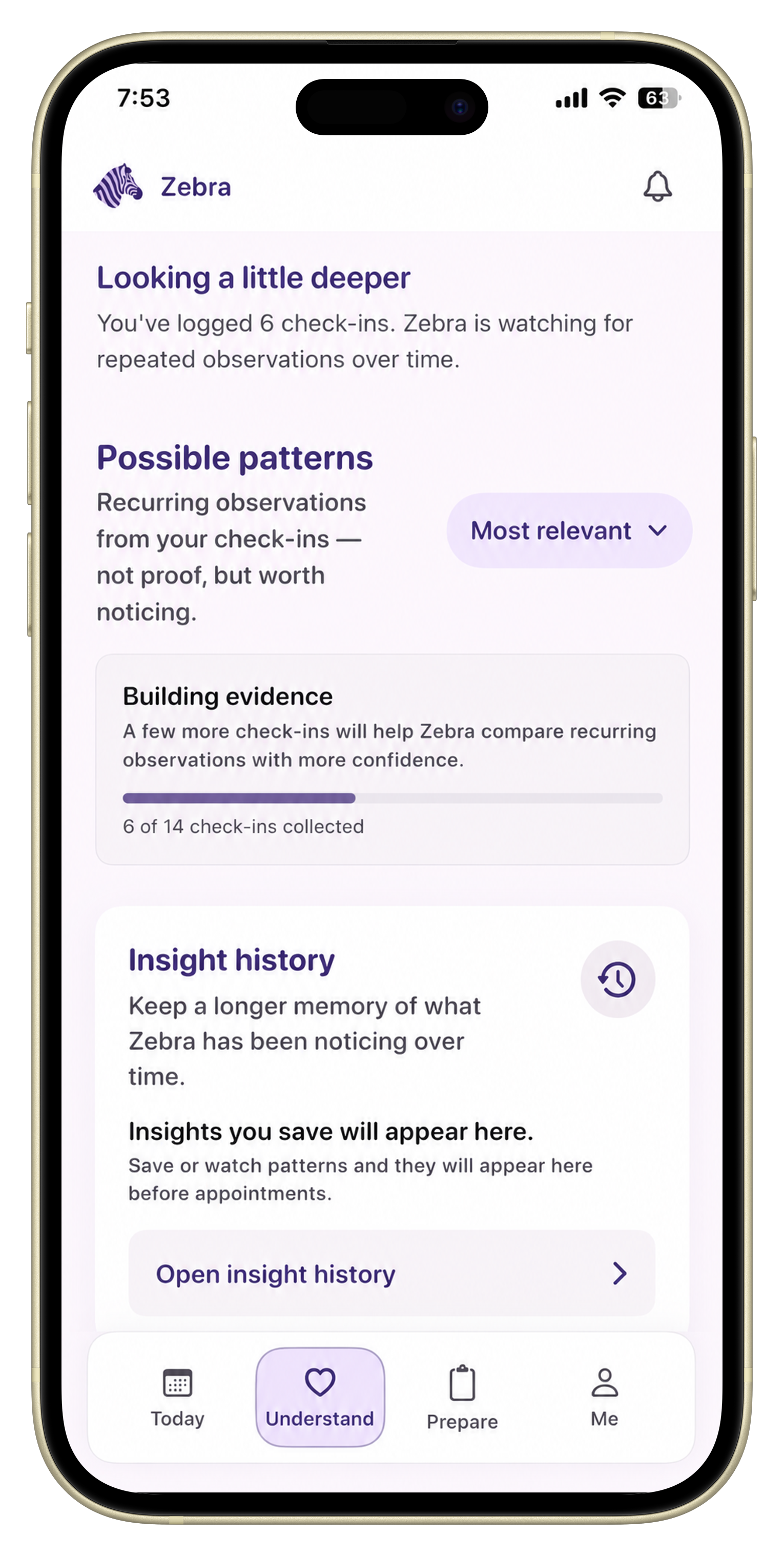
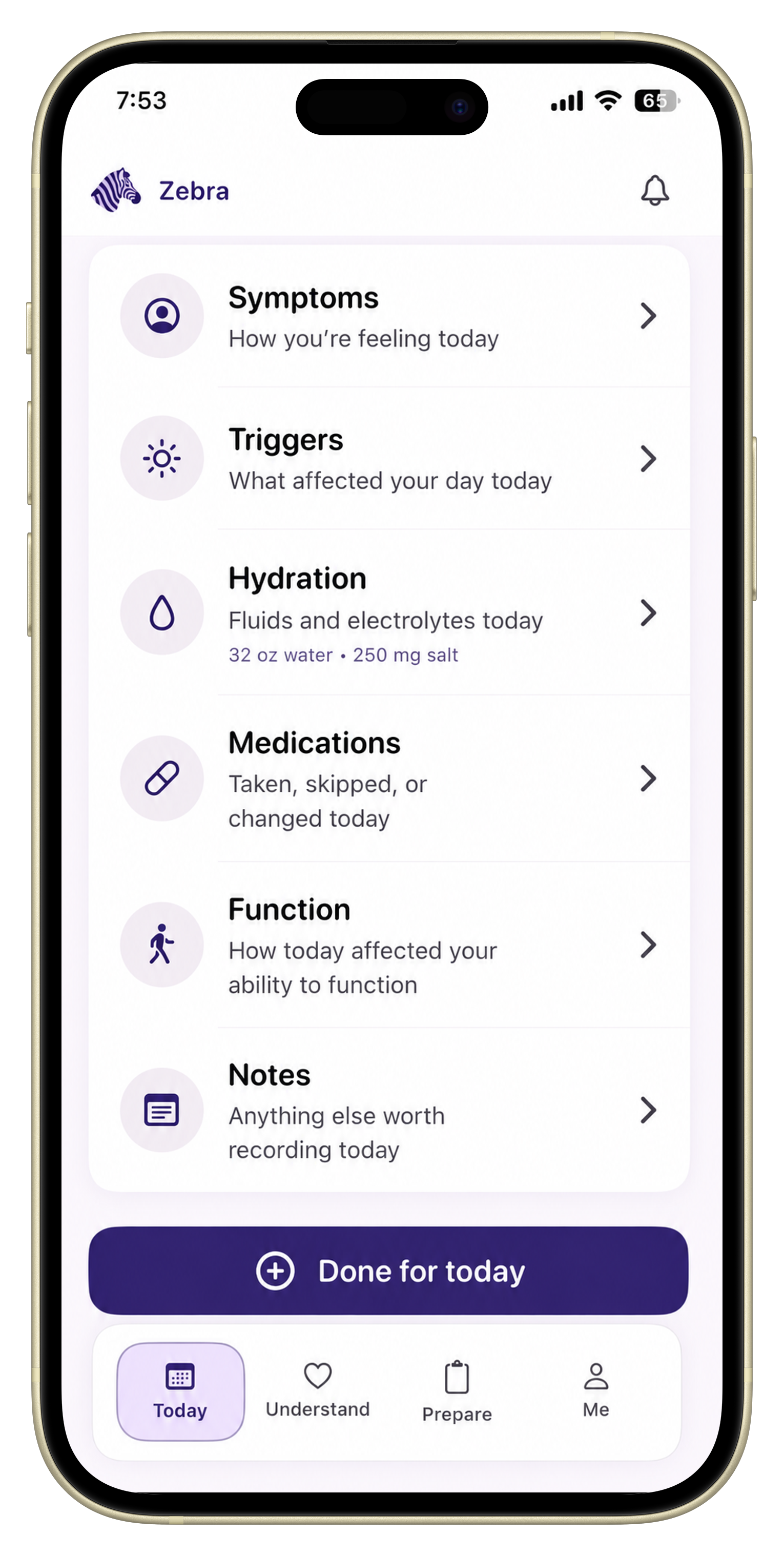
Zebra is built around keeping the record usable on hard days, not just on good ones. That matters for fatigue and ME/CFS because the process only helps if it is still possible to use when energy drops.
Use the minimum useful record: a few key symptoms, the main function change, and any exertion or delayed crash context that matters.
No. A low-effort pattern is usually more sustainable than a detailed daily record that becomes impossible to maintain.
Track the exertion or stressor, when symptoms worsened, what changed, how long the crash lasted, and what activities became harder.
Yes. A partial real history is better than turning tracking into another burden. Restart with the smallest useful entry you can manage.
Yes. Even an imperfect record can still show recurring crashes, symptom changes, and function impact more clearly than memory alone.
Put this into practice
Use Zebra to keep symptoms, delayed crashes, and daily-function changes in one easier-to-review record.
Download ZebraKnowledge hub
Keep exploring
A practical explanation of EDS and dysautonomia overlap, plus how to keep the symptom history reviewable.
Learn how to keep a symptom journal with brain fog using a low-effort, structured system that still helps before appointments.
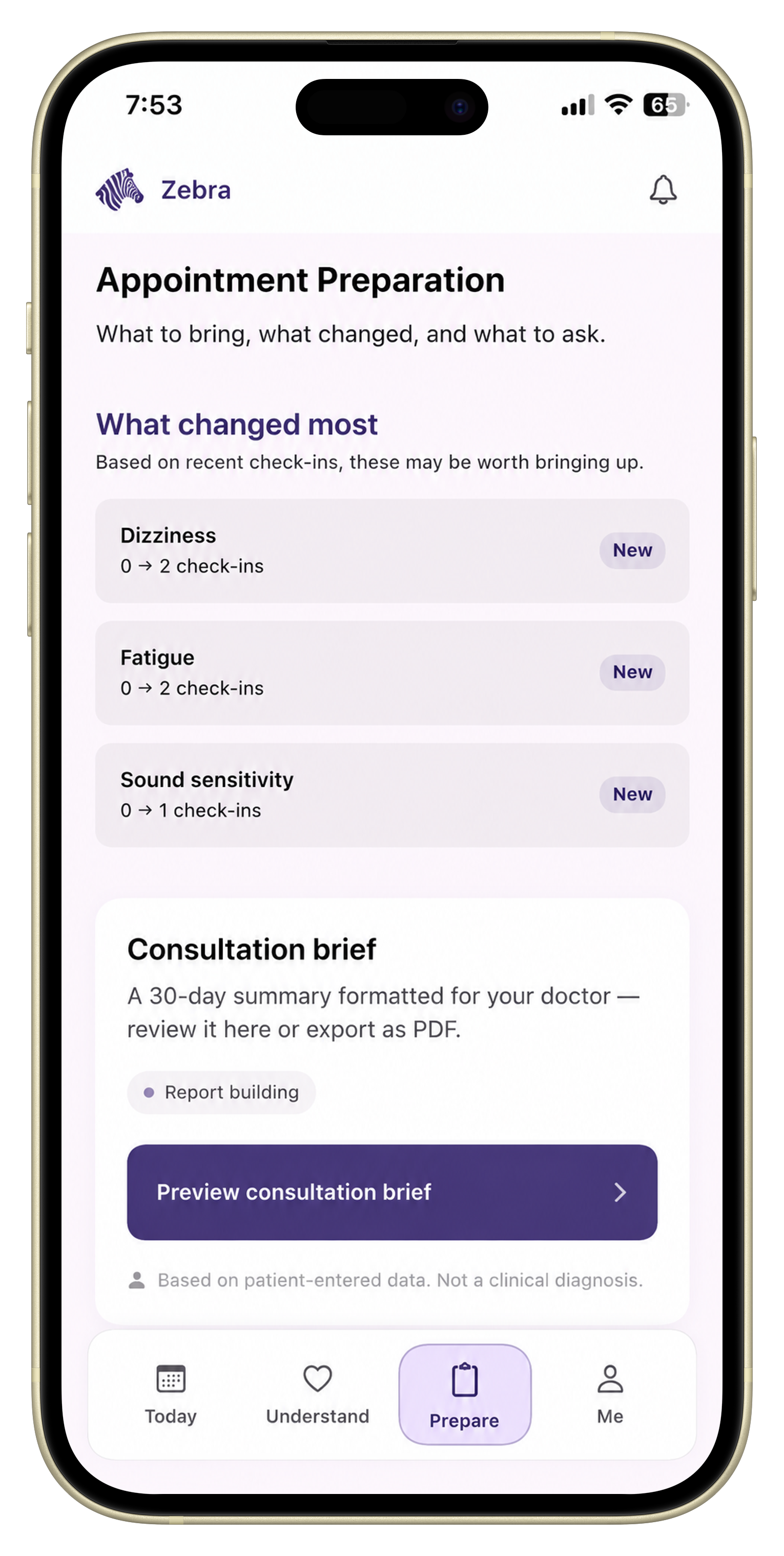
Learn how to summarize symptoms clearly for appointments without losing the details that matter most.
Learn why symptom tracking often falls apart on bad days and how a lower-effort approach can make it more sustainable.