How to Keep a Symptom Journal With Brain Fog
Learn how to keep a symptom journal with brain fog using a low-effort, structured system that still helps before appointments.

Zebra
For invisible chronic illness
Brain Fog and Difficult Days
Symptom tracking often fails on bad days because the exact symptoms that make tracking important also make tracking harder. Fatigue, pain, brain fog, dizziness, and overwhelm reduce the energy, memory, and focus needed to log what happened. When a tracking system assumes you can always keep up, it breaks exactly when you need it most.
Symptom tracking often fails on bad days because the exact symptoms that make tracking important also make tracking harder. Fatigue, pain, brain fog, dizziness, and overwhelm reduce the energy, memory, and focus needed to log what happened. When a tracking system assumes you can always keep up, it breaks exactly when you need it most.
On bad days, people often deal with:
That means a tracking system designed for healthy consistency will often fail in chronic illness reality.
The pattern is common:
This is not a personal failure. It is often a design failure.
Bad-day-friendly tracking usually means:
The point is not streaks. It is preserving enough history to help later.
On bad days, success may mean:
That still counts.
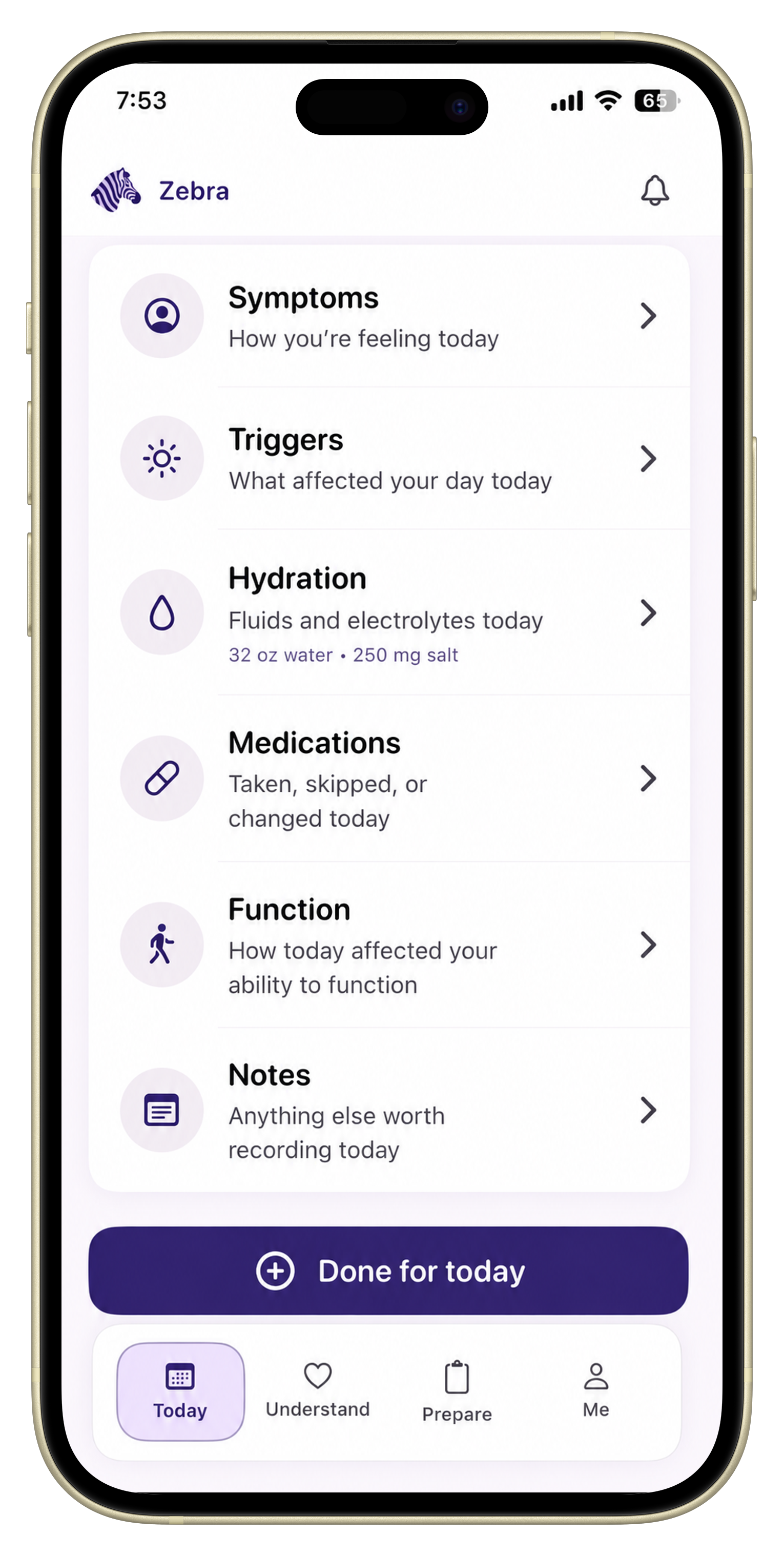
Zebra’s value proposition is built around reducing effort on hard days instead of asking for more. The record only helps if you can still use it when symptoms are worst.
Because pain, fatigue, brain fog, and dizziness reduce the energy and focus needed to record what happened.
Restart with today. A partial real record is more useful than a delayed attempt at perfect catch-up.
No. A usable imperfect record is still valuable, especially if it captures the stronger symptoms and function impact.
Put this into practice
Use Zebra to lower the effort required on bad days.
Download ZebraKnowledge hub
Keep exploring
Learn how to keep a symptom journal with brain fog using a low-effort, structured system that still helps before appointments.
Learn how to track brain fog symptoms, function changes, and context so the history is easier to explain at appointments.
A practical guide to tracking cycle-related flares, POTS symptoms, fibromyalgia pain, fatigue, brain fog, GI symptoms, medications, and appointment questions.
A practical guide to tracking migraine and headache days, symptoms, medication response, possible triggers, sleep, hydration, menstrual cycle context, and appointment-ready summaries.