Doctor Appointment Symptom Checklist
A practical symptom checklist for preparing clearer notes before a doctor, specialist, or cardiology appointment.

Zebra
For invisible chronic illness
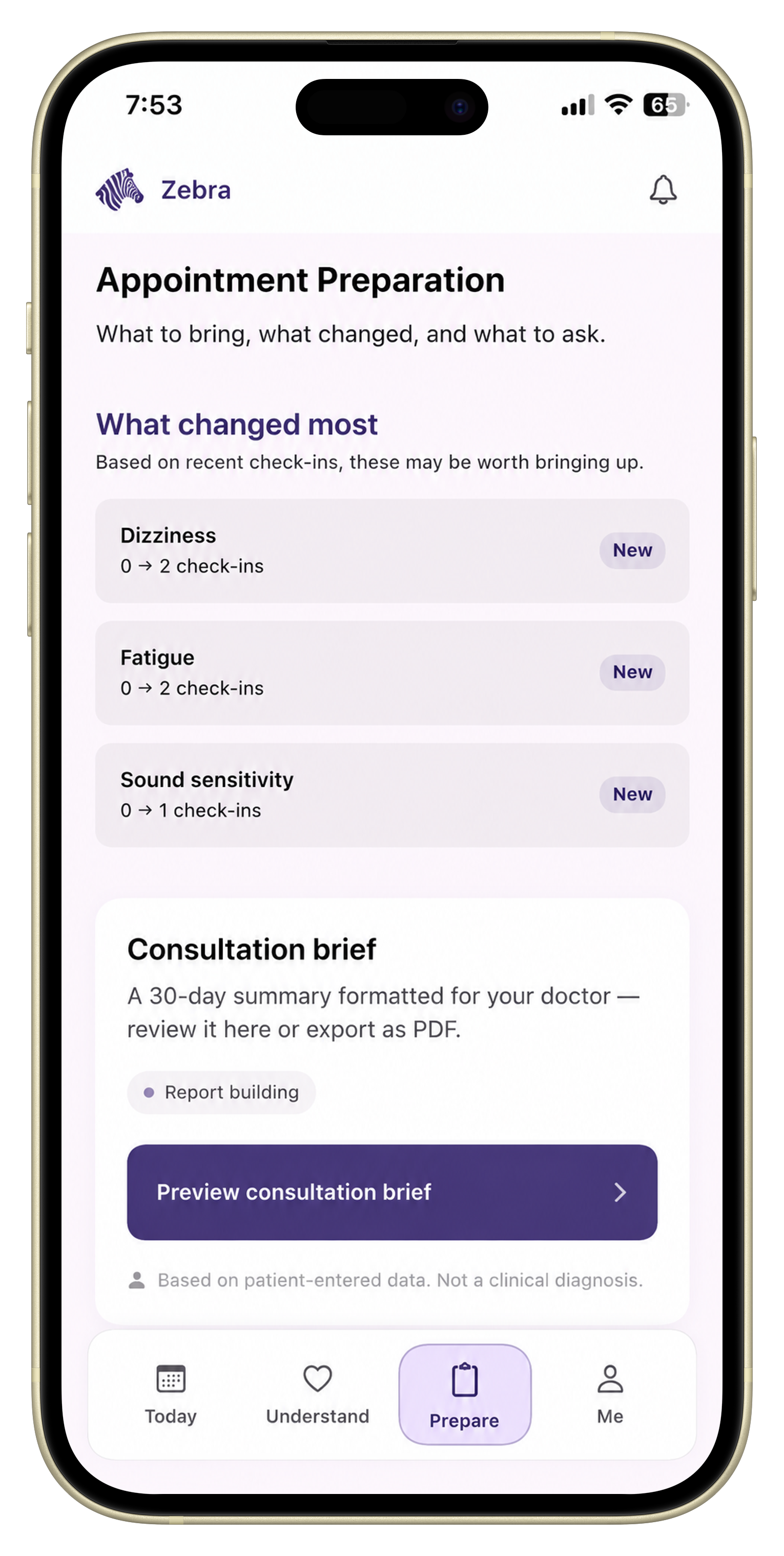
Appointment Preparation
To summarize symptoms without forgetting key details, start with what changed, what affected daily life, what treatment or routine shifts matter, and what you need help with now. A good symptom summary is short enough to use under pressure and structured enough to keep important details from disappearing when brain fog hits.
To summarize symptoms without forgetting key details, start with what changed, what affected daily life, what treatment or routine shifts matter, and what you need help with now. A good symptom summary is short enough to use under pressure and structured enough to keep important details from disappearing when brain fog hits.
Most people do not forget because they were careless. They forget because:
The answer is not to remember harder. It is to summarize smarter.
Start with the clearest change:
Say what the symptom did:
Include the context that matters:
Keep your top question or decision at the end:
If the summary is too long to reread quickly, it is too long. A useful summary is often:
The goal is usability, not completeness.
Zebra helps because it organizes the daily history first. That makes the final summary easier to build later, especially if symptoms, flares, function, meds, and related observations were already kept together.
Focus on what changed, how it affected daily life, what relevant context changed around it, and what question you need answered.
Use a written summary before the visit instead of relying on memory in the room.
Short enough to scan quickly. If you cannot reread it easily under stress, it is probably too long.
Put this into practice
Use Zebra to turn daily tracking into a cleaner summary.
Download ZebraKnowledge hub
Keep exploring
A practical symptom checklist for preparing clearer notes before a doctor, specialist, or cardiology appointment.
A practical framework for tracking how symptoms affect daily life before a doctor appointment.
A practical guide to choosing a symptom tracker that helps before specialist and follow-up appointments.
Learn how to organize symptom history, medications, function changes, and questions into a clear doctor-visit summary.