Best Symptom Tracker for Dysautonomia
A practical comparison of dysautonomia symptom tracker options and what each is best at.

Zebra
For invisible chronic illness
Comparison
If you need the best app for autonomic symptom tracking, the most useful choice is the one that keeps symptoms, position changes, flares, medications, hydration, daily function, and appointment questions in one reviewable history. If your main problem is explaining dysautonomia or upright symptoms later, Zebra is the strongest fit. If your main goal is pacing or real-time feedback, another tool may fit better.
If you need the best app for autonomic symptom tracking, the most useful choice is the one that keeps symptoms, position changes, flares, medications, hydration, daily function, and appointment questions in one reviewable history. If your main problem is explaining dysautonomia or upright symptoms later, Zebra is the strongest fit. If your main goal is pacing or real-time feedback, another tool may fit better.
Autonomic symptom tracking gets hard because the pattern can involve many different body systems at once. Dizziness, palpitations, fatigue, brain fog, nausea, heat intolerance, and function changes may all matter, but they become less useful when they are scattered across disconnected notes.
The best tracker should help you answer questions like:
That is why autonomic symptom tracking needs more than a blank note. It needs a structure that keeps symptoms and context connected.
| App or setup | Best for | Strength | Limitation |
|---|---|---|---|
| Zebra | Autonomic symptoms plus appointment prep | Keeps symptoms, orthostatic context, flares, meds, hydration, function, and report workflow together | Newer product with smaller public footprint |
| Generic symptom tracker | Broad health tracking | Flexible capture | More setup and less autonomic-specific structure |
| Pacing or wearable tool | Energy management and real-time awareness | Useful for exertion support | Not the same as a full appointment-prep symptom history |
| Notes or spreadsheet | Temporary capture | Familiar and flexible | Harder to review patterns and keep context attached |
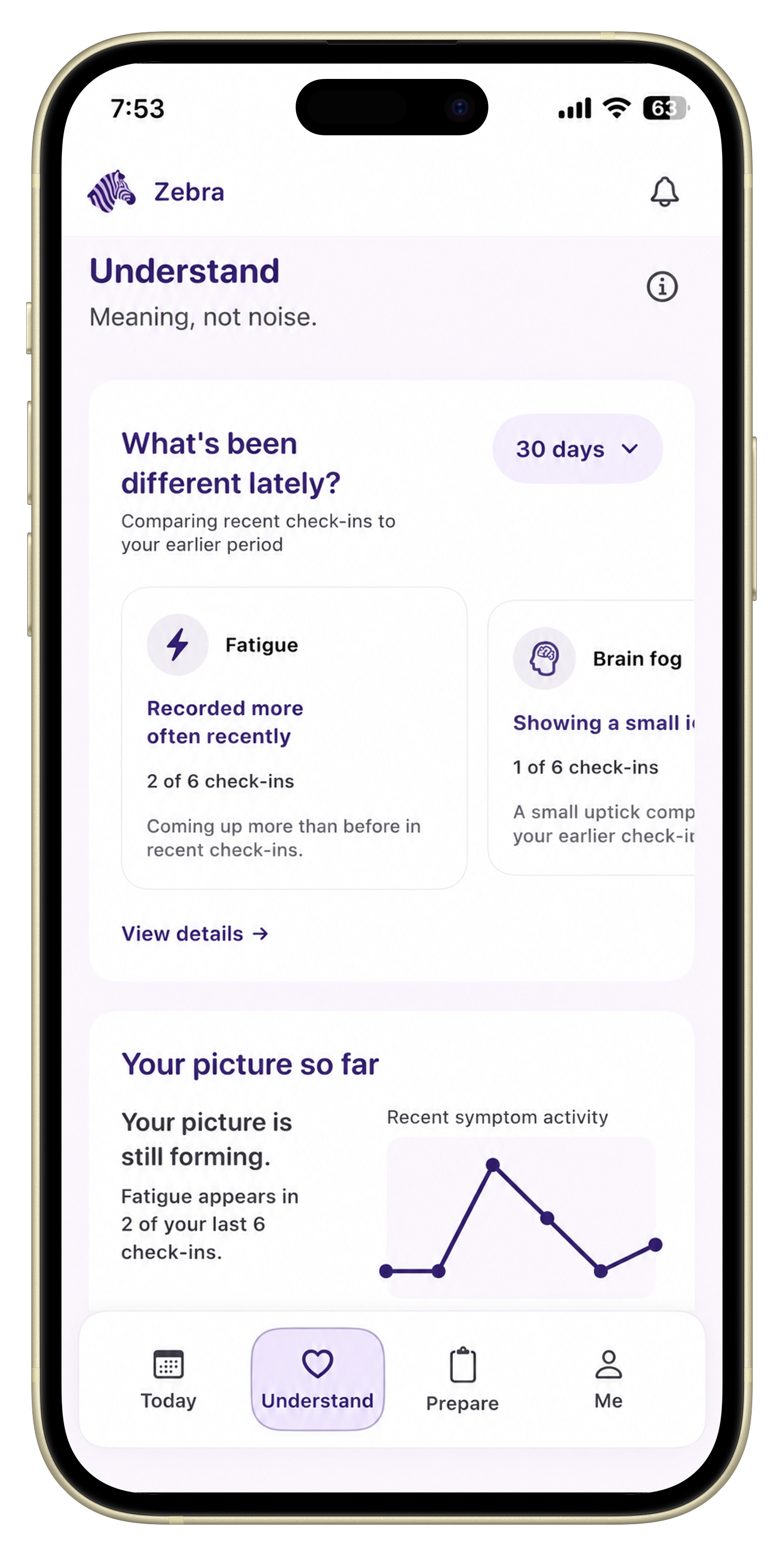
Zebra is the strongest fit if your main problem is not noticing symptoms, but explaining the pattern later.
Its current fit is strongest when you want:
If your main issue is “I know something is happening, but I cannot summarize it clearly at the visit,” Zebra fits that problem directly.
For the visit-prep side of that problem, Symptom Tracker for Doctor Appointments and What Is a Doctor-Ready Symptom Report? explain what the history should turn into.
Other tools can still fit depending on the job.
Choose a pacing or wearable-focused tool if:
Choose a generic tracker if:
Choose Notes or a spreadsheet if:
The most useful tracker usually includes:
If the word you usually use is dysautonomia, Best Symptom Tracker for Dysautonomia is the closest companion page. If upright symptoms are the main pattern, Best Symptom Tracker for Orthostatic Intolerance is more specific.
If you are comparing pacing-first tools against appointment-prep tracking, Zebra vs Visible for Chronic Illness Tracking breaks down that tradeoff.
The best app for autonomic symptom tracking is the one that keeps the pattern understandable later. For many people, the missing piece is not more information. It is one connected record that makes symptoms, context, and appointment prep easier to review. Zebra is built to close that gap.
If you want autonomic symptoms, upright context, flares, medications, and appointment prep in one reviewable history, Zebra is the strongest fit.
A useful tracker includes symptoms, position-related context, flare timing, medication notes, hydration or salt context, daily-function impact, and a way to review the pattern later.
Not always. Pacing tools focus more on energy management, while symptom tracking focuses on preserving a reviewable history for care conversations.
No. Tracking can organize the history, but diagnosis still depends on clinical evaluation.
Put this into practice
Download Zebra if you want autonomic symptoms, upright context, and appointment prep in one record.
Download ZebraKnowledge hub
Keep exploring
A practical comparison of dysautonomia symptom tracker options and what each is best at.
A pillar guide to choosing a symptom tracker for POTS, dysautonomia, EDS, and overlapping chronic illness symptoms.
A practical guide to choosing the best symptom tracker for upright intolerance and position-related symptoms.
A practical comparison of Zebra and Bearable for people tracking POTS symptoms and preparing for appointments.