How EDS and Dysautonomia Symptoms Overlap
A practical explanation of EDS and dysautonomia overlap, plus how to keep the symptom history reviewable.

Zebra
For invisible chronic illness
EDS / hEDS
When EDS symptoms overlap with dysautonomia, the main problem is not just symptom volume. It is symptom blur. Dizziness, fatigue, brain fog, pain, palpitations, and function changes can start stacking together until it becomes hard to tell what changed, what tends to happen together, and what you need to mention at your next appointment.
When EDS symptoms overlap with dysautonomia, the main problem is not just symptom volume. It is symptom blur. Dizziness, fatigue, brain fog, pain, palpitations, and function changes can start stacking together until it becomes hard to tell what changed, what tends to happen together, and what you need to mention at your next appointment.
If you are tracking both EDS or hEDS and dysautonomia, it usually helps to keep one connected record instead of forcing the symptoms into separate systems. The goal is not to label each symptom perfectly in real time. The goal is to keep the pattern reviewable.
For the overlap explanation itself, start with How EDS and Dysautonomia Symptoms Overlap. This page focuses on the tracking workflow.
A useful overlap record makes four things easier to answer later:
That is why overlap tracking should stay simple enough to use on bad days. If the system is too detailed to maintain, it stops helping.
If fatigue goes in one app, dizziness goes in another, and function changes live in your notes, the picture gets harder to review.
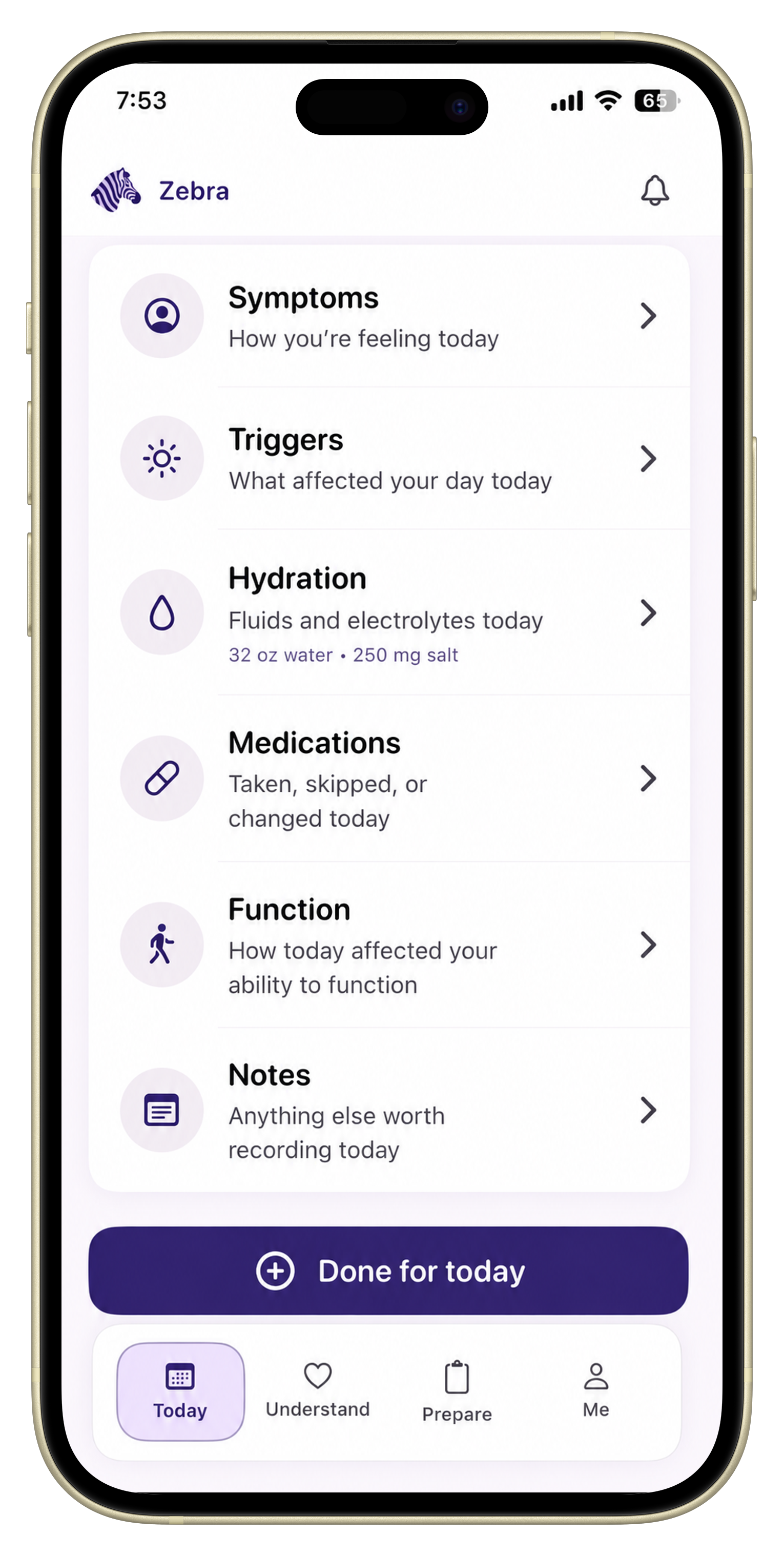
A better structure is one timeline that captures:
This is especially important for overlap patterns because the relationship between symptoms often matters more than any single entry.
For many people, the most useful overlap categories include:
You do not need every possible symptom every day. Start with the symptoms that:
Symptoms become easier to interpret when the surrounding context is visible.
Useful context can include:
That does not prove a cause. It helps you preserve the lived pattern instead of relying on memory later.
If orthostatic symptoms are part of the picture, What Is Orthostatic Intolerance? and How to Track POTS Symptoms and Orthostatic Changes can help you decide when position notes matter.
This is often the clearest way to show why the pattern matters.
Track examples like:
This functional impact gives appointments much more context than a symptom list alone.
Overlap symptoms are often easier to review as clusters:
For flare tracking, note:
That gives you a usable history without requiring a long written diary.
You do not need to collect numbers every time you feel unwell.
Measurements can help when they are relevant to the pattern or to current care, such as:
But the measurements should stay attached to symptoms and context. Otherwise they become another disconnected data stream.
If you want the minimum useful version, try this:
This is enough to build a clearer overlap history without overcomplicating your day.
Overlap tracking is most useful when it can be reviewed before the visit.
Before an appointment, summarize:
If you are heading into care soon, What to Track Before a Specialist Appointment and What to Track Before an EDS Specialist Appointment help turn the daily record into a cleaner visit summary.
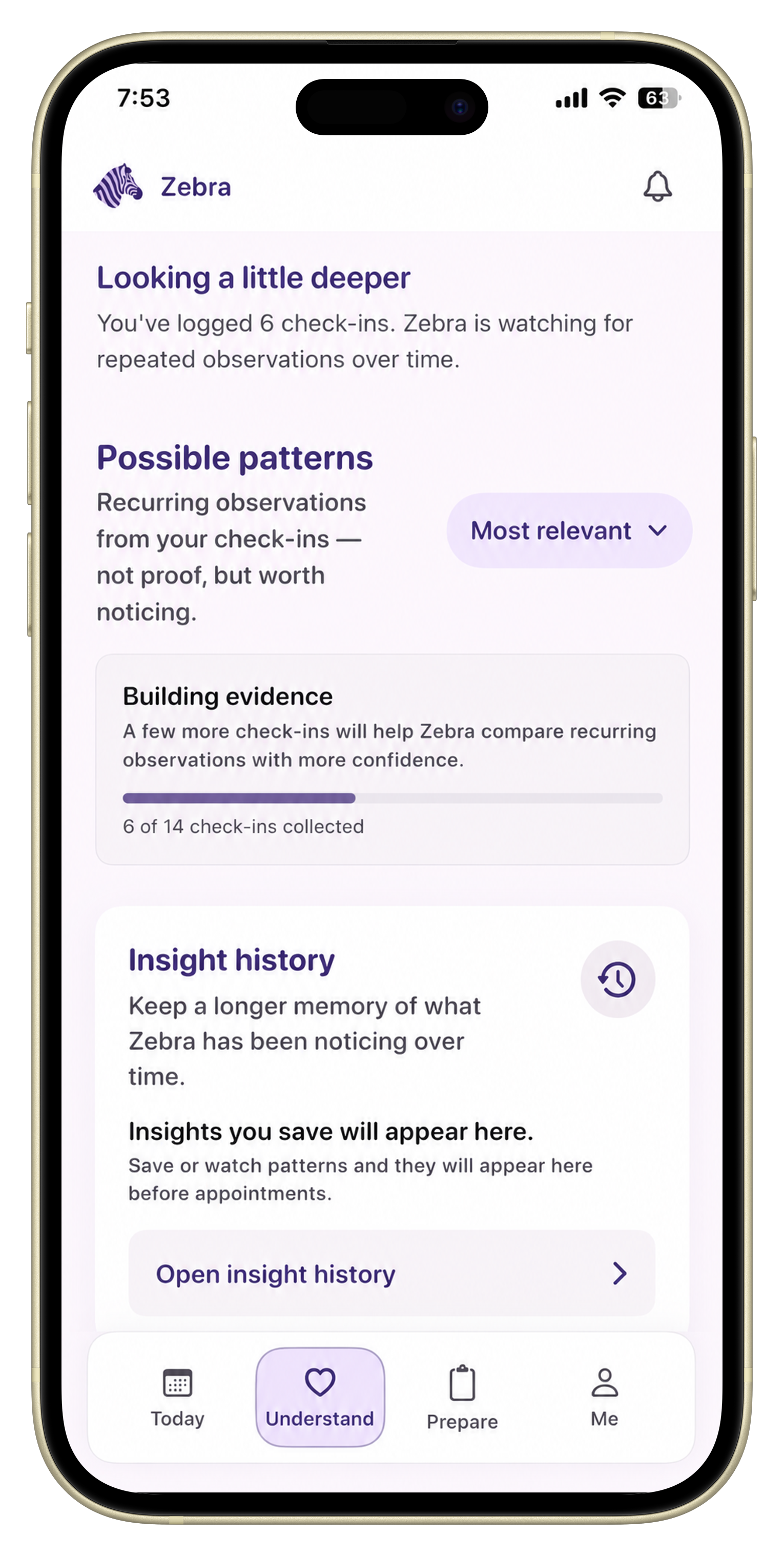
Zebra is designed for people whose history stops making sense when symptoms are scattered across different tools. Instead of separating overlap symptoms into isolated notes, it helps keep the timeline, context, and review flow connected in one record.
Track the symptoms together in one timeline, then add the context that helps them make sense, such as position changes, flares, function impact, and what symptoms tend to appear together.
Not usually. If the symptoms are part of the same lived pattern, keeping them together is often more useful than splitting them into disconnected records.
The most useful context is often timing, position, triggers, severity changes, flare patterns, and what the symptoms prevented you from doing.
No. Use measurements when they are relevant, but keep the record realistic enough to maintain on hard days.
Summarize what changed, what clusters together, what affects function, and which questions you want answered. A short reviewable history is usually more useful than a scattered note collection.
Put this into practice
Use Zebra to keep overlap symptoms, orthostatic context, and daily function in one connected history.
Download ZebraKnowledge hub
Keep exploring
A practical explanation of EDS and dysautonomia overlap, plus how to keep the symptom history reviewable.
A practical tracking guide for people managing overlapping POTS, EDS or hEDS, and MCAS symptoms before appointments.
A practical guide to choosing the best symptom tracker for EDS and dysautonomia overlap.
A practical guide to tracking blood pooling, leg or foot discoloration, swelling, heaviness, pain, standing time, posture, compression, hydration, salt, recovery, and appointment summaries.