
POTS Home Test Notes: What to Record With Heart Rate and Blood Pressure
A practical guide to recording heart rate, blood pressure, symptoms, and context for POTS or orthostatic intolerance conversations.

Zebra
For invisible chronic illness
Reference / Glossary
Orthostatic intolerance is a term used when symptoms appear or worsen while sitting upright or standing and improve when you lie down. It describes a symptom pattern, not a diagnosis by itself.
Orthostatic intolerance is a term used when symptoms appear or worsen while sitting upright or standing and improve when you lie down. It describes a symptom pattern, not a diagnosis by itself.
People often use this term when talking about dizziness, lightheadedness, weakness, brain fog, palpitations, or feeling unwell when upright for too long.
Symptoms may include:
Not everyone has the same pattern, and one person’s bad day may look different from another’s.
No. POTS is one condition that involves orthostatic symptoms, but orthostatic intolerance is a broader term. It describes the upright symptom pattern itself rather than naming the exact condition behind it.
For patients, this term can be helpful because it gives a name to a pattern:
That can also make tracking more useful, because you can organize symptom history around what changes with position instead of treating every symptom as random.
Tracking does not diagnose orthostatic intolerance, but it can help you organize:
That can make care conversations easier to prepare for.
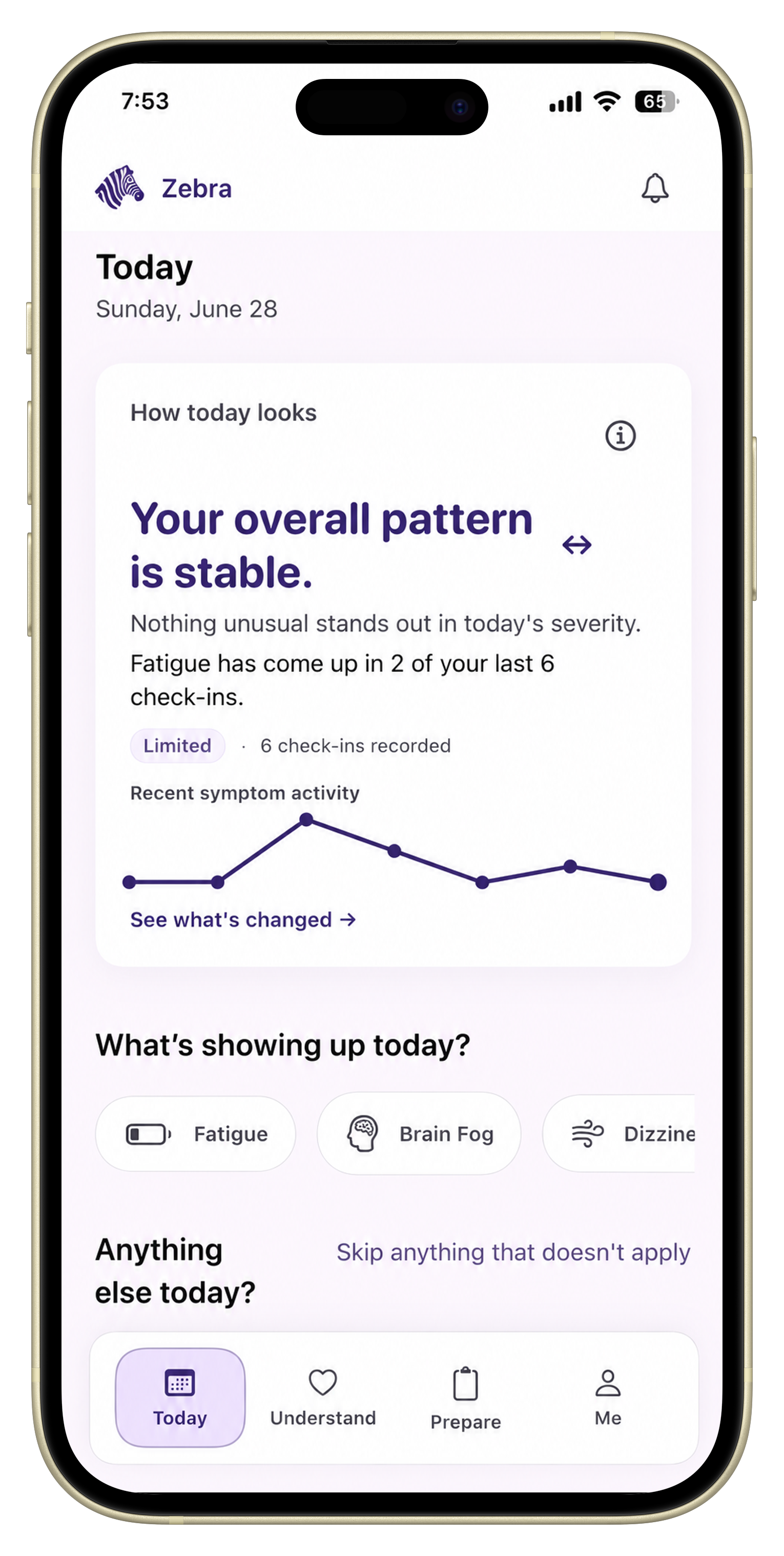
Zebra helps keep symptom history and position-related observations in the same record, which is especially useful when upright symptoms are part of the bigger picture you are trying to explain.
It means symptoms show up or worsen when you are upright and improve when you lie down.
No. POTS is one diagnosis that can involve orthostatic symptoms, but orthostatic intolerance is a broader pattern.
No. Tracking can help organize the history, but diagnosis still depends on clinical evaluation.
Put this into practice
Use Zebra to keep upright symptoms and related history in one record.
Download ZebraKnowledge hub
Keep exploring
A practical guide to recording heart rate, blood pressure, symptoms, and context for POTS or orthostatic intolerance conversations.
A practical guide to tracking symptoms and context after a positive tilt table test for clearer follow-up appointments.
A practical guide to tracking blood pooling, leg or foot discoloration, swelling, heaviness, pain, standing time, posture, compression, hydration, salt, recovery, and appointment summaries.
A practical guide to tracking exercise intolerance, activity type, position, duration, intensity, heart rate, dizziness, fatigue, delayed worsening, recovery, and appointment summaries.