What Does an Orthostatic Test Help You Record?
Learn what an orthostatic test helps you record and why position-based observations are more useful when kept with symptom history.

Zebra
For invisible chronic illness
POTS and Dysautonomia Tracking
To track POTS symptoms well, focus on the symptoms that matter most, when they happen, how they change with position, and what else was happening around them. The goal is not to collect endless numbers. It is to build a clear history of upright symptoms, flares, and related context that you can review later or bring to an appointment.
To track POTS symptoms well, focus on the symptoms that matter most, when they happen, how they change with position, and what else was happening around them. The goal is not to collect endless numbers. It is to build a clear history of upright symptoms, flares, and related context that you can review later or bring to an appointment.
POTS tracking becomes much more useful when symptoms and orthostatic observations live in the same record instead of separate apps or screenshots.
Useful POTS tracking categories often include:
You do not need to track every possible sensation every day. Start with the symptoms that:
One of the most useful parts of POTS tracking is noting whether symptoms change when you:
This does not mean every check-in has to be a full orthostatic test. It means your record should capture that position matters.
Symptoms make more sense when the surrounding context is visible.
Helpful context can include:
That does not prove a cause. It makes your history easier to interpret.
If you only track the average day, you may miss the days that matter most.
For flare days, track:
If home heart rate or blood pressure observations are part of your current care or prep, keep them organized and tied to symptoms. A simple pattern is often enough:
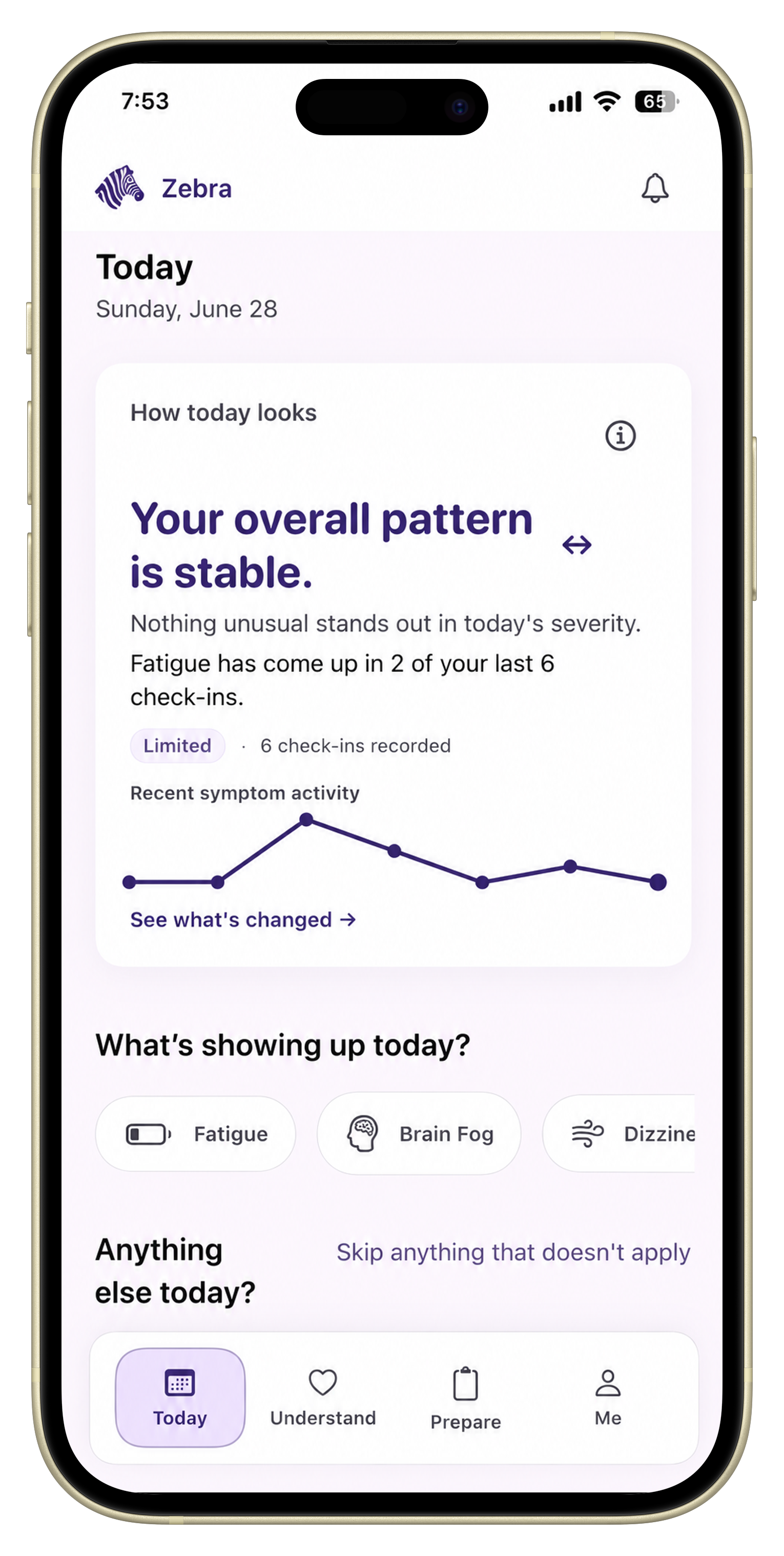
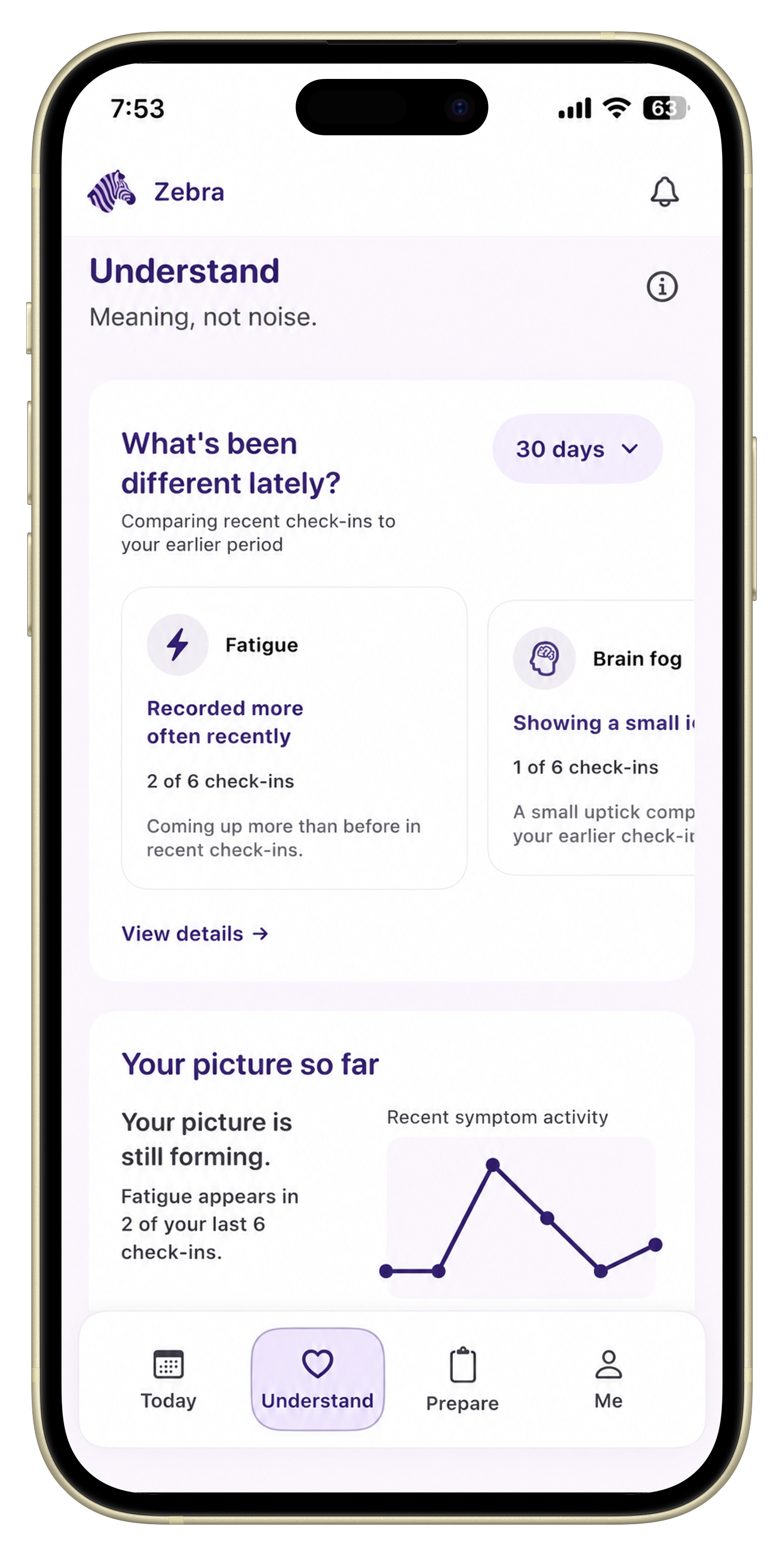
Zebra is designed to keep symptoms, flares, meds, hydration, salt, and orthostatic observations in one record so the history stays connected. That is especially helpful for people with POTS who are also tracking EDS, Fibromyalgia, or other overlapping symptoms.
Track the symptoms that are most frequent, disruptive, or relevant to your care, especially dizziness, palpitations, fatigue, brain fog, and upright symptom changes.
If it is relevant to your care, yes. It is often more useful when paired with symptom and position notes instead of stored separately.
No. Many people benefit more from a mix of daily symptom tracking and occasional structured position-based observations.
Put this into practice
Use Zebra to keep symptoms and upright changes in the same timeline.
Download ZebraKnowledge hub
Keep exploring
Learn what an orthostatic test helps you record and why position-based observations are more useful when kept with symptom history.
A practical guide to choosing an app for orthostatic symptom tracking and reviewable appointment history.
A practical guide to choosing the best symptom tracker for orthostatic intolerance.
A practical guide to tracking hydration, salt, compression garments, and symptom context in one useful chronic illness record.