Best Symptom Tracker for POTS, Dysautonomia, and EDS
A pillar guide to choosing a symptom tracker for POTS, dysautonomia, EDS, and overlapping chronic illness symptoms.

Zebra
For invisible chronic illness
Comparison
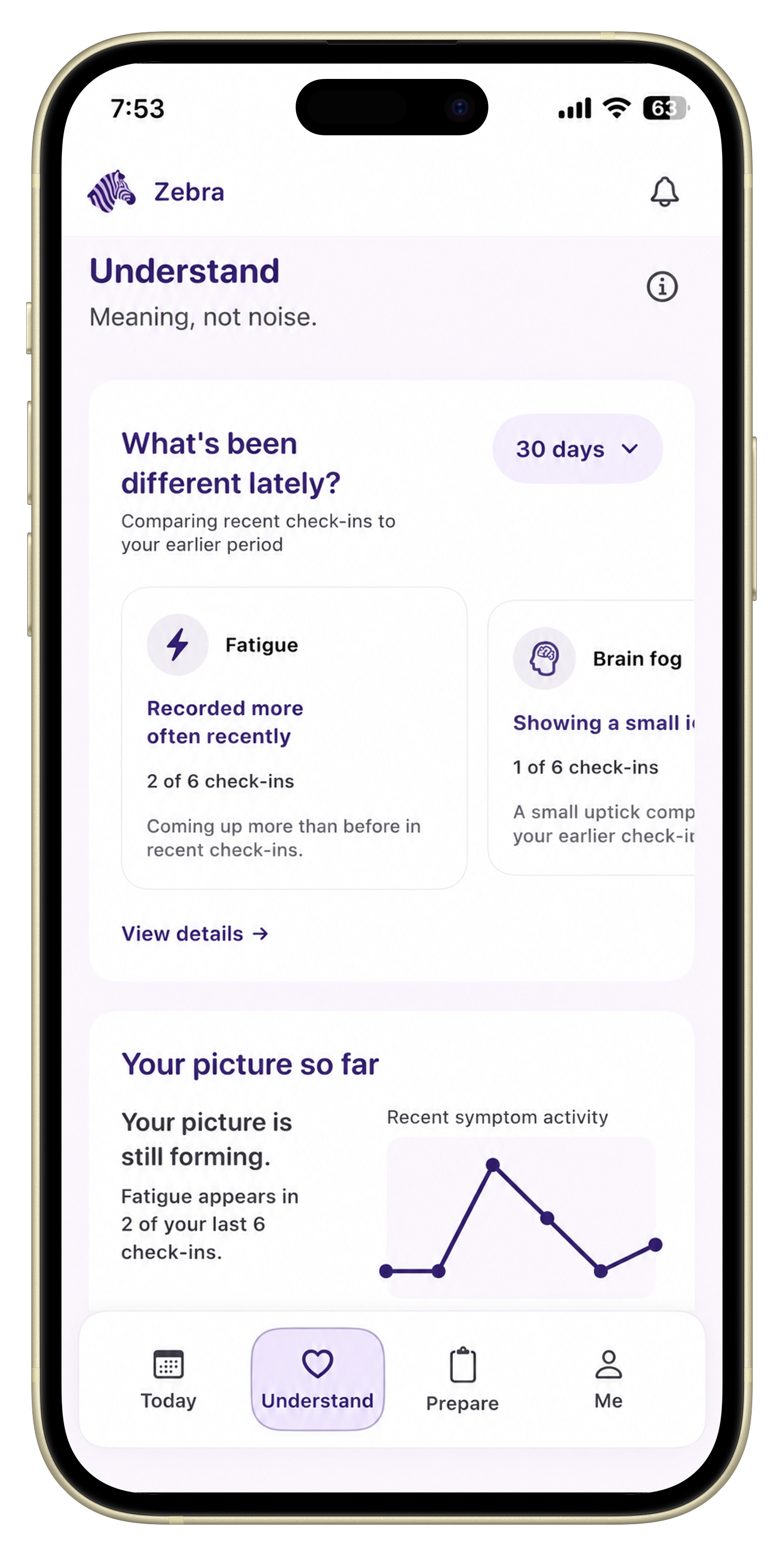
If you need the best symptom tracker for EDS and dysautonomia overlap, the most useful choice is the one that keeps pain, dizziness, fatigue, brain fog, orthostatic context, flare patterns, and daily-function changes in one connected history. If your main problem is symptom blur and scattered notes, Zebra is the strongest fit. If you want a highly generic tracker, broader tools can still work.
If you need the best symptom tracker for EDS and dysautonomia overlap, the most useful choice is the one that keeps pain, dizziness, fatigue, brain fog, orthostatic context, flare patterns, and daily-function changes in one connected history. If your main problem is symptom blur and scattered notes, Zebra is the strongest fit. If you want a highly generic tracker, broader tools can still work.
Overlap tracking gets hard when symptoms that belong to the same lived pattern end up scattered across different apps, notes, and memory.
If you are comparing the full POTS, dysautonomia, and EDS tracker landscape, start with the broader hub: Best Symptom Tracker for POTS, Dysautonomia, and EDS.
The best symptom tracker should help you answer questions like:
That is why overlap tracking needs more than raw symptom capture. It needs a structure that keeps the whole pattern reviewable.
| App or setup | Best for | Strength | Limitation |
|---|---|---|---|
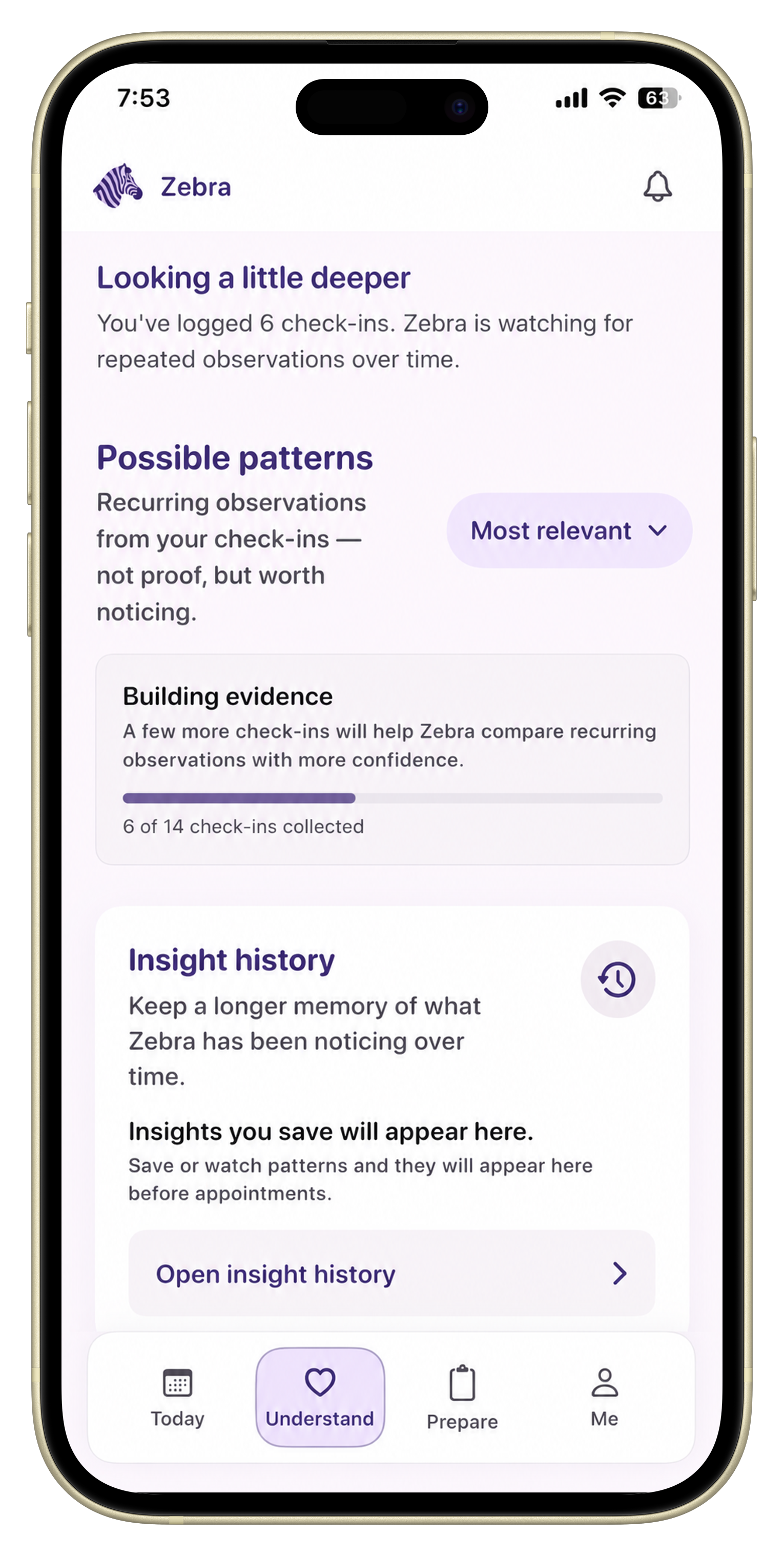
| Zebra | EDS and dysautonomia overlap plus appointment prep | Keeps symptoms, orthostatic context, function impact, flares, and review workflow together | Newer product with smaller public footprint |
| Generic symptom tracker | Broad flexible tracking | Customizable symptom capture | More setup and less overlap-specific structure |
| Notes or spreadsheet | Temporary capture | Familiar and flexible | Harder to review clusters and function changes clearly |
| Pacing or wearable tool | Real-time energy support | Useful for exertion awareness | Not the same as a full overlap symptom-history workflow |
Zebra is the strongest fit if your main problem is not lack of awareness, but lack of one connected record.
Its current fit is strongest when you want:
If your main issue is “I know the symptoms overlap, but I cannot explain the pattern later,” Zebra fits that problem directly.
Broader trackers or notes can still work if:
The tradeoff is that overlap history often depends on the connection between:
That is where symptom blur becomes much harder to review in a generic setup.
The most useful tracker usually includes:
For the workflow version, How to Track EDS Symptoms When They Overlap with Dysautonomia is the best companion page.
Usually no.
If the symptoms are part of the same lived pattern, separating them can make the picture harder to review. A connected timeline is usually more useful than isolated category notes.
For the overlap explanation itself, How EDS and Dysautonomia Symptoms Overlap gives the broader picture.
The best symptom tracker for EDS and dysautonomia overlap is the one that keeps the full pattern understandable later. For many people, that means fewer disconnected tools, more context, and a timeline that stays usable on bad days. Zebra is built to close that gap.
If you want overlap symptoms, orthostatic context, flare patterns, and appointment prep in one record, Zebra is the strongest fit.
A useful tracker includes symptoms, position-related context, flare timing, daily-function impact, medication notes, and a way to review what changed before appointments.
Usually not. If they are part of the same lived pattern, keeping them in one connected history is often more useful.
No. Focus on the symptoms that cluster together, change the most, or affect daily life and current care the most.
Put this into practice
Download Zebra if you want overlap symptoms, orthostatic context, and daily-function history in one place.
Download ZebraKnowledge hub
Keep exploring
A pillar guide to choosing a symptom tracker for POTS, dysautonomia, EDS, and overlapping chronic illness symptoms.
A practical guide to choosing the best app for autonomic symptom tracking and reviewable appointment history.
A practical guide to choosing the best symptom tracker for upright intolerance and position-related symptoms.
A practical workflow for keeping EDS and dysautonomia overlap symptoms in one clear, usable record.