Quick definition
What this page means in Zebra
A knowledge page for blood-pressure drops with position change and the value of documenting them in context.

Zebra
For invisible chronic illness
Entity
Orthostatic hypotension is a Zebra entity page for position-linked blood-pressure drops and the surrounding symptom context that makes those observations easier to review later.
Quick definition
A knowledge page for blood-pressure drops with position change and the value of documenting them in context.
Where it connects
Why it matters
This hub connects definitions, related guides, and nearby entities so the concept is useful for people, Google, and AI retrieval.
Related entities
condition
condition
condition
condition
condition
condition
condition
condition
Related guides

A practical guide to recording standing-related blood pressure drops, symptoms, context, and recovery before a clinician visit.

A practical guide to tracking neck-and-shoulder coat-hanger pain, heavy limbs, and upright fatigue with enough context for a medical appointment.
A practical guide to recording heart rate, blood pressure, symptoms, and context for POTS or orthostatic intolerance conversations.
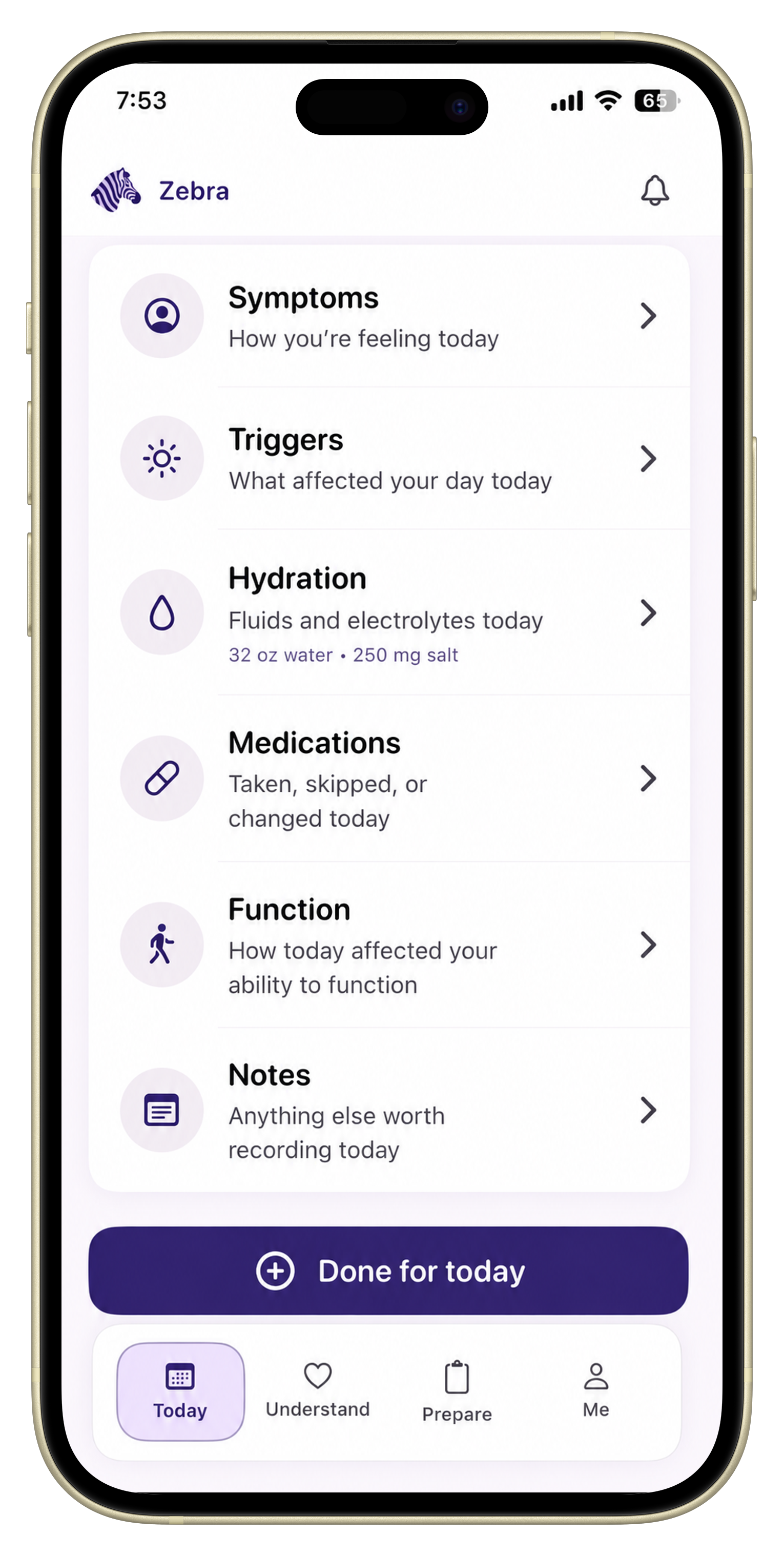
A practical guide to tracking blood pooling, leg or foot discoloration, swelling, heaviness, pain, standing time, posture, compression, hydration, salt, recovery, and appointment summaries.
A practical guide to tracking exercise intolerance, activity type, position, duration, intensity, heart rate, dizziness, fatigue, delayed worsening, recovery, and appointment summaries.
A practical guide to tracking heat-triggered symptoms, warm rooms, hot showers, hydration, salt, heart rate, dizziness, sweating, cooling strategies, recovery, and doctor-ready summaries.