
How to Track Pre-Syncope and Weird Dysautonomia Episodes
A practical guide to tracking near-fainting, lightheadedness, and strange dysautonomia episodes without relying on memory.

Zebra
For invisible chronic illness
Dysautonomia
Neck-and-shoulder pain, heavy limbs, and upright fatigue can be easy to dismiss as vague. Track where it happens, when it starts, posture, triggers, recovery, vitals, and daily impact so your clinician can see whether the pattern is orthostatic.

Coat-hanger pain usually means aching across the back of the neck, shoulders, and upper back, roughly where a coat hanger would sit. In people with dysautonomia, orthostatic intolerance, or orthostatic hypotension, it may show up when upright and ease after sitting or lying down.
Limb heaviness can be just as hard to explain. You may not feel “pain” exactly. Your arms or legs may feel weighted, weak, slow, shaky, or like they cannot keep up with standing, walking, stairs, showering, or errands.
Tracking helps because these symptoms can sound vague in a short appointment. A clear timeline can show whether the pain or heaviness follows posture, heat, meals, exertion, hydration, medication changes, or flare days.
Do not just write “pain” if you can be more specific.
For coat-hanger pain, note whether it is in:
For limb heaviness, note whether it affects:
Location matters because “neck and shoulders after standing” tells a different story than “one-sided arm weakness” or “calf pain after walking.”
The most useful question is: what position were you in when it started?
Track:
MedlinePlus Genetics notes that orthostatic hypotension symptoms can include neck-and-shoulder “coat hanger pain,” weakness, dizziness, blurred vision, fatigue, and fainting, and that symptoms may worsen with physical activity, warmth, large meals, or long standing.
Coat-hanger pain or heavy limbs may travel with other dysautonomia symptoms.
Add any that happened at the same time:
This helps your clinician see whether the symptom happened alone or as part of an orthostatic episode.
A trigger note does not have to prove causation. It helps compare days.
Useful context includes:
If the pattern is “neck pain and heavy legs after 12 minutes standing in a warm store,” that is much easier to discuss than “my body feels heavy sometimes.”
Severity matters, but recovery often tells the bigger story.
Track:
Functional impact turns a symptom into a real-life example your clinician can use.
If your clinician has asked you to track heart rate or blood pressure, connect numbers to posture, time, and symptoms.
For example:
Do not force vital tracking during an unsafe episode. If you feel faint, get safe first.
Because neck, shoulder, arm, leg, and weakness symptoms can have many causes, mark anything that is new, severe, one-sided, or unusual for you.
Seek urgent care for concerning symptoms such as:
Zebra can help organize notes, but it cannot decide whether a symptom is safe.
Use this format when you are tired:
Short notes are enough. The pattern is the point.
Helpful background:
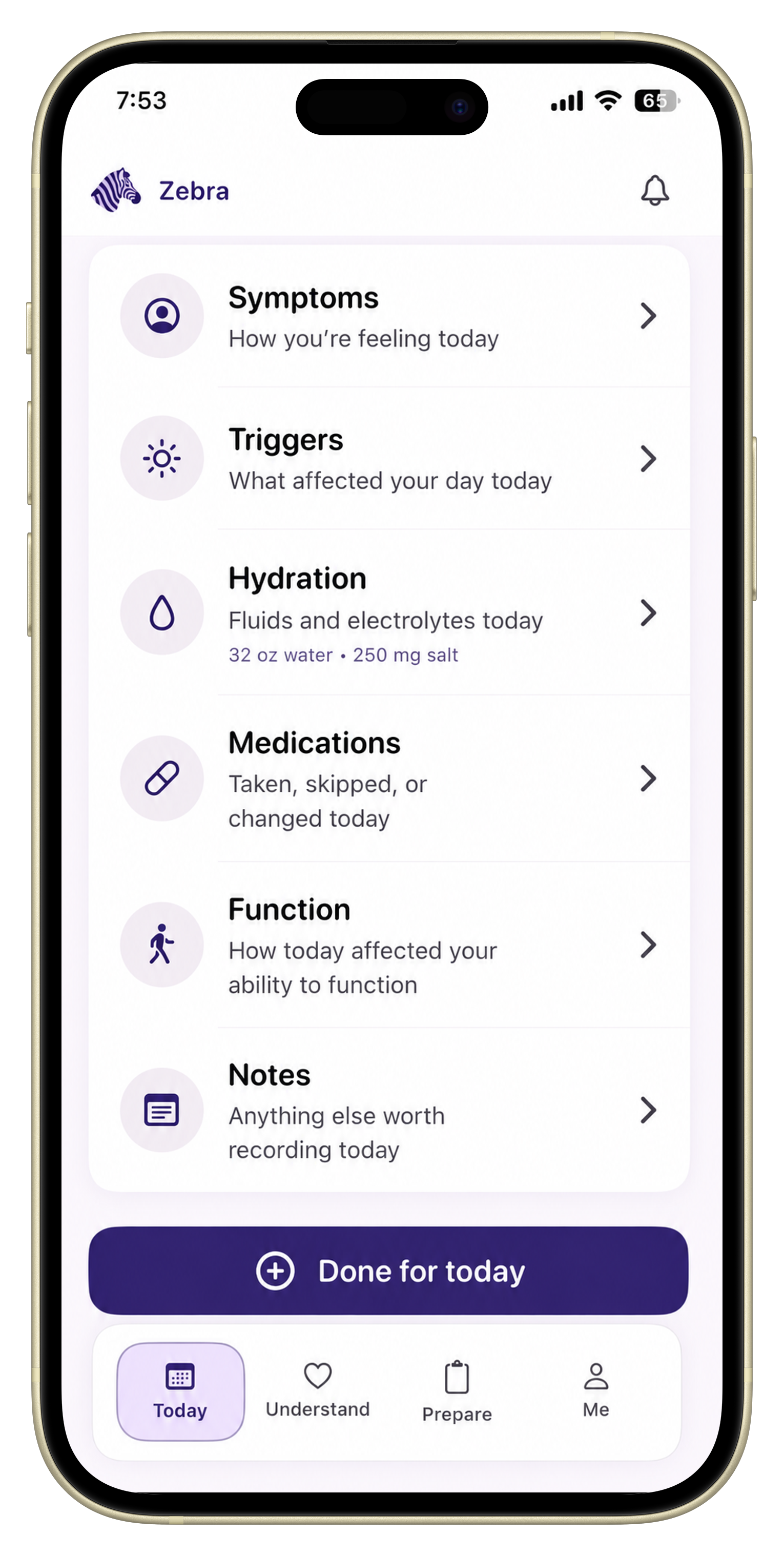
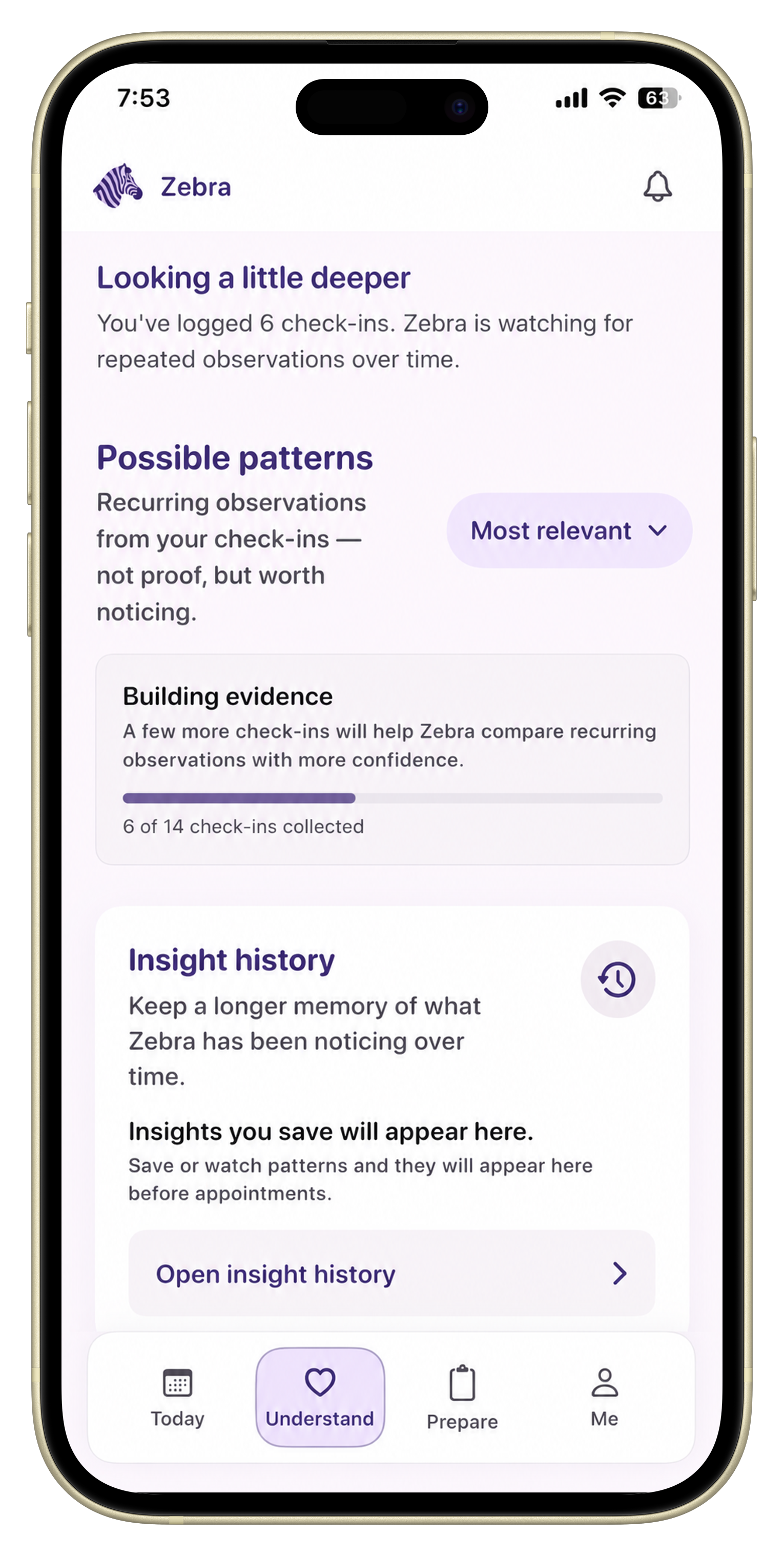
Zebra helps keep coat-hanger pain, limb heaviness, fatigue, dizziness, hydration, medications, triggers, orthostatic observations, and functional impact in one timeline.
It does not diagnose the cause of neck pain or heavy limbs. It helps you bring a clearer pattern to the appointment.
Coat-hanger pain usually describes aching or pain across the back of the neck, shoulders, and upper back. In autonomic disorders, it may be worse upright and improve after sitting or lying down.
Track location, severity, posture, time upright, triggers, recovery time, related symptoms, vitals if available, medications, hydration, and functional impact.
Some people with orthostatic intolerance or orthostatic hypotension report weakness, heaviness, fatigue, or reduced stamina while upright. Your clinician should interpret whether it fits your condition.
Ask your clinician what is urgent for you. Seek urgent care for symptoms such as chest pain, trouble breathing, sudden weakness, one-sided symptoms, fainting injury, severe new headache, or symptoms that feel unusual or severe.
No. Zebra helps organize patient-entered history for appointments. It does not diagnose, treat, or replace medical care.
Put this into practice
Use Zebra to keep coat-hanger pain, limb heaviness, posture, triggers, vitals, hydration, and medication notes in one timeline.
Download ZebraKnowledge hub
Keep exploring
A practical guide to tracking near-fainting, lightheadedness, and strange dysautonomia episodes without relying on memory.
A practical guide to tracking sick-day POTS flares, infection symptoms, fever, hydration, salt, medication timing, heart rate, dizziness, fatigue, recovery, and doctor-ready summaries.
A practical guide to tracking morning POTS symptoms, getting out of bed, hydration, salt, breakfast, medication timing, heart rate, blood pressure, dizziness, brain fog, recovery, and doctor-ready summaries.
A practical guide to tracking palpitations, racing heart, skipped beats, heart rate, posture, dizziness, triggers, medication context, recovery, and appointment-ready summaries.