Some people with POTS, dysautonomia, orthostatic intolerance, EDS or HSD overlap, Long COVID, or chronic illness notice leg or foot color changes when upright. Legs may look red, purple, mottled, dusky, or swollen. Feet may feel heavy, cold, hot, tight, painful, or hard to move. Symptoms may improve after sitting, lying down, elevating legs, cooling, fluids, salt, or compression.
A blood pooling symptom tracker does not diagnose POTS, dysautonomia, vascular disease, Raynaud’s, acrocyanosis, clotting problems, or any other condition. It helps you bring a clearer standing-related pattern to a clinician who can evaluate it.
Start With Position And Time Upright
Blood pooling notes are most useful when they show the relationship to gravity and time.
Track:
- lying, sitting, standing, walking, showering, or exercising
- how long you were upright
- whether symptoms started immediately or after several minutes
- whether you were standing still or moving
- whether heat, showering, meals, or exertion were nearby
- whether symptoms improved when you sat or lay down
- how long recovery took
Example: “Standing in kitchen 18 minutes. Feet turned purple-red, calves heavy, dizziness 5/10, HR 124 standing. Sat with legs up, color improved in 12 minutes.”
That gives your clinician a reviewable sequence.
Describe The Color Change Clearly
Use plain visual language. You do not need to label the medical cause.
Helpful descriptions:
- red
- purple
- blue-purple
- mottled
- blotchy
- dusky
- pale
- white
- one foot or both feet
- hands, feet, legs, or toes
- color changed only when standing
- color improved with elevation
- color stayed even after rest
If safe and your clinician finds it helpful, you may take a photo for your own medical discussion. Do not rely on photos alone; timing and symptoms matter too.
Add Swelling, Heaviness, Pain, And Temperature
Color is only one part of the story.
Track whether you felt:
- swelling
- tight skin
- heaviness
- aching
- burning
- tingling
- numbness
- cold feet
- hot feet
- calf pain
- foot pain
- leg weakness
- trouble standing still
- needing to sit or move legs
Also note whether the pattern is one-sided or both-sided. Sudden one-sided swelling or pain deserves prompt medical advice.
Keep Orthostatic Symptoms Nearby
Blood pooling notes are more useful for POTS and dysautonomia when they stay connected to whole-body symptoms.
Track whether color changes happened with:
If you already measure heart rate or blood pressure as part of your care plan, note the number and position. Do not start constant checking if it worsens symptoms or anxiety.
Add Compression, Hydration, And Salt Context
Clinicians may ask whether support strategies change symptoms.
Record:
- water intake that day
- electrolytes
- salt intake if your clinician recommends it
- compression garments used or not used
- compression type: socks, stockings, leggings, abdominal compression
- compression strength if you know it
- whether symptoms changed with compression
- heat, shower, or warm room
- medication timing
- missed meals
- menstrual cycle context if relevant
Do not change salt, fluids, compression, or medications based on an app record alone. Use the pattern for a care conversation.
Track What Helped And How Fast
Recovery gives context.
Log whether symptoms improved with:
- sitting
- lying down
- leg elevation
- walking instead of standing still
- compression
- fluids
- electrolytes
- cooling
- food
- medication already prescribed for you
- time
Then add how long it took. “Improved in 5 minutes” and “took two hours to settle” are different patterns.
Know What Should Be Urgent
Seek urgent medical care for:
- sudden one-sided leg swelling
- severe calf pain
- chest pain
- new shortness of breath
- fainting with injury
- a limb that is cold, pale, numb, or weak
- loss of pulse
- sudden neurologic symptoms
- symptoms your clinician has told you are urgent
Tracking can wait. Safety comes first.
What To Summarize Before The Appointment
Before a cardiology, neurology, vascular, primary care, EDS, Long COVID, or dysautonomia appointment, summarize:
- where color changes happen
- what color you notice
- whether one side or both sides are involved
- how long you can stand before symptoms start
- whether walking is different from standing still
- whether heat or showers make it worse
- whether sitting, lying down, or elevation helps
- whether compression helps
- hydration and salt context
- heart rate or blood pressure context, if measured
- dizziness, fainting, pain, swelling, or functional impact
- any urgent or new symptoms
Helpful questions:
- “Could this pattern fit blood pooling, acrocyanosis, Raynaud’s, circulation issues, or something else?”
- “Should I track photos, standing time, heart rate, blood pressure, or symptoms?”
- “What symptoms should be urgent?”
- “What compression or hydration plan is appropriate for me?”
- “Would this change my POTS or dysautonomia evaluation?”
Source Context
Helpful background:
Where Zebra Fits
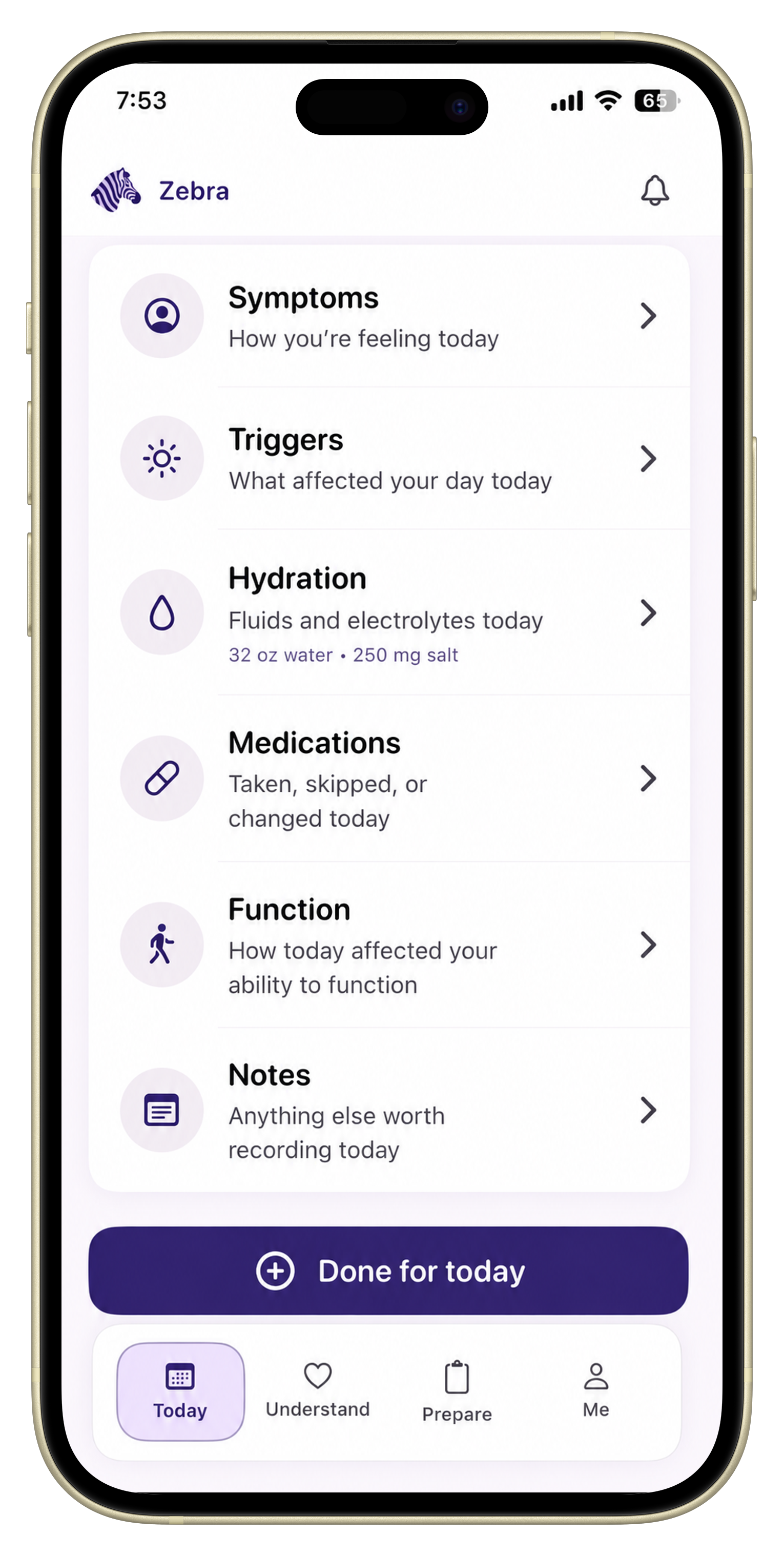
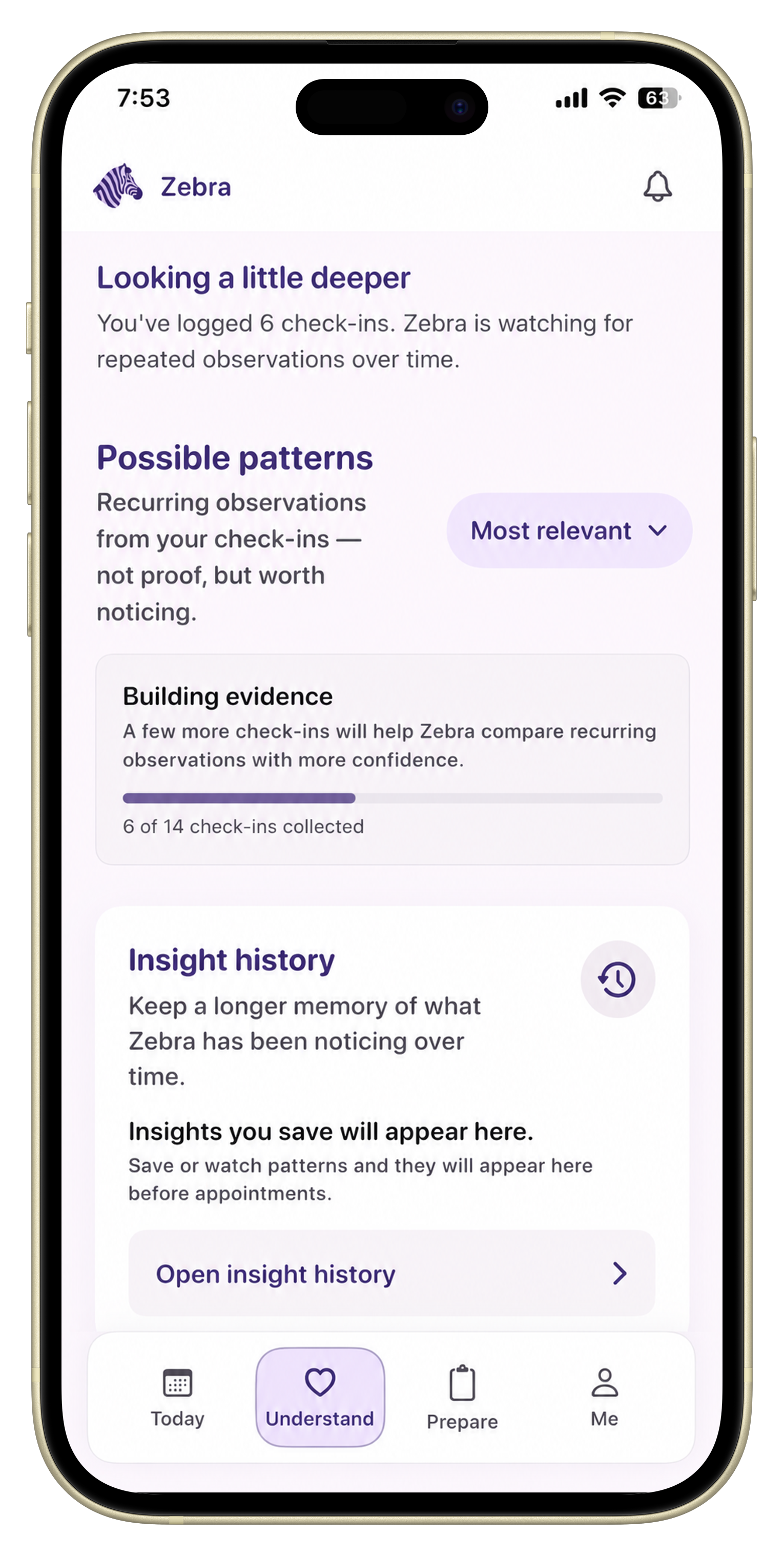
Zebra helps keep color changes, standing time, posture, dizziness, heart rate context, compression, hydration, salt, recovery, functional impact, and appointment questions in one timeline.
It does not diagnose blood pooling or circulation problems. It helps you bring clearer notes to the clinician who can evaluate your pattern.
Key Takeaways
- Track color changes with standing time, posture, symptoms, compression, hydration, salt, and recovery.
- Describe what you see without trying to label the diagnosis.
- One-sided sudden swelling, severe pain, chest pain, shortness of breath, or a cold pale limb needs urgent care.
- A short, consistent diary can make standing-related blood pooling patterns easier to discuss.
Put this into practice
Download Zebra
Use Zebra to keep blood pooling, leg color changes, posture, dizziness, compression, hydration, salt, recovery, and appointment questions in one timeline.
Download Zebra