Illness and Infection POTS Flare Tracker: What to Log
A practical guide to tracking sick-day POTS flares, infection symptoms, fever, hydration, salt, medication timing, heart rate, dizziness, fatigue, recovery, and doctor-ready summaries.

Zebra
For invisible chronic illness
Dysautonomia
Travel-day notes are most useful when flights, car rides, walking, standing in lines, heat, missed meals, fluids, salt, compression, medication timing, dizziness, heart rate, fatigue, brain fog, recovery, and functional impact stay connected. The goal is not to make travel perfect. The goal is to bring clearer patterns to your clinician before the next trip.
For some people with POTS, dysautonomia, orthostatic intolerance, Long COVID, EDS or HSD overlap, ME/CFS, migraine, or chronic illness, travel can turn many small triggers into one hard day.
A flight, road trip, train ride, long appointment day, airport transfer, hotel check-in, theme park visit, conference, wedding, or family visit may include early alarms, poor sleep, skipped meals, lower fluids, heat, terminal walking, standing in lines, carrying bags, sitting still, time-zone changes, medication timing changes, and recovery after the trip.
A travel day symptom tracker does not diagnose POTS, dysautonomia, dehydration, blood clots, medication effects, anxiety, infection, or any other condition. It helps you bring a clearer travel pattern to your clinician: what happened before, during, and after the trip.
Travel notes should begin with the shape of the day.
Track:
Example: “Flight day. Woke 4:45 a.m., missed breakfast, stood in security 35 minutes, walked two terminals, wore compression, drank less because aisle seat was not available. Dizziness and heart racing worse by boarding.”
That note is much easier to review than “travel destroyed me.”
Travel can make symptoms harder to understand because several stressors happen at once.
Useful categories:
Try writing “security line plus low fluids” or “long car ride plus missed lunch” instead of deciding the cause too early. The pattern is more useful when it stays specific.
Some symptoms happen while standing, walking, boarding, driving, or sitting. Others show up after arrival or the next day.
Track whether you noticed:
If symptoms are severe, new, one-sided, associated with chest pain or severe shortness of breath, or different from your usual pattern, follow your clinician’s guidance about urgent care.
Travel often changes the routines that make symptoms more predictable.
Track:
Do not change fluids, salt, compression, medication, or supplements based on a tracker alone. Use your notes to ask what travel plan is safe for your body and your medical history.
The most important travel detail may be what happens after arrival.
Write:
“Recovered after one hour” and “lost three days after the flight” are different medical details.
Before a primary care, cardiology, neurology, dysautonomia, Long COVID, EDS, or rehabilitation appointment, summarize:
Useful questions:
Helpful background:
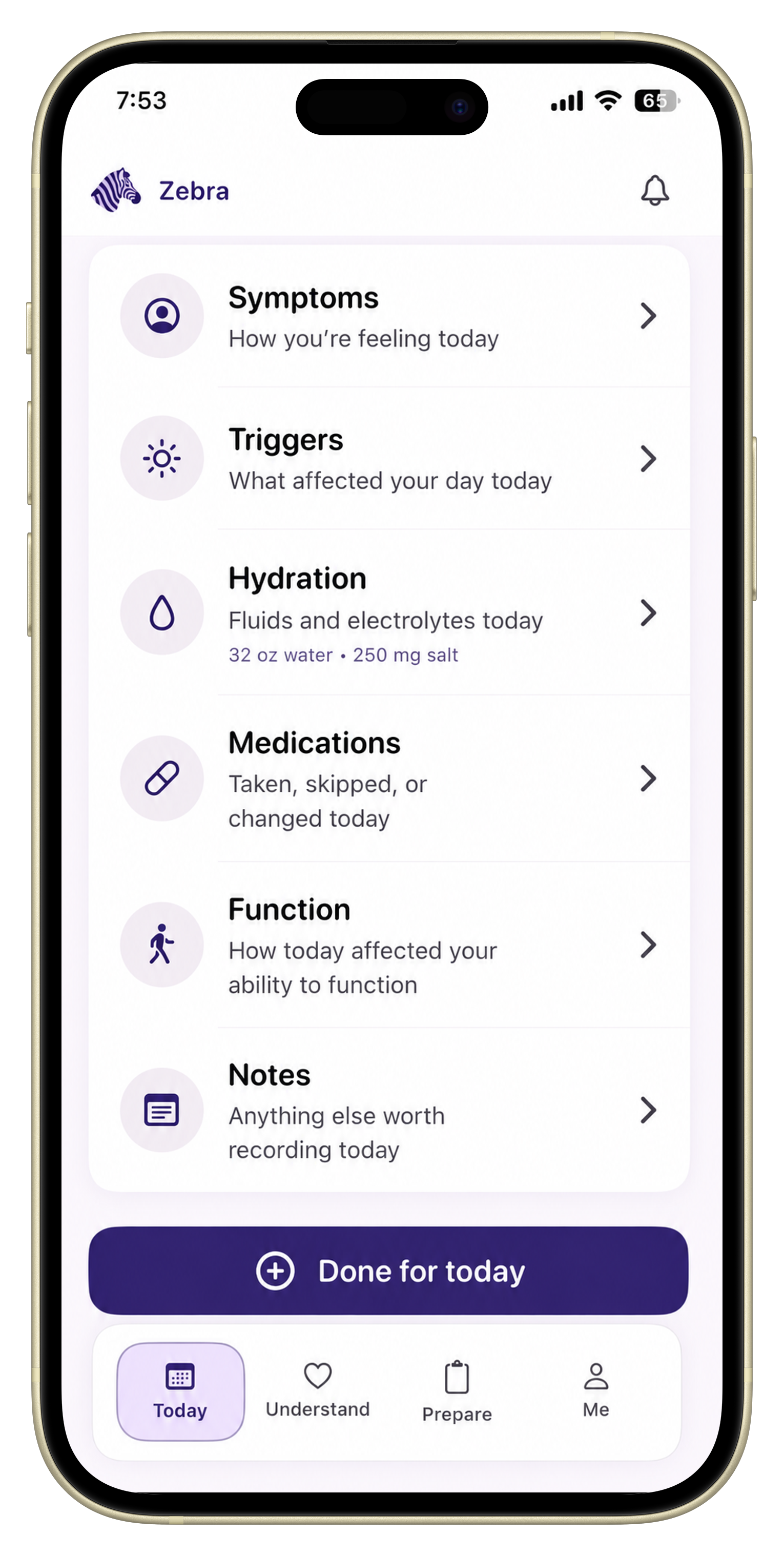
Zebra helps keep travel context, symptoms, hydration, salt, compression, medications, recovery, functional impact, and appointment questions in one timeline.
It does not diagnose travel symptoms or tell you how to travel safely. It helps you bring a clearer, doctor-ready travel pattern to the clinician who can advise you.
Put this into practice
Use Zebra to keep travel triggers, hydration, salt, medications, compression, symptoms, recovery, and appointment questions in one timeline.
Download ZebraKnowledge hub
Keep exploring
A practical guide to tracking sick-day POTS flares, infection symptoms, fever, hydration, salt, medication timing, heart rate, dizziness, fatigue, recovery, and doctor-ready summaries.
A practical guide to tracking morning POTS symptoms, getting out of bed, hydration, salt, breakfast, medication timing, heart rate, blood pressure, dizziness, brain fog, recovery, and doctor-ready summaries.
A practical guide to tracking symptoms while standing in line, shopping, waiting, commuting, hydration, salt, compression, heart rate, dizziness, palpitations, recovery, and doctor-ready summaries.
A practical guide to tracking shower and bath symptoms, water temperature, standing time, sitting support, dizziness, heart rate, palpitations, nausea, sweating, recovery, and appointment summaries.