For some people with POTS, dysautonomia, orthostatic intolerance, Long COVID, EDS or HSD overlap, ME/CFS, migraine, or chronic illness, a cold, stomach bug, fever, COVID, flu, sinus infection, urinary symptoms, or another illness can make the usual symptom pattern harder to read.
An illness and infection flare tracker does not diagnose an infection, POTS, dysautonomia, dehydration, medication effects, or any other condition. It helps you bring clearer context to a clinician: what illness symptoms were present, what changed in your usual baseline, what helped, and how long recovery took.
Start With The Illness Context
Write the sick-day details that changed your body’s normal pattern.
Track:
- sore throat, cough, congestion, fever, chills, stomach symptoms, urinary symptoms, rash, or pain
- symptom start date
- temperature, if measured
- COVID, flu, or other test results, if applicable
- sleep disruption
- appetite changes
- vomiting or diarrhea
- missed meals
- reduced fluids
- whether you were already in a flare
Example: “Day 2 of cold, low fever, poor sleep. Dizziness much worse after standing, HR higher than usual walking to bathroom, fluids lower because nausea.”
That note keeps the infection context connected to the POTS pattern.
Track What Changed From Baseline
The key question is not only “What symptoms did I have?” It is “What was different from my usual?”
Useful comparisons:
- dizziness worse than baseline
- heart rate higher than usual
- palpitations more frequent
- more faintness when standing
- brain fog or fatigue worse
- showering harder
- standing time shorter
- more time in bed
- slower recovery after basic tasks
If you already keep baseline symptoms in Zebra, compare the sick day to that usual pattern.
Add Fluids, Salt, Meals, And Medication Context
Illness can change hydration, food, and medication timing.
Track:
- water and electrolytes
- salt intake if recommended by your clinician
- missed meals
- nausea or low appetite
- vomiting or diarrhea
- fever or sweating
- medication timing
- missed doses
- over-the-counter medications
- recent prescription changes
Do not change fluids, salt, medications, or supplements based on a tracker alone. Use the pattern to ask what sick-day plan is safe for your situation.
Track Upright Symptoms During Illness
POTS and dysautonomia symptoms may look different when your body is fighting illness.
Track:
If symptoms are severe, new, one-sided, or different from your usual pattern, follow your clinician’s guidance about urgent care.
Record Recovery And Functional Impact
Recovery may take longer than the infection itself.
Write:
- when fever or acute illness symptoms improved
- when orthostatic symptoms returned to baseline
- whether fatigue, brain fog, headache, or dizziness lingered
- days missed from work, school, appointments, exercise, chores, or caregiving
- whether you needed help
- whether symptoms returned after trying normal activity
“Cold symptoms gone but standing still worse after six days” is an important appointment detail.
What To Summarize Before A Doctor Visit
Before a primary care, cardiology, neurology, Long COVID, EDS, dysautonomia, or rehabilitation appointment, summarize:
- illness start date and main symptoms
- fever, vomiting, diarrhea, poor intake, or dehydration concerns
- what changed from baseline
- heart rate or blood pressure context, if already measured
- medication changes or missed doses
- fluids, salt, and meal context
- recovery timeline
- functional impact
- any fainting, chest pain, severe shortness of breath, confusion, dehydration signs, new neurological symptoms, or clinician-defined urgent symptoms
Useful questions:
- “Do I need a sick-day plan for fluids, salt, medications, or monitoring?”
- “Which symptoms should be urgent for me?”
- “Could this illness explain the flare, or should we look for another cause?”
- “How long should I expect recovery to take?”
- “When should I restart normal activity or appointments?”
Source Context
Helpful background:
Where Zebra Fits
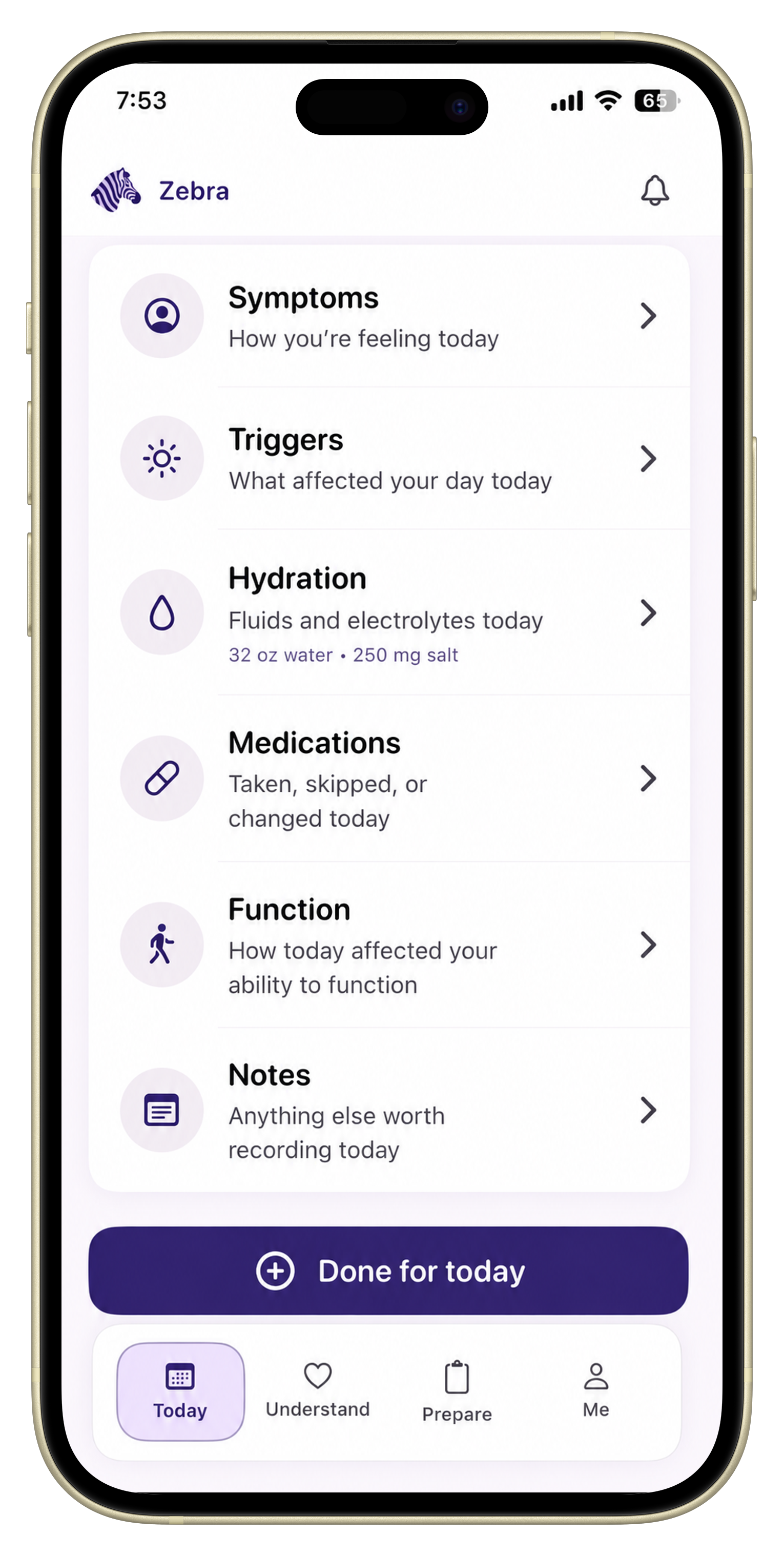
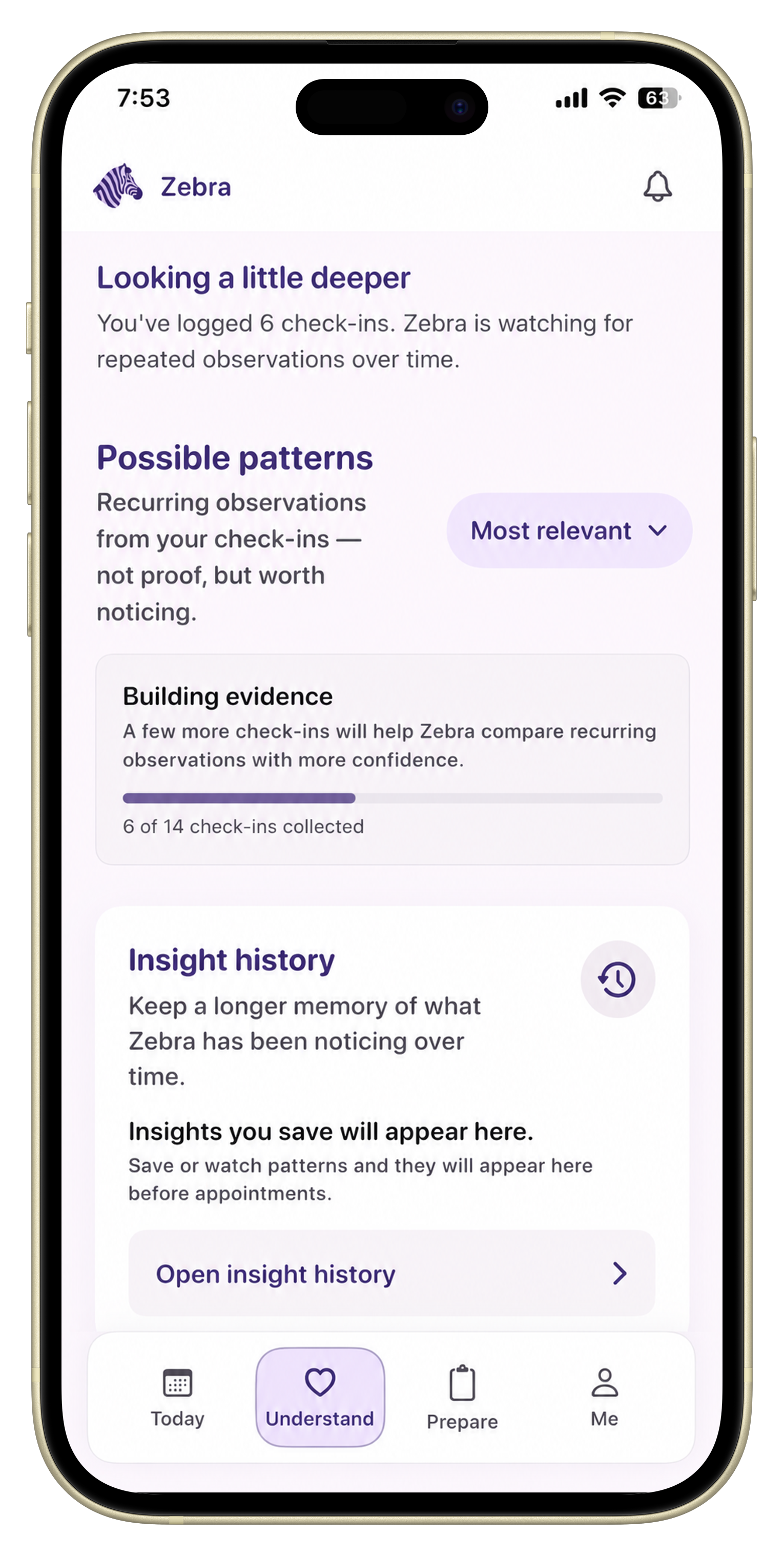
Zebra helps keep illness symptoms, flare changes, hydration, salt, medications, recovery, functional impact, and appointment questions in one timeline.
It does not diagnose infection or autonomic conditions. It helps you bring a clearer, doctor-ready sick-day flare pattern to the clinician who can evaluate it.
Key Takeaways
- Track illness symptoms, fever, fluids, salt, meals, medications, upright symptoms, recovery, and functional impact together.
- Compare sick days to your usual baseline so changes are easier to see.
- Recovery after illness can be part of the flare pattern.
- Use tracking to ask safer sick-day questions, not to self-diagnose or change treatment alone.
Put this into practice
Download Zebra
Use Zebra to keep illness symptoms, flare changes, hydration, salt, medications, recovery, and appointment questions in one timeline.
Download Zebra