Doctor Appointment Symptom Checklist
A practical symptom checklist for preparing clearer notes before a doctor, specialist, or cardiology appointment.

Zebra
For invisible chronic illness
Appointment Preparation
Preparing for a specialist appointment with chronic illness is usually less about bringing more information and more about bringing the right information in a format you can actually use. The goal is to walk in knowing what changed, what is affecting daily life, what you have tried, and what you want help with.
Preparing for a specialist appointment with chronic illness is usually less about bringing more information and more about bringing the right information in a format you can actually use. The goal is to walk in knowing what changed, what is affecting daily life, what you have tried, and what you want help with.
That sounds simple until brain fog, fatigue, dismissal history, and scattered notes get involved. A strong appointment-prep system reduces that pressure before the visit starts.
Good preparation helps you do four things:
It is not about making yourself look perfect. It is about making the visit easier to use.
Your summary should answer:
Keep it short enough that you can actually use it.
A specialist often needs the sequence:
This helps your history feel coherent instead of scattered.
The list does not need to be fancy. It needs to be accurate and easy to review. Include:
If the appointment is cardiology or dysautonomia-related, bring the home numbers that support the discussion. If the appointment is about pain, function, or fatigue, a clean symptom history may matter more than a spreadsheet full of vitals.
Many people prepare symptoms and forget the questions that made them schedule the appointment in the first place.
Use a short list:
Examples:
If you do not define this in advance, it is easier to leave feeling unsatisfied even if the visit was reasonable.
You do not need to recreate your whole history. You need the part that helps the current visit.
The night before is not the time to build the whole system from scratch.
The AHRQ Questions Are the Answer materials are useful here because they encourage people to bring written questions and ask for explanations in plain language.
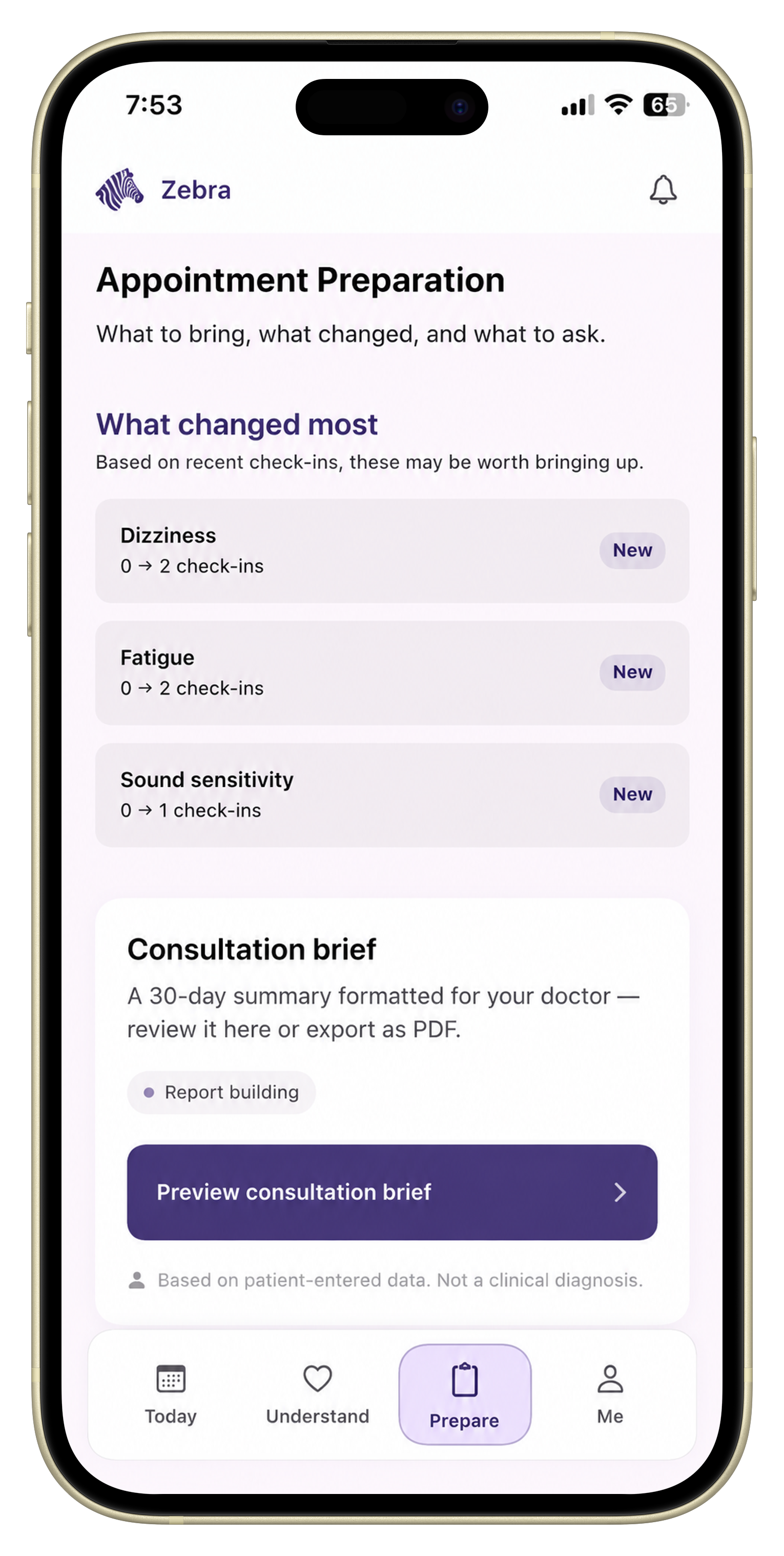
Zebra is built for the month before the appointment, not just the ten minutes inside it. It helps you keep symptoms, flares, meds, function changes, and related observations in one history so you are not rebuilding them from memory at the last minute.
That history can then support a doctor-ready report and a cleaner visit summary.
Focus on recent symptom changes, function impact, medication changes, relevant measurements, and the top questions you want answered.
Usually the last 2 to 4 weeks are the most useful, plus any major older changes that still shape the current problem.
Use a written symptom summary and question list so you can refer to them when brain fog or stress makes it harder to speak clearly.
No. A short structured summary is usually more useful than a large pile of raw notes.
Put this into practice
Use Zebra to organize the month before your appointment.
Download ZebraKnowledge hub
Keep exploring
A practical symptom checklist for preparing clearer notes before a doctor, specialist, or cardiology appointment.
A practical guide to choosing a symptom tracker that helps before specialist and follow-up appointments.
Learn what to track before a specialist appointment, including symptoms, flares, medications, function changes, and your top questions.
Learn how to organize symptom history, medications, function changes, and questions into a clear doctor-visit summary.