Symptom Tracking for Chronic Illness: How to Build Doctor-Ready Proof
Learn how to turn symptom tracking into doctor-ready proof with a simple framework for symptoms, flares, function, and appointment prep.

Zebra
For invisible chronic illness
Symptom Tracking
Medication changes are easier to discuss later when they stay connected to the flare, symptoms, timing, and daily context around them. The goal is not to interpret medication effects yourself. It is to keep a careful patient-entered record you can review with a clinician.
Medication changes are easier to discuss later when they stay connected to the flare, symptoms, timing, and daily context around them. The goal is not to interpret medication effects yourself. It is to keep a careful patient-entered record you can review with a clinician.
If you manage chronic illness, medication notes can get scattered quickly. A change might live in a portal message, a pharmacy receipt, a notes app, or memory. During a flare, that is a lot to reconstruct.
Track changes that are relevant to your care conversation.
Examples:
Do not use a tracker to make medication decisions on your own. Use it to preserve the history you want to discuss.
Keep the entry simple:
This makes it easier to review later than a note that only says “bad flare.”
Timing can help you explain the sequence.
Useful timing notes include:
Timing does not prove cause. It helps the conversation stay clear.
Medication notes are less useful when separated from symptoms.
For example, instead of writing:
write:
That gives you a better appointment note.
Avoid turning the record into a place for unsafe decisions.
Do not use it to:
The record is for organization and discussion.
Before a visit, pull out:
This can become part of a doctor-ready symptom report.
Zebra keeps medications, symptoms, flares, notes, and appointment questions in one timeline so medication context does not get separated from the rest of your health history.
If medication changes are relevant to your care conversation, tracking them beside symptoms and timing can make the history easier to review.
Useful details can include the date, what changed, symptom context, side effects or concerns, and questions for your clinician.
No. Tracking can preserve context for discussion, but it should not be treated as proof of cause or medical advice.
Put this into practice
Use Zebra to keep medication notes, flares, symptoms, and appointment questions in one record.
Download ZebraKnowledge hub
Keep exploring
Learn how to turn symptom tracking into doctor-ready proof with a simple framework for symptoms, flares, function, and appointment prep.
Learn what a symptom journal is, what belongs in one, and why structure matters for chronic illness tracking.
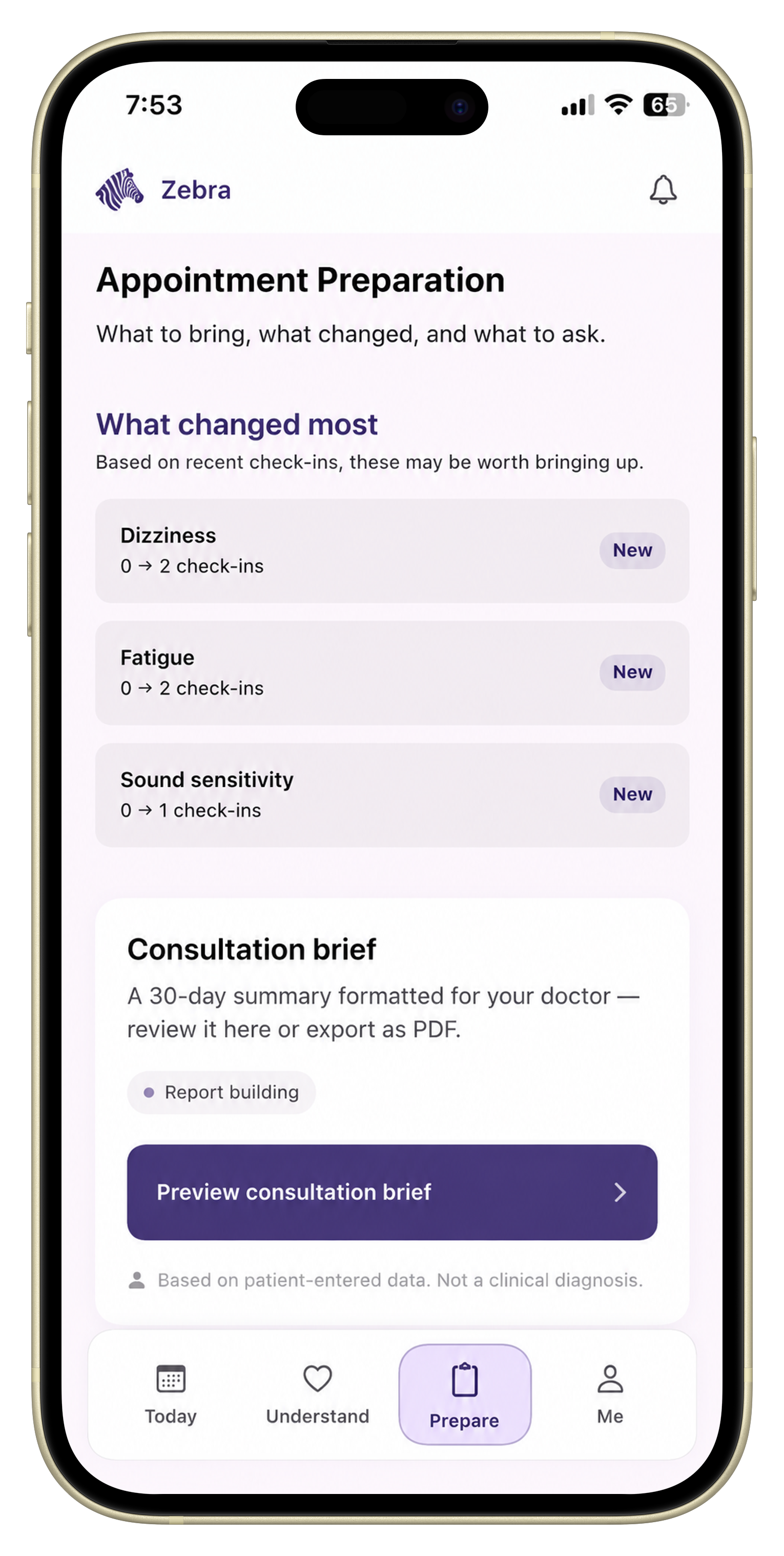
A simple framework for turning a month of symptom tracking into a clearer appointment-ready summary.
A practical framework for tracking how symptoms affect daily life before a doctor appointment.