What Is a Symptom Journal?
Learn what a symptom journal is, what belongs in one, and why structure matters for chronic illness tracking.

Zebra
For invisible chronic illness
Symptom Tracking and Proof
Symptom tracking for chronic illness matters most when it helps you explain what has been happening without rebuilding your history from memory. Doctor-ready proof is not about tracking every possible detail. It is about creating a clear record of symptoms, changes, function, and questions that you can actually use before an appointment.
Symptom tracking for chronic illness matters most when it helps you explain what has been happening without rebuilding your history from memory. Doctor-ready proof is not about tracking every possible detail. It is about creating a clear record of symptoms, changes, function, and questions that you can actually use before an appointment.
Many people with chronic illness already track something. The problem is that the record is often scattered across Notes, screenshots, memory, spreadsheets, and half-finished apps. The issue is not effort. The issue is whether that effort becomes something usable.
Doctor-ready proof does not mean a diagnosis. It does not mean one chart that proves everything. It means an organized patient-entered record that helps you discuss:
The purpose is communication, not certainty.
This is the simplest way to think about chronic illness tracking that actually leads somewhere.
Record the things most likely to matter later:
Look for what changed, not just what exists.
Examples:
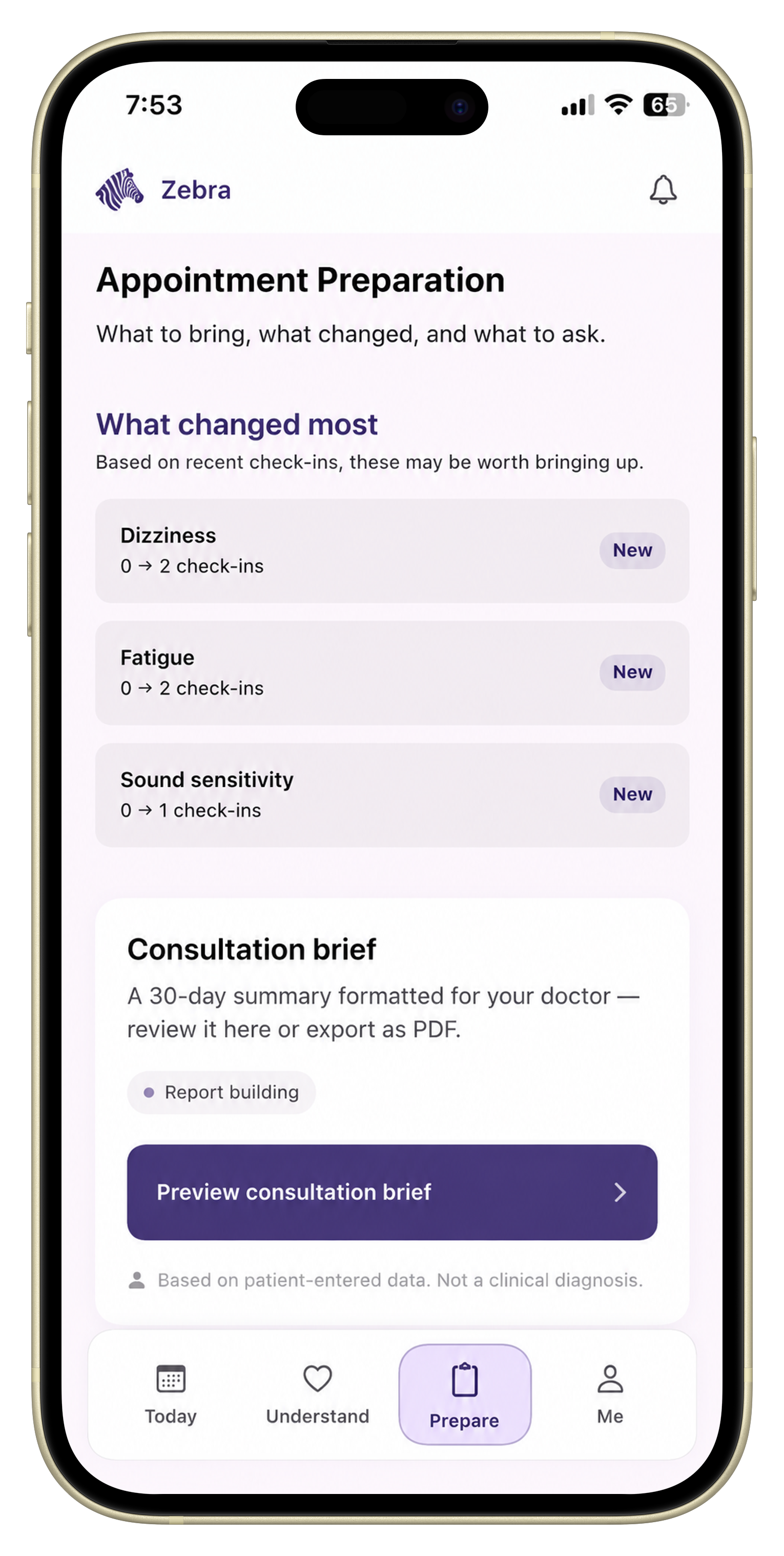
Before an appointment, pull the useful history forward:
Bring a clean summary, not a pile of raw notes.
This is the step most generic tracking systems fail to support well.
If your goal is doctor-ready proof, the most useful categories are:
You do not need a perfect full-body log. You need a record that helps future you explain the month clearly.
For many people with invisible illness, symptoms are not only hard to manage. They are hard to describe in a way that survives a short appointment. Brain fog, dismissal, rushed visits, and fragmented history make it easy to leave feeling like the important part never got said.
Tracking becomes more useful when it reduces that pressure.
Weak proof usually looks like:
That does not mean the tracking was pointless. It means the record never got organized for the moment it needed to be used.
Stronger proof usually includes:
It is easier to review, easier to discuss, and less dependent on perfect recall.
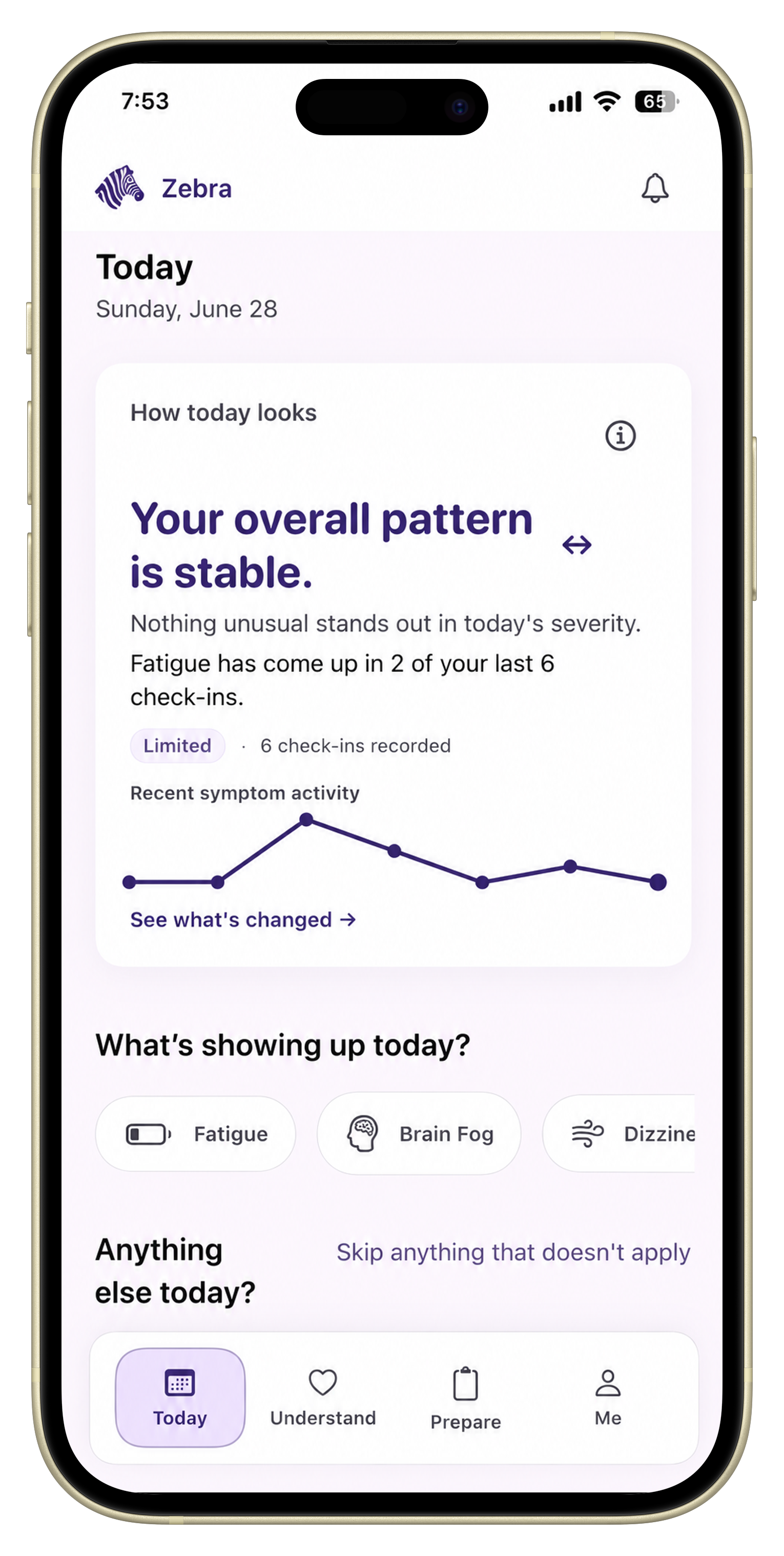
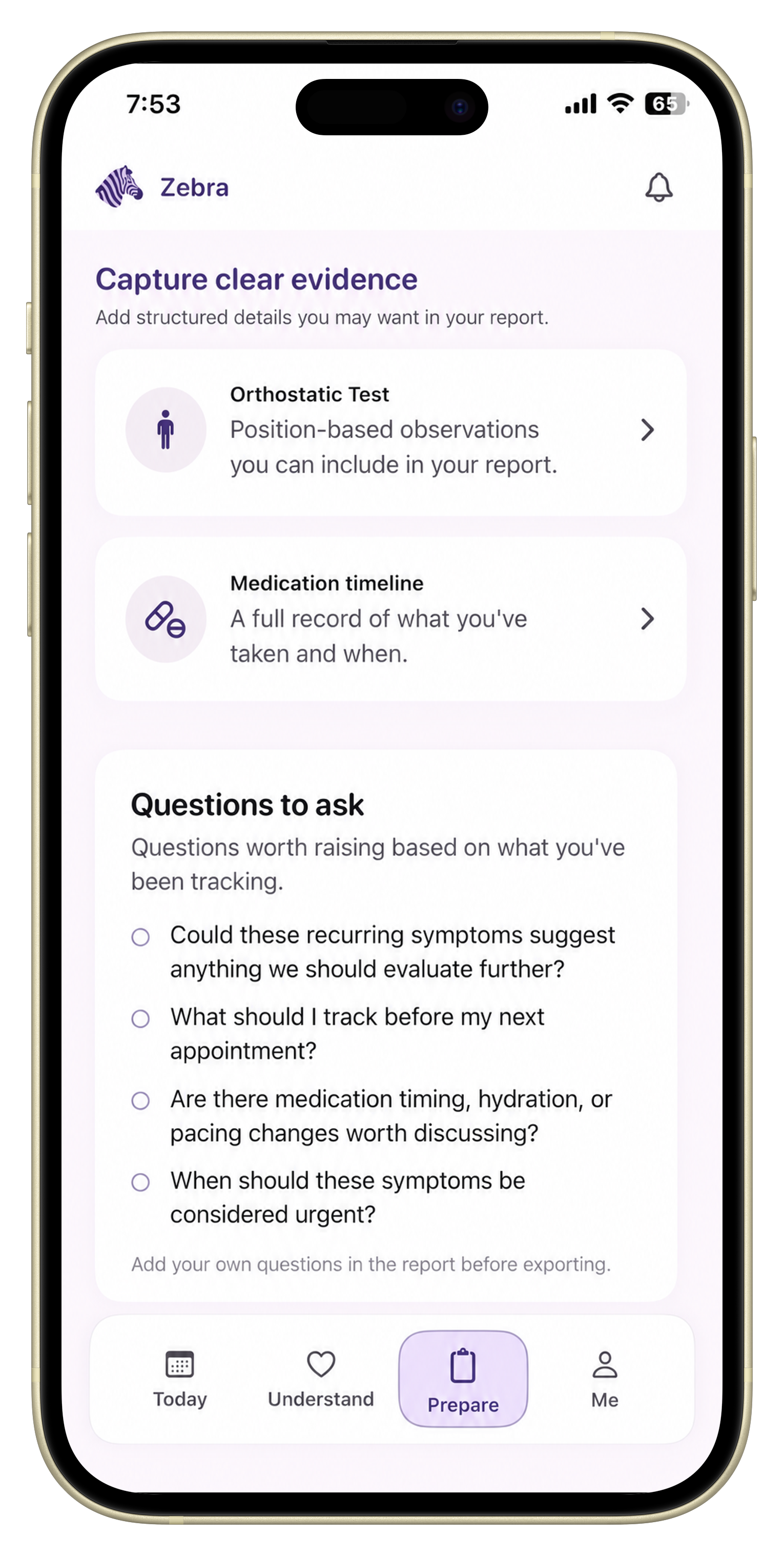
Zebra is built around this exact workflow. The point is not just to log symptoms. The point is to keep symptom history, flares, function, meds, hydration, and related observations together so they can become a doctor-ready report later.
Zebra does not diagnose conditions or control how a doctor will respond. It helps organize patient-entered history so the conversation is easier to prepare for.
Doctor-ready proof is an organized summary of patient-entered history that helps you explain symptoms, changes, and questions before an appointment.
No. Track the symptoms and context most likely to matter for understanding changes and preparing for appointments.
Clear timing, relevant symptom categories, functional impact, medication context, and a structure that is easy to review.
No. A symptom tracker can help organize history, but it does not diagnose conditions or replace medical evaluation.
Put this into practice
Start building doctor-ready proof in Zebra.
Download ZebraKnowledge hub
Keep exploring
Learn what a symptom journal is, what belongs in one, and why structure matters for chronic illness tracking.
A practical symptom checklist for preparing clearer notes before a doctor, specialist, or cardiology appointment.
A simple framework for turning a month of symptom tracking into a clearer appointment-ready summary.
A practical guide to keeping medication changes, flares, symptoms, and questions in one reviewable record.