How to Keep a Symptom Journal With Brain Fog
Learn how to keep a symptom journal with brain fog using a low-effort, structured system that still helps before appointments.

Zebra
For invisible chronic illness
Brain Fog and Difficult Days
To track brain fog symptoms for a doctor appointment, focus on when it happens, how it affects daily life, what changed around it, and how often it is showing up. Brain fog is hard to explain when it stays abstract. It becomes easier to discuss when you can point to what it actually did to your day.
To track brain fog symptoms for a doctor appointment, focus on when it happens, how it affects daily life, what changed around it, and how often it is showing up. Brain fog is hard to explain when it stays abstract. It becomes easier to discuss when you can point to what it actually did to your day.
Useful brain fog tracking can include:
Examples of function impact:
If brain fog is only described as “my thinking felt off,” it may not communicate how disruptive it really was. Functional impact makes the symptom more concrete.
You do not need a long paragraph every time. A strong entry might be:
That is enough to help later.
It may be useful to note whether brain fog tends to show up with:
This is context, not proof of cause.
Before the visit, pull out:
That turns brain fog from a vague complaint into a clearer history.
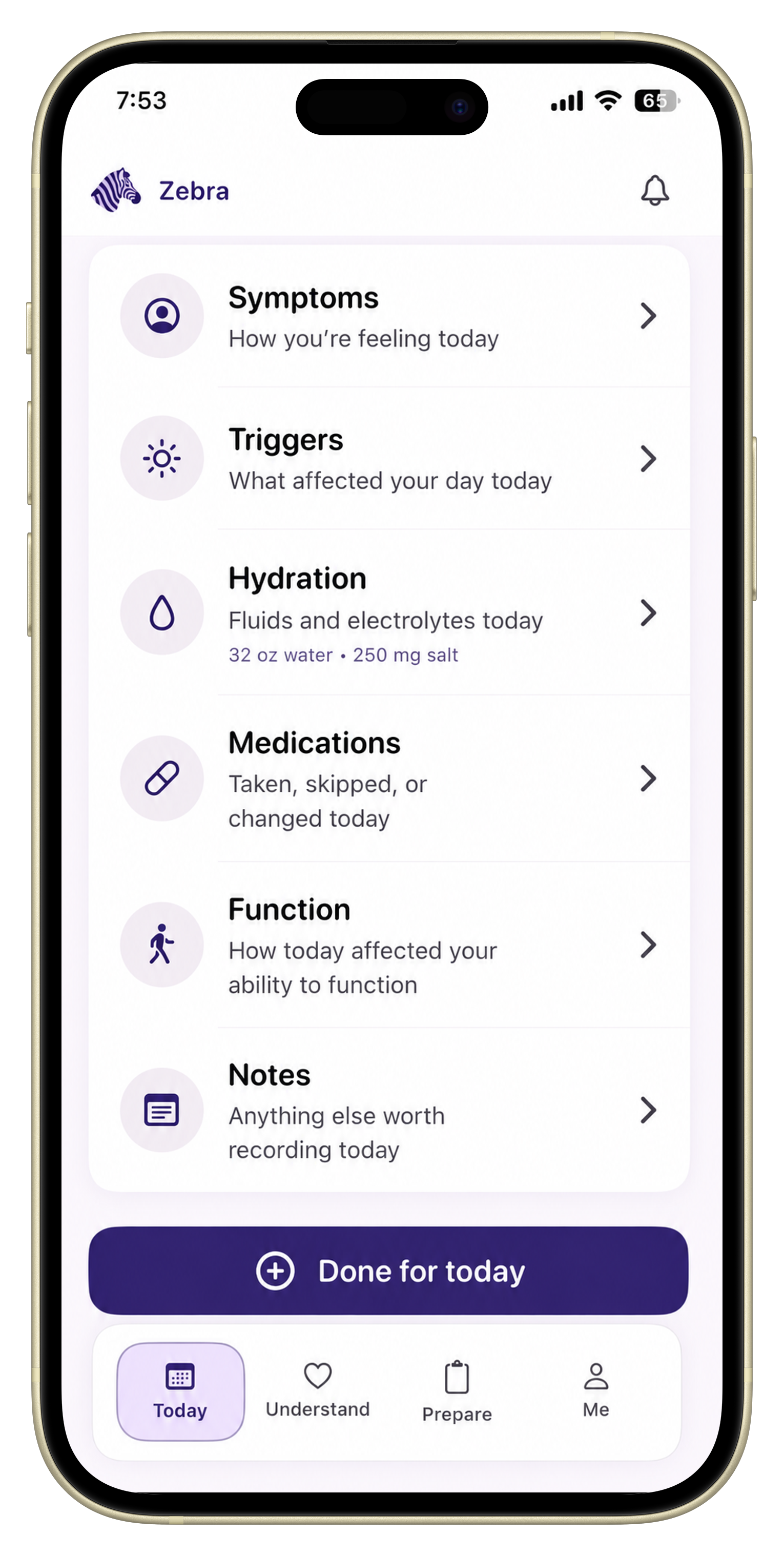
Zebra helps keep brain fog inside the same record as symptoms, flares, function, and other changes so it is easier to review before an appointment.
Track when it happens, how often it happens, what it affects, and what other symptoms or changes showed up around it.
Use concrete examples of what it changed in daily life, not only the label itself.
Not necessarily. A record of stronger or repeated episodes is often enough to make the pattern clearer.
Put this into practice
Use Zebra to keep brain fog and function changes in the same history.
Download ZebraKnowledge hub
Keep exploring
Learn how to keep a symptom journal with brain fog using a low-effort, structured system that still helps before appointments.
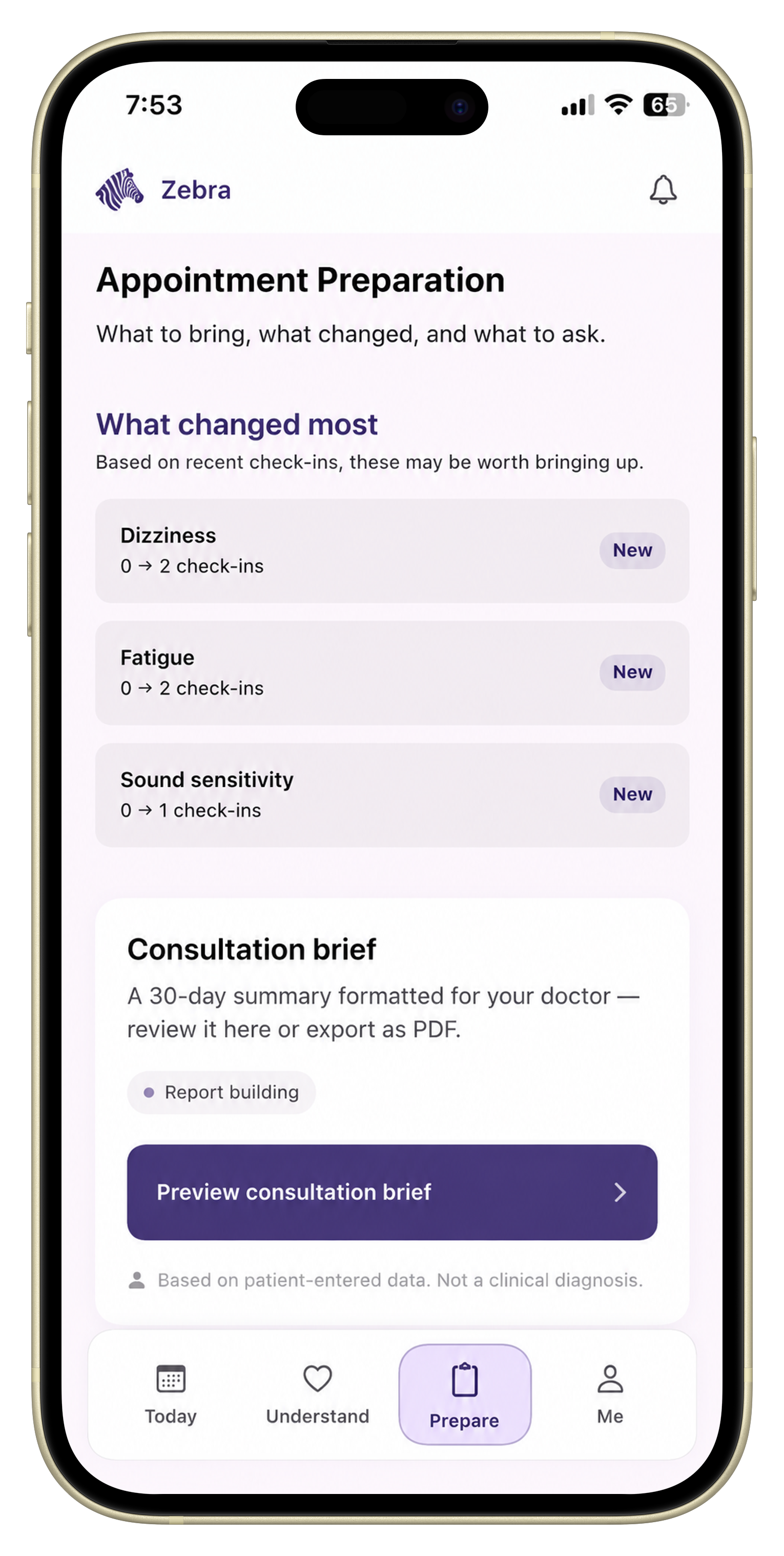
Learn how to summarize symptoms clearly for appointments without losing the details that matter most.
Learn why symptom tracking often falls apart on bad days and how a lower-effort approach can make it more sustainable.

Start symptom tracking without overloading yourself: a practical 7-day plan for logging symptoms, triggers, meds, recovery, and daily impact.