Illness and Infection POTS Flare Tracker: What to Log
A practical guide to tracking sick-day POTS flares, infection symptoms, fever, hydration, salt, medication timing, heart rate, dizziness, fatigue, recovery, and doctor-ready summaries.

Zebra
For invisible chronic illness
POTS
A positive tilt table test can leave you with more questions than answers. The useful next step is to track the symptoms, standing context, recovery time, medications, hydration, salt, and daily-life impact that help your clinician understand what the test result looks like outside the lab.

A positive tilt table test can leave you with more questions than answers. The useful next step is to track the symptoms, standing context, recovery time, medications, hydration, salt, and daily-life impact that help your clinician understand what the test result looks like outside the lab.
This matters because the test is only one piece of the story. Cleveland Clinic explains that a tilt table test monitors heart rate, blood pressure, and symptoms while your body moves from lying flat to upright. A positive result means your body responded abnormally during the test, but the meaning depends on the pattern and your medical history.
The goal after the test is not to diagnose yourself. The goal is to bring cleaner follow-up notes.
Before you track anything new, write down the exact language from the test report or after-visit summary.
Useful details include:
If the wording feels confusing, that is normal. Bring the exact wording to your follow-up instead of trying to translate it from memory.
The most useful post-test notes usually connect symptoms to position and time upright.
Track:
For people being evaluated for POTS, dysautonomia, or orthostatic intolerance, this context can matter as much as the symptom names.
You do not need to write a paragraph every time.
Use a short list:
Then add one sentence: “What was I doing when this started?”
That one sentence turns a symptom list into appointment context.
Only make changes your clinician recommends. But if hydration, salt, compression, or medication are already part of your care plan, track them beside symptoms.
Useful notes include:
The Heart Rhythm Society consensus statement notes that clinical history for suspected POTS should consider modifying factors and possible triggers, including dehydration, heat, alcohol, and exercise. Tracking these as context can make follow-up conversations more precise.
Functional impact is often the difference between “I felt dizzy” and “this changed my day.”
Write down examples like:
Clinicians cannot always see the cost of symptoms unless you bring real-life examples.
After a positive tilt table test, consider bringing questions like:
If you are worried about forgetting questions in the room, put them in your symptom tracker as soon as they come up.
Helpful background:
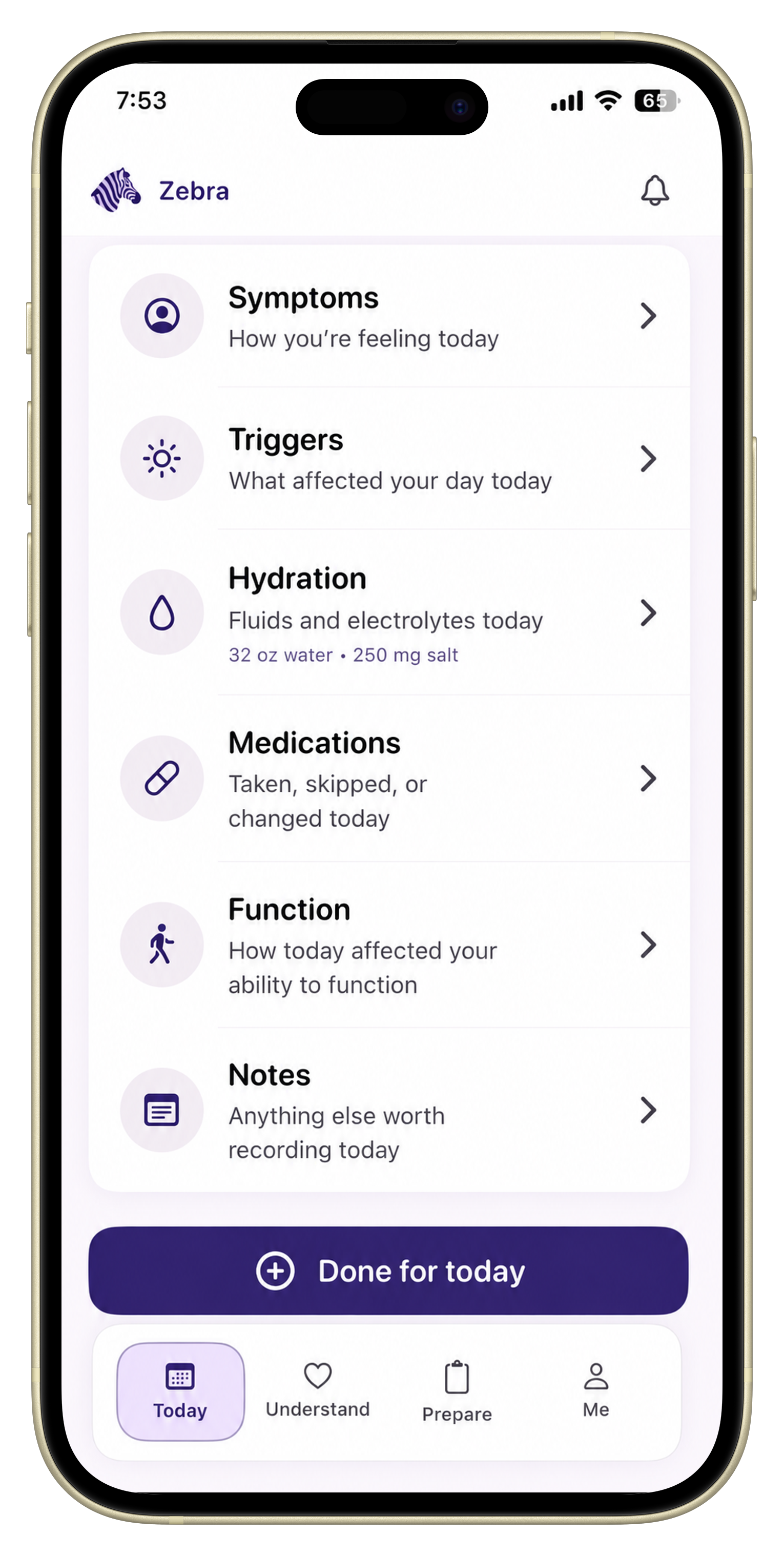
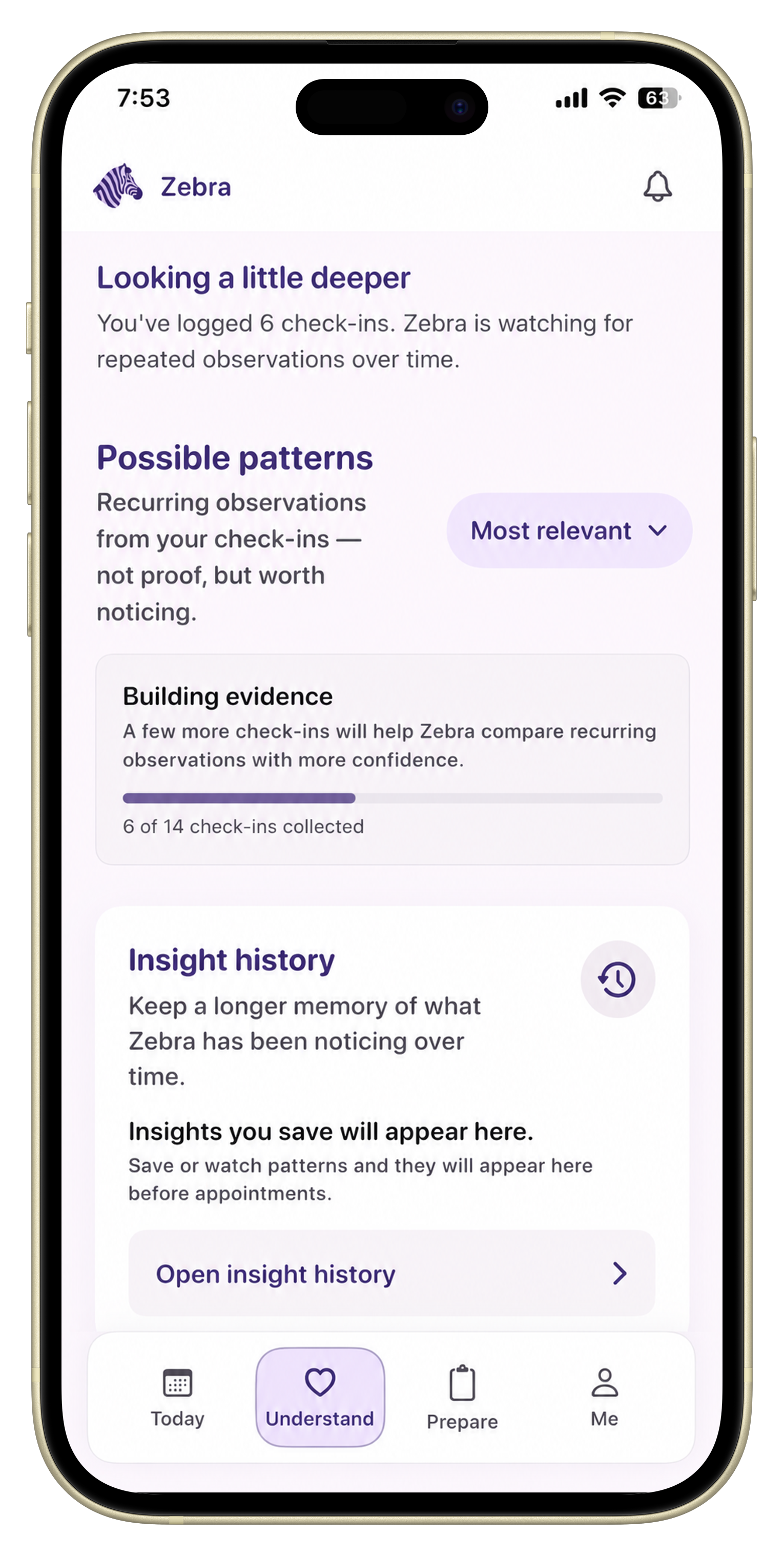
Zebra helps keep the after-test story in one place: symptoms, orthostatic observations, medications, hydration, salt, notes, triggers, and follow-up questions.
It does not interpret your test or diagnose POTS. It helps you organize what happens next so the follow-up appointment has less guessing.
Track symptoms, standing context, recovery time, medications, hydration, salt, functional impact, and questions for your follow-up appointment.
No. A positive result means your body responded abnormally during the test, but your clinician interprets the pattern with your symptoms, history, and other data.
If your clinician wants home observations, track them with position, timing, symptoms, and context. Do not change treatment based on numbers alone.
Commonly useful symptoms include dizziness, lightheadedness, fainting or near-fainting, palpitations, fatigue, brain fog, nausea, weakness, shakiness, and shortness of breath.
No. Zebra helps organize patient-entered history for appointments. It does not diagnose, treat, or replace medical care.
Put this into practice
Use Zebra to keep orthostatic symptoms, vitals, medications, hydration, salt, notes, and appointment questions in one timeline.
Download ZebraKnowledge hub
Keep exploring
A practical guide to tracking sick-day POTS flares, infection symptoms, fever, hydration, salt, medication timing, heart rate, dizziness, fatigue, recovery, and doctor-ready summaries.
A practical guide to tracking morning POTS symptoms, getting out of bed, hydration, salt, breakfast, medication timing, heart rate, blood pressure, dizziness, brain fog, recovery, and doctor-ready summaries.
A practical guide to tracking palpitations, racing heart, skipped beats, heart rate, posture, dizziness, triggers, medication context, recovery, and appointment-ready summaries.
A practical guide to tracking shower and bath symptoms, water temperature, standing time, sitting support, dizziness, heart rate, palpitations, nausea, sweating, recovery, and appointment summaries.