How to Track POTS Symptoms and Orthostatic Changes
Learn how to track POTS symptoms, upright changes, flares, and relevant home observations in one clear history.

Zebra
For invisible chronic illness
POTS and Dysautonomia Tracking
Hydration, salt, and compression garments are often tracked as separate habits, but they are more useful when they stay connected to symptoms, upright tolerance, and flare history. The point is not to prove what caused a better or worse day. It is to keep enough context to review what changed before an appointment.
Hydration, salt, and compression garments are often tracked as separate habits, but they are more useful when they stay connected to symptoms, upright tolerance, and flare history. The point is not to prove what caused a better or worse day. It is to keep enough context to review what changed before an appointment.
For people tracking POTS, dysautonomia, or orthostatic intolerance, support routines can matter because symptoms often shift with position, activity, fluids, heat, sleep, and daily stress. A simple record can help you discuss those shifts without rebuilding the whole month from memory.
Keep the categories small:
You do not need a perfect wellness log. You need a record that is clear enough to scan later.
Hydration, salt, and compression garments are only useful in a history when they have context.
For example:
These notes do not prove cause. They give your care team a clearer picture of what happened around the symptoms.
Use broad labels instead of exact numbers when exact numbers are too much.
Examples:
That level of detail is often enough for appointment preparation.
Add detail when something changes.
Useful moments to note:
Changes usually matter more than perfect totals.
Before a visit, look for:
The goal is a short appointment summary, not a long spreadsheet.
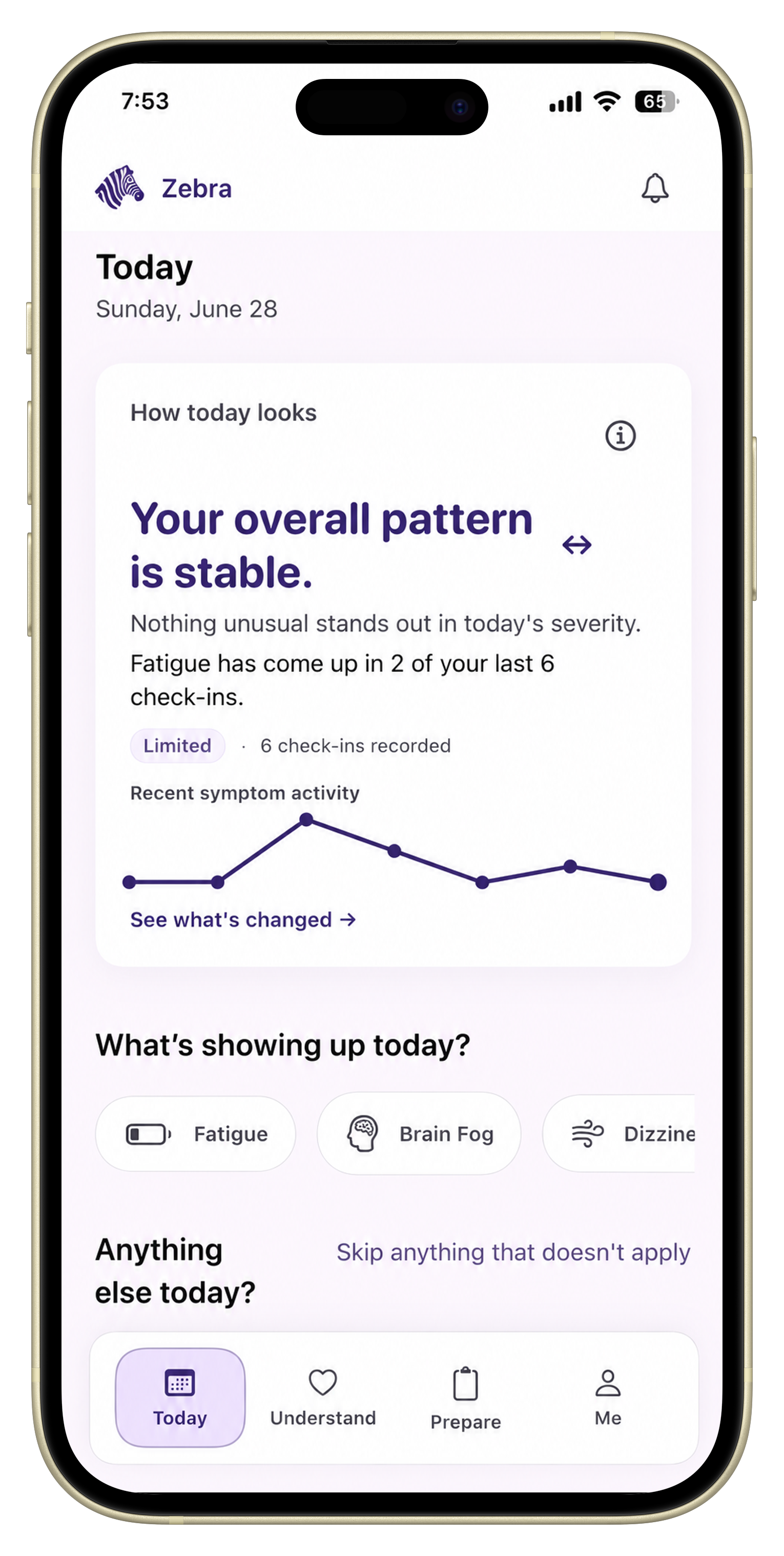
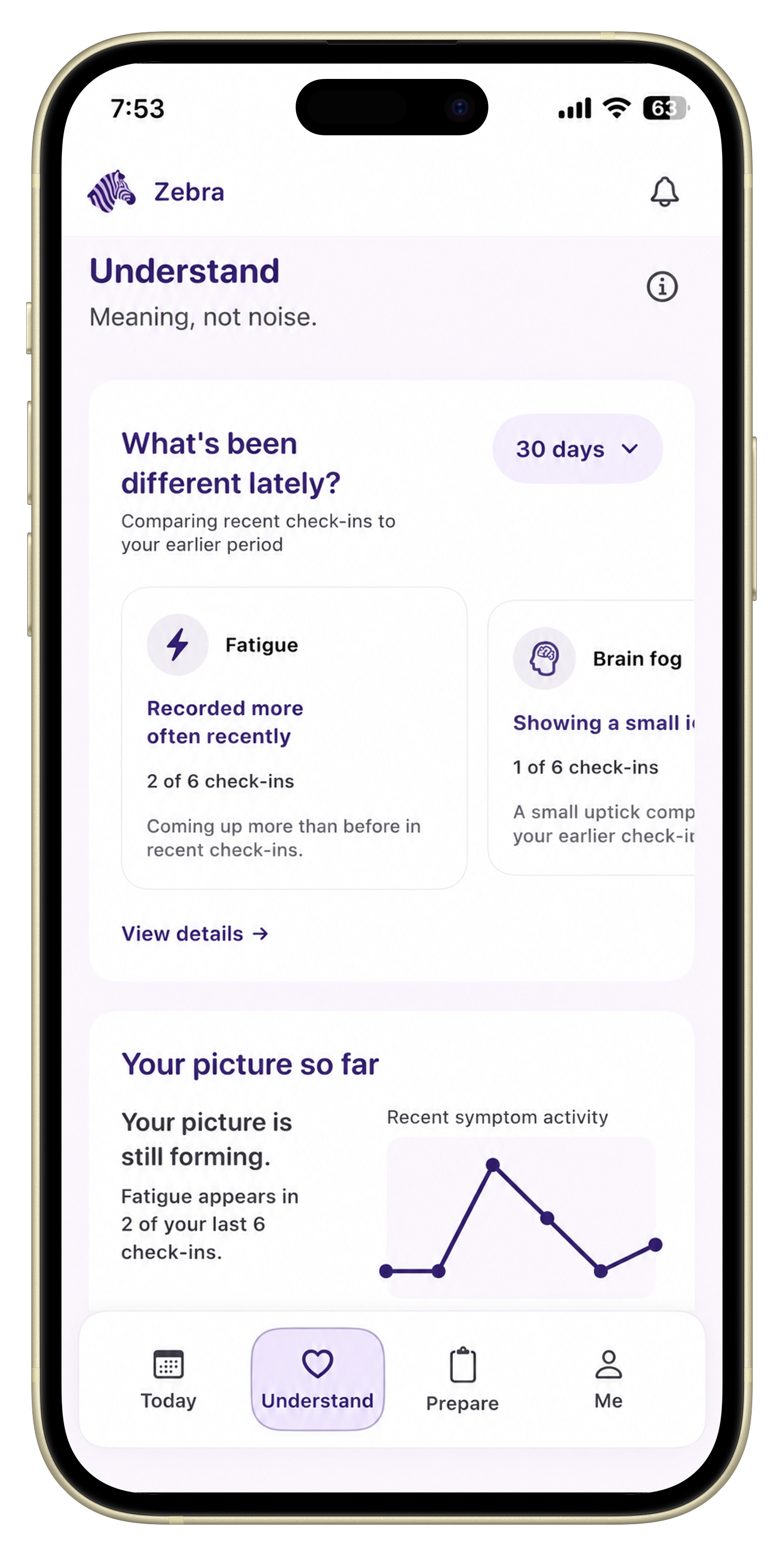
Zebra helps keep hydration, salt, compression context, symptoms, flares, medications, and notes in one timeline so your daily routine does not get separated from the symptom story you need to explain.
If they are part of your routine or care conversations, tracking them beside symptoms can make the record easier to review.
Not always. A consistent rough record of changes, missed days, or unusual days can still be useful.
Tracking can show context and patterns to discuss with a clinician, but it should not be treated as proof or medical advice.
Put this into practice
Use Zebra to keep hydration, salt, supports, symptoms, and flares in the same timeline.
Download ZebraKnowledge hub
Keep exploring
Learn how to track POTS symptoms, upright changes, flares, and relevant home observations in one clear history.
Learn what an orthostatic test helps you record and why position-based observations are more useful when kept with symptom history.
Compare the best symptom tracker apps for POTS in 2026, including Zebra, Bearable, Visible, and Notes-based workarounds.
Learn how to track salt, fluids, flares, and symptoms in one clear record without creating more daily overwhelm.