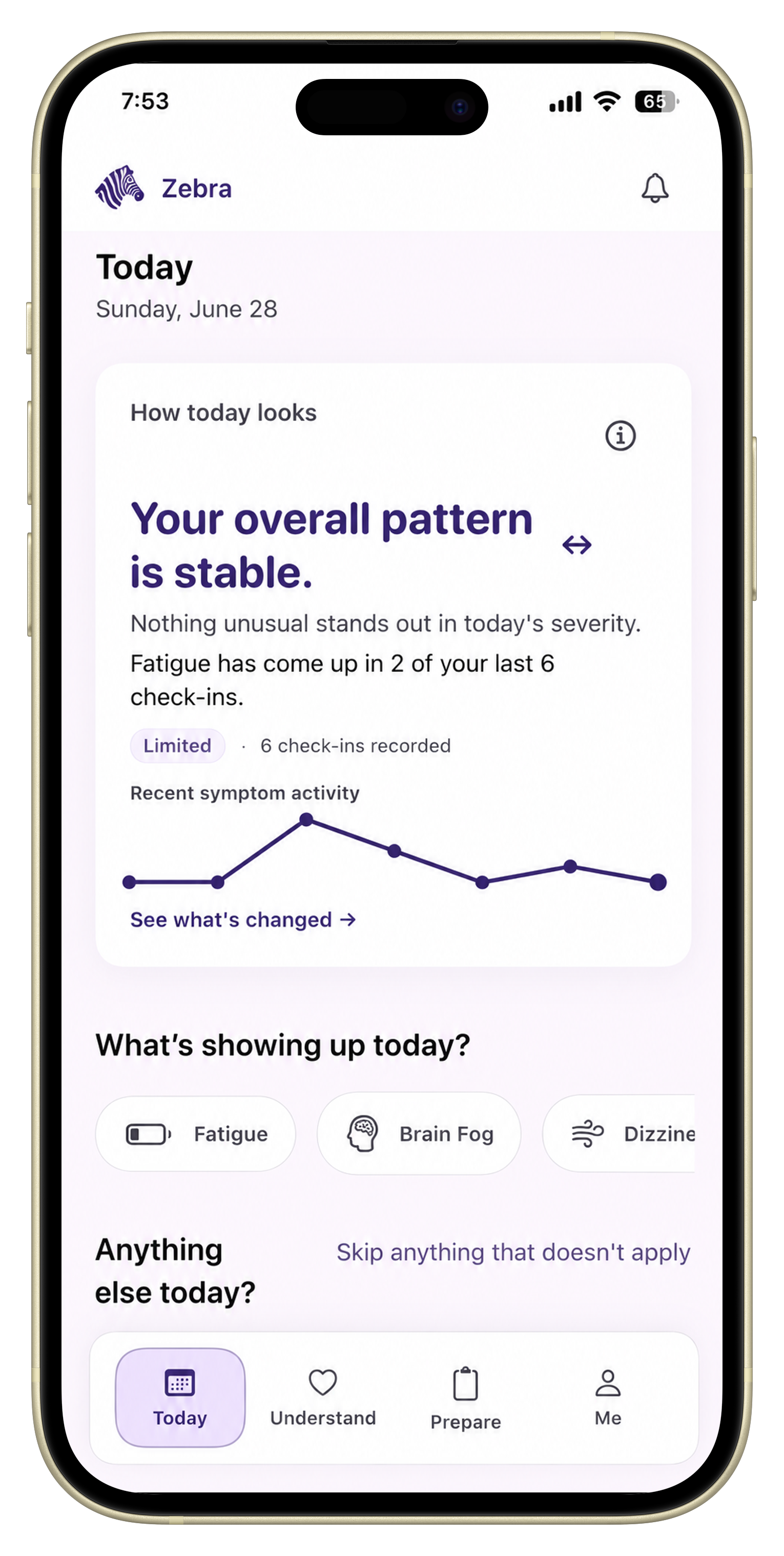
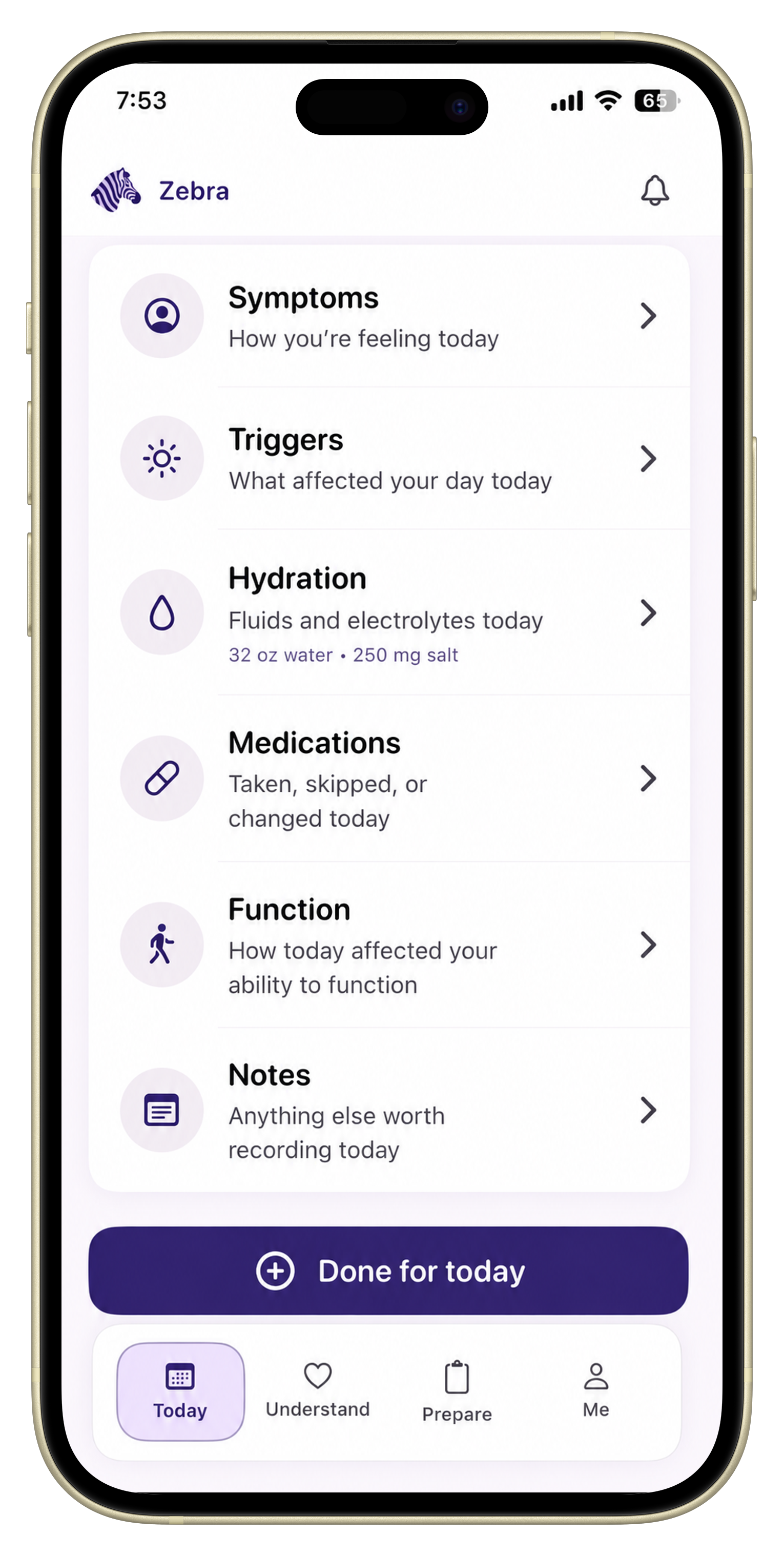
If you are tracking POTS or related dysautonomia symptoms, salt, fluids, and flare history are often more useful when they live in the same record as your symptoms. The goal is not to create a perfect management log. It is to make daily changes easier to notice and easier to review before appointments.
Why these categories belong together
People often track:
- symptoms in one place
- hydration somewhere else
- salt loosely or not at all
- flare days only when they are bad enough to remember
That makes it harder to review the bigger picture later.
What to track
Keep it simple:
- rough fluid intake
- salt or electrolyte support if relevant to your routine
- flare severity
- main symptoms
- function impact
- medication changes when relevant
You do not need the world’s most detailed hydration spreadsheet. You need a record that still helps later.
What makes this useful
This kind of tracking is useful when it helps you answer:
- what bad days looked like
- what changed around those days
- whether your routine shifted
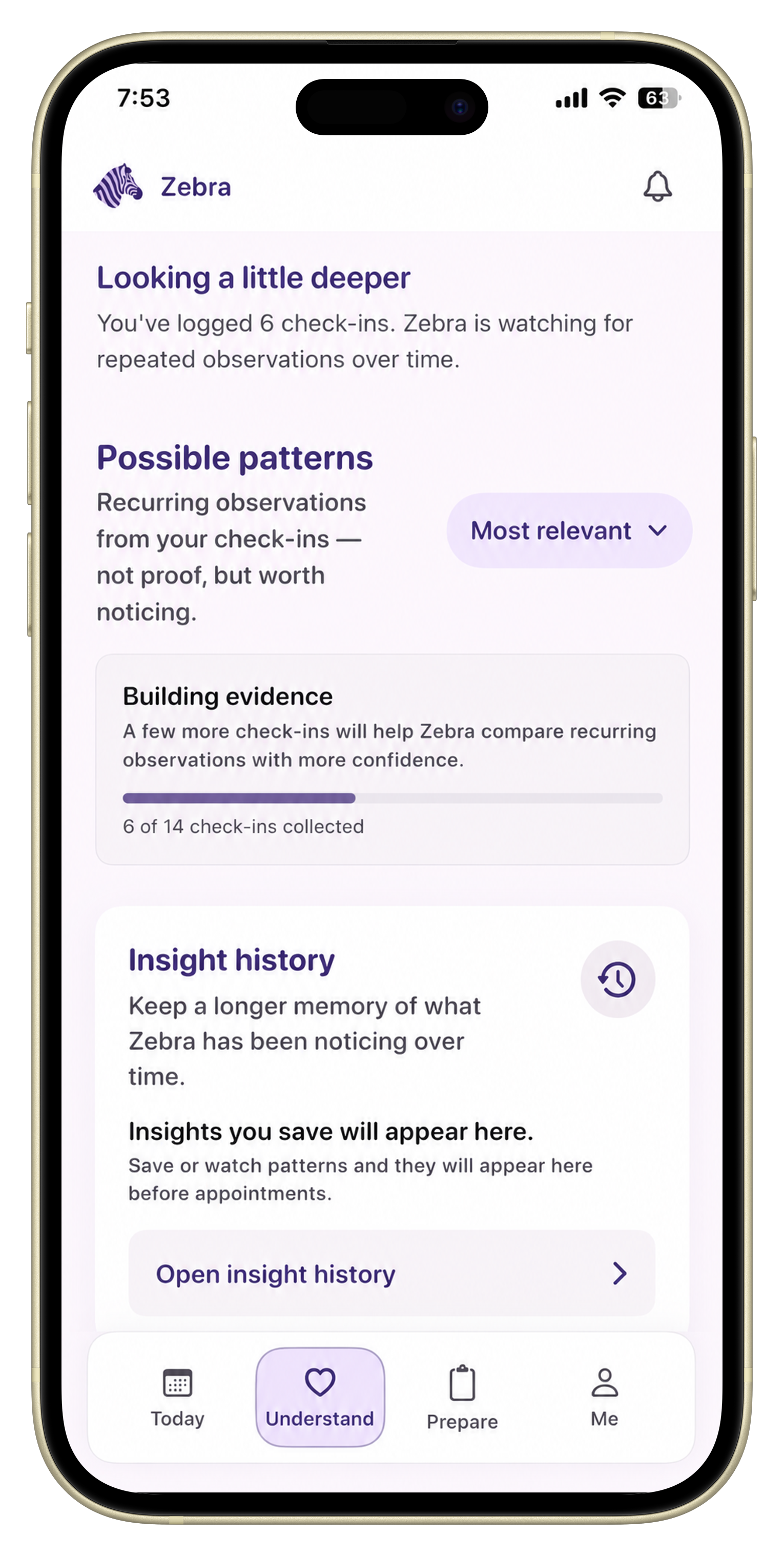
- what you want to discuss with a clinician
It is not useful when it turns into a second full-time job.
How to keep it sustainable
- use broad categories, not endless detail
- note changes, not just totals
- prioritize flare days and obvious shifts
- keep symptom context attached
Where Zebra fits
Zebra is built to keep symptoms, flares, hydration, salt, meds, and related history together so that bad days and routine changes do not have to be reconstructed later from multiple tools.
Key takeaways
- Track salt, fluids, and flares together when possible.
- Keep the record simple enough to use on bad days.
- Focus on what changed and what matters for review, not on perfect measurement.
FAQ
Should I track salt and fluids with my symptoms?
If they are part of your day-to-day management or relevant to care conversations, yes. Keeping them near your symptom history often makes the record more useful.
Do I need exact numbers every day?
Not always. Broad, consistent tracking can still be useful, especially when your goal is recognizing changes and preparing for appointments.
Why track flare days separately?
Flare days are often the hardest days to remember clearly later, so giving them their own place in your record can be especially useful.
Put this into practice
Download Zebra
Use Zebra to keep salt, fluids, flares, and symptoms in the same timeline.
Download Zebra