Menstrual Cycle Flare Tracker: What to Log When Symptoms Change
A practical guide to tracking cycle-related flares, POTS symptoms, fibromyalgia pain, fatigue, brain fog, GI symptoms, medications, and appointment questions.

Zebra
For invisible chronic illness
Fatigue
Sleep and fatigue notes are most useful when bedtime, wake time, sleep quality, night waking, naps, medications, caffeine, pain, brain fog, activity, and next-day function stay connected. The goal is not to diagnose a sleep disorder. The goal is to bring clearer patterns to your clinician.
Sleep and fatigue are tightly linked for many people with chronic illness, but the pattern can be hard to explain from memory. You may remember that you slept badly. You may remember that the next day was awful. The useful part for a clinician is often the timeline between them: bedtime, wake time, sleep quality, night waking, naps, medications, caffeine, pain, brain fog, activity, and next-day function.
A sleep and fatigue diary does not diagnose insomnia, sleep apnea, ME/CFS, fibromyalgia, Long COVID, or any other condition. It helps you bring a clearer record to a clinician who can decide what needs evaluation.
You do not need perfect sleep data.
Start with:
Example: “Bed 11:30, woke 7:10, slept maybe 5.5 hours, woke 3 times from hip pain, unrefreshed 8/10.”
That is enough to make the next day easier to interpret.
Sleep notes are more useful when connected to the next day.
Track:
This helps separate “I slept badly” from “sleep disruption changed what I could do.”
Naps can be part of coping, recovery, or a sign that fatigue is interfering with the day. The goal is not to judge the nap. The goal is to keep the timing visible.
Track:
For people with energy-limiting illness, an unavoidable nap can be a functional impact note, not a failure.
Many sleep diary templates include caffeine, alcohol, exercise, medications, and evening routines because those details can shape sleep or help clinicians ask better questions.
Track context like:
Do not change medication based on a diary alone. Use the notes for a care conversation.
For some people, sleep disruption is part of a broader flare pattern.
Track whether poor sleep happened near:
Do not treat one bad night as proof of cause. Look for repeat patterns you can discuss.
Sleep resources often suggest using a diary for one to two weeks before discussing sleep problems with a clinician. If two weeks is too much, start with one week.
Use this structure:
The point is consistency, not perfection.
Before a visit, pull out:
Helpful questions:
Helpful background:
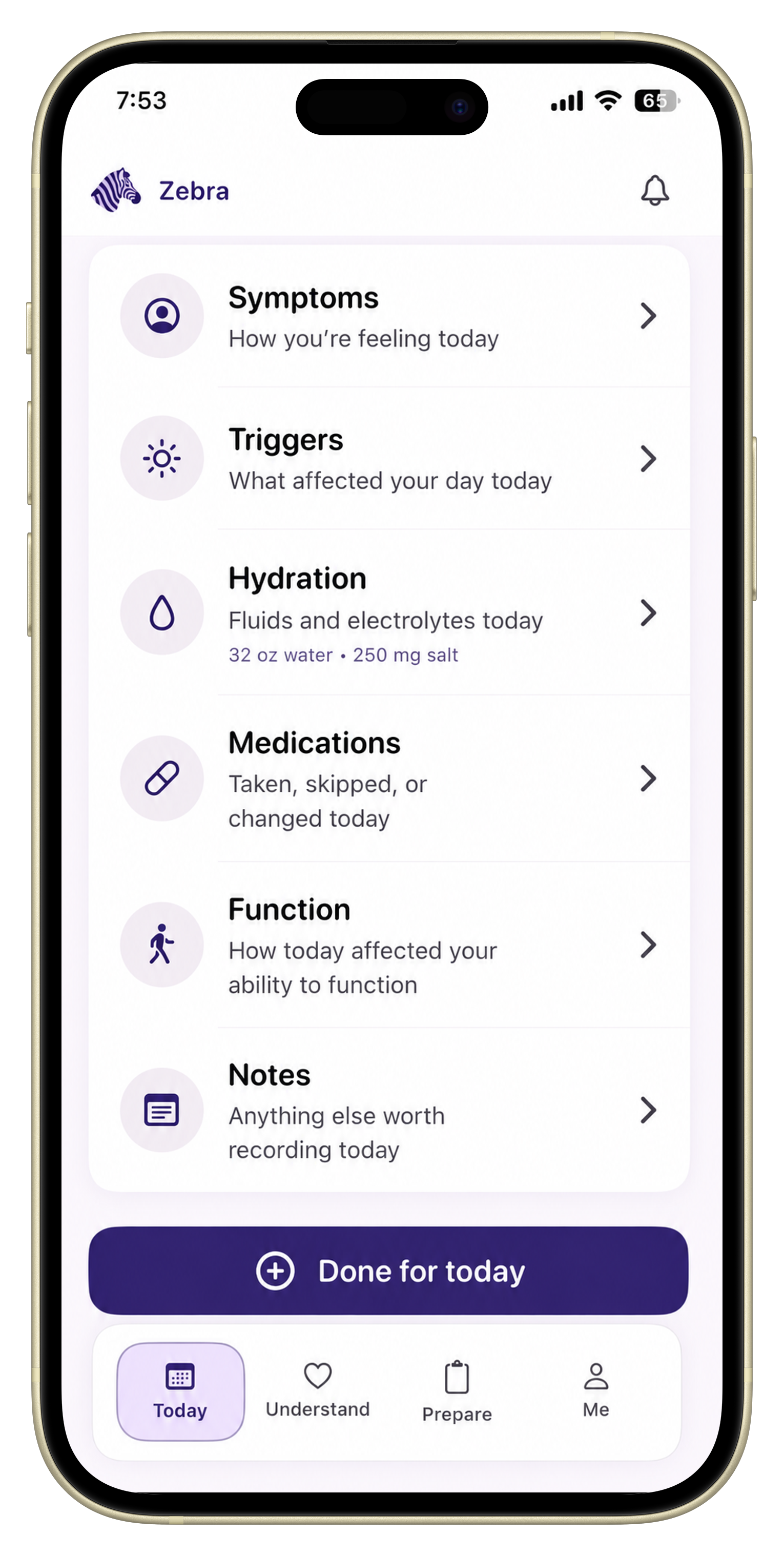
Zebra helps keep sleep context, fatigue, pain, flares, medications, triggers, activity, functional impact, and appointment questions in one timeline.
It does not diagnose sleep disorders or fatigue causes. It helps you bring a clearer sleep-and-symptom pattern to the clinician who can evaluate it.
Track bedtime, wake time, sleep quality, night waking, naps, caffeine or alcohol if relevant, medication timing, pain, brain fog, fatigue severity, activity, and next-day functional impact.
Many sleep diary resources suggest one to two weeks, but your clinician may recommend a different length. A short consistent record is often more useful than months of scattered notes.
No. A sleep diary can help organize patterns for a clinician, but diagnosis may require clinical evaluation or testing.
No. Track the smallest useful set: sleep timing, sleep quality, next-day fatigue, brain fog, pain, activity, and what changed your function.
No. Zebra helps organize patient-entered history for appointments. It does not diagnose, treat, or replace medical care.
Put this into practice
Use Zebra to keep sleep context, fatigue, brain fog, pain, activity, medications, and appointment questions in one timeline.
Download ZebraKnowledge hub
Keep exploring
A practical guide to tracking cycle-related flares, POTS symptoms, fibromyalgia pain, fatigue, brain fog, GI symptoms, medications, and appointment questions.

A practical fibromyalgia flare tracker guide for logging pain, fatigue, sleep, brain fog, triggers, recovery, and what helped.
A practical guide to tracking Long COVID symptoms, delayed crashes, orthostatic symptoms, activity limits, and appointment questions.
A practical guide to tracking migraine and headache days, symptoms, medication response, possible triggers, sleep, hydration, menstrual cycle context, and appointment-ready summaries.