Menstrual Cycle Flare Tracker: What to Log When Symptoms Change
A practical guide to tracking cycle-related flares, POTS symptoms, fibromyalgia pain, fatigue, brain fog, GI symptoms, medications, and appointment questions.

Zebra
For invisible chronic illness
Fibromyalgia
A fibromyalgia flare can make everything louder: pain, fatigue, sleep problems, brain fog, sensory sensitivity, and stress. Track the smallest useful details so you can spot patterns without turning a bad day into a paperwork day.

A fibromyalgia flare can make everything feel louder: pain, fatigue, sleep problems, brain fog, sensory sensitivity, and stress. On a bad flare day, the goal is not to write a perfect health diary. The goal is to capture enough detail that future-you and your clinician can understand what happened.
CDC describes fibromyalgia as a condition that can cause pain, fatigue, emotional and mental distress, and sleep problems. Cleveland Clinic notes that symptoms can worsen during flare-ups and that common triggers may include emotional stress, routine changes, poor sleep, weather or temperature changes, illness, injury, and medication or treatment changes.
That makes tracking useful, but only if it stays small enough to do while you feel awful.
When you only have energy for one note, write a snapshot.
Use:
Example: “Flare 8/10. Widespread burning pain, heavy fatigue, fog. Slept badly, cold weather, overdid errands yesterday. Canceled work call. Heat and quiet helped.”
That is enough.
Fibromyalgia pain can move, spread, or change quality.
Track:
NHS notes that fibromyalgia pain can feel like aching, burning, sharp, or stabbing pain and that sensitivity to touch, light, food, smoke, or other inputs can cause symptoms to flare.
Fatigue is not just “tired.”
Useful flare notes include:
This helps explain the difference between “painful but functioning” and “unable to do basic tasks.”
Sleep can shape flare severity, and flares can also wreck sleep.
Track:
You do not need perfect sleep data. A simple “slept 4 hours, woke from pain twice” is useful.
Brain fog is more useful when tied to what it changed.
Instead of only writing “foggy,” note:
This turns a vague symptom into functional impact.
Flare tracking is not a guilt exercise. Some flares happen even when you do everything “right.”
Possible context to record:
Cambridge University Hospitals describes chronic pain flare-ups as episodes of much worse pain that can happen after overactivity, illness, emotional strain, or sometimes with no obvious reason. That “no obvious reason” part matters.
Track only strategies you actually used.
Examples:
Also track when something backfired. “Tried cleaning for 20 minutes, pain jumped from 6 to 9” is useful information.
Functional impact is often the most appointment-ready part of the note.
Write down what the flare changed:
This helps your clinician understand severity beyond a number.
Use this on bad days:
If that is too much, use the first, second, and seventh lines only.
Helpful background:
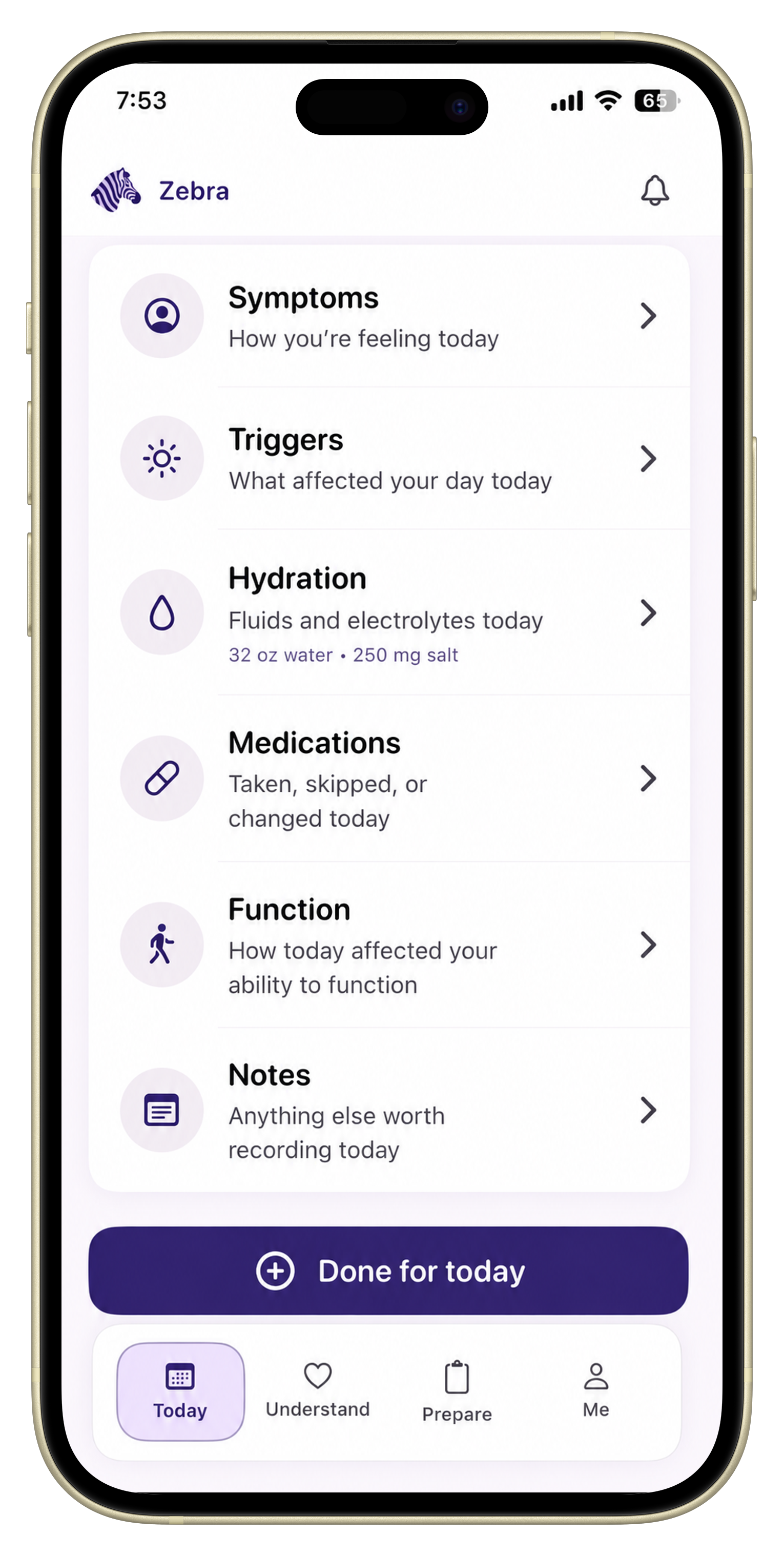
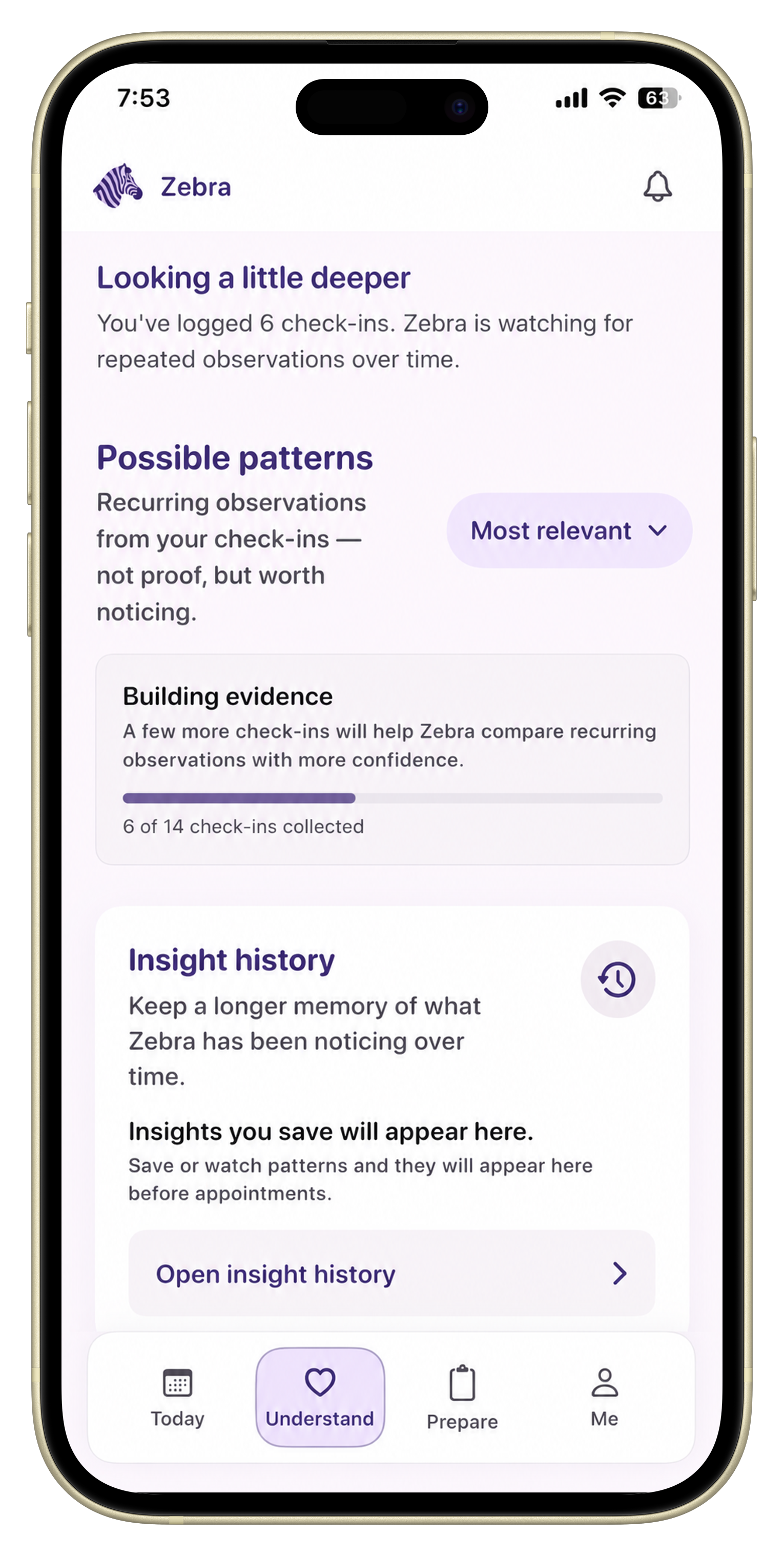
Zebra helps keep flare notes, symptom severity, fatigue, brain fog, medication context, triggers, sleep notes, and functional impact in one place.
It does not diagnose fibromyalgia or tell you which treatment to use. It helps make the flare pattern easier to bring to a clinician.
Track pain location and severity, fatigue, sleep, brain fog, sensitivity, mood or stress, activity level, possible triggers, medication context, what helped, recovery time, and daily impact.
Keep it short. A few taps or one sentence can be enough: symptom severity, possible trigger, what you had to stop, and what helped.
Tracking may help you notice repeated patterns around sleep changes, stress, overactivity, illness, weather, routine changes, or medication changes, but your clinician should help interpret them.
Yes. Track pacing, rest, gentle movement, heat, relaxation, medication context, sleep changes, or other clinician-approved strategies so you can compare what helps over time.
No. Zebra helps organize patient-entered history for appointments. It does not diagnose, treat, or replace medical care.
Put this into practice
Use Zebra to keep fibromyalgia flare notes, symptoms, triggers, medications, sleep context, and functional impact in one timeline.
Download ZebraKnowledge hub
Keep exploring
A practical guide to tracking cycle-related flares, POTS symptoms, fibromyalgia pain, fatigue, brain fog, GI symptoms, medications, and appointment questions.
A practical guide to tracking migraine and headache days, symptoms, medication response, possible triggers, sleep, hydration, menstrual cycle context, and appointment-ready summaries.
A practical guide to tracking sleep, fatigue, pain, brain fog, naps, medication context, activity, and next-day functional impact.
Start symptom tracking without overloading yourself: a practical 7-day plan for logging symptoms, triggers, meds, recovery, and daily impact.