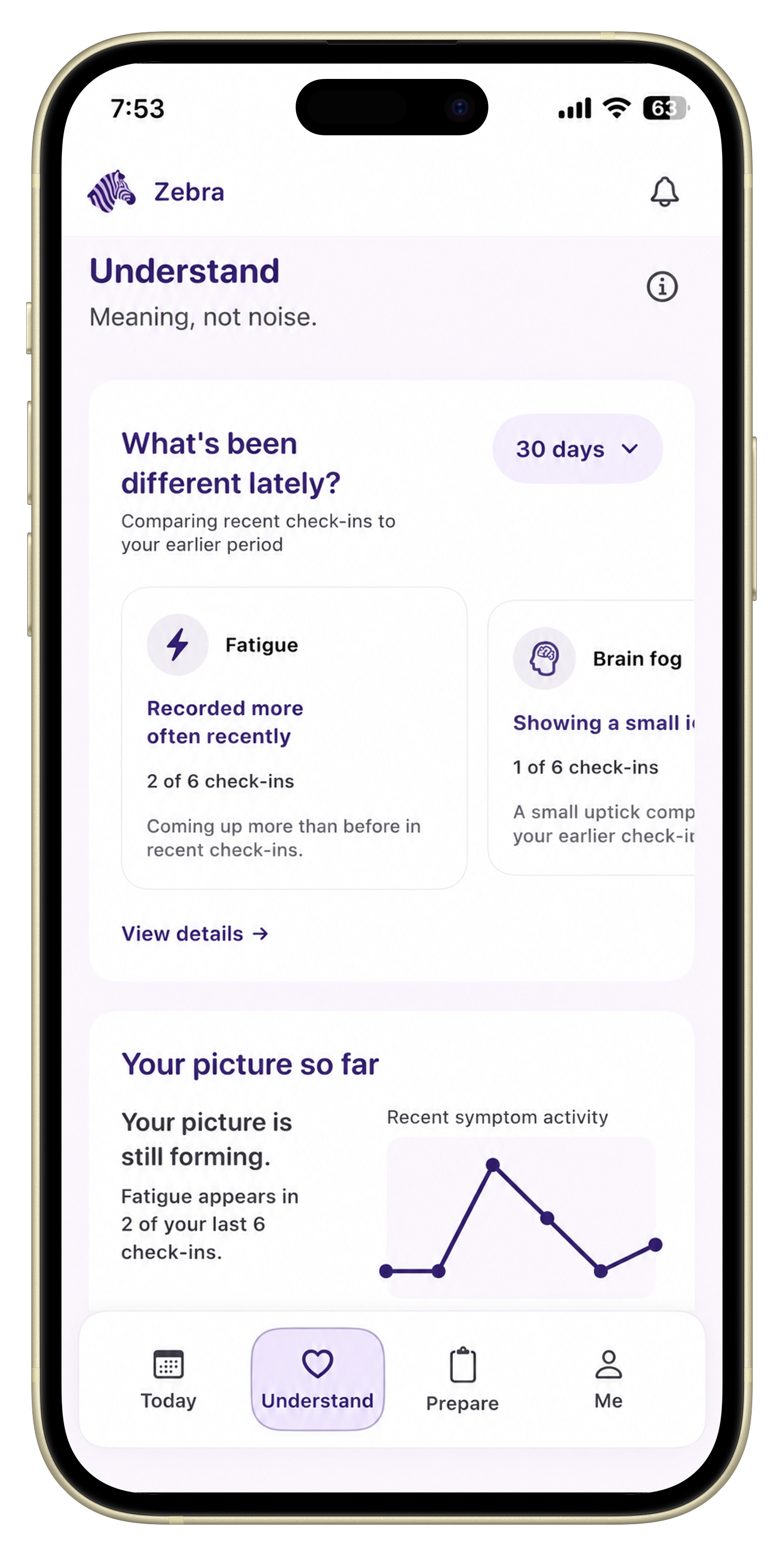
Best Symptom Tracker Apps for POTS in 2026
Compare the best symptom tracker apps for POTS in 2026, including Zebra, Bearable, Visible, and Notes-based workarounds.

Zebra
For invisible chronic illness
POTS
POTS and orthostatic tachycardia are related, but they are not the same level of explanation. Orthostatic tachycardia describes a position-related heart-rate pattern. POTS is a broader clinical syndrome that usually includes symptoms like dizziness, palpitations, fatigue, and upright intolerance. If you are tracking for care, the most useful question is not just whether your heart rate rises. It is what changes with position, what symptoms show up with it, and what that pattern does to daily life.
POTS and orthostatic tachycardia are related, but they are not the same level of explanation. Orthostatic tachycardia describes a position-related heart-rate pattern. POTS is a broader clinical syndrome that usually includes symptoms like dizziness, palpitations, fatigue, and upright intolerance. If you are tracking for care, the most useful question is not just whether your heart rate rises. It is what changes with position, what symptoms show up with it, and what that pattern does to daily life.
For symptom tracking, that difference matters because numbers alone are rarely enough. A clearer history usually combines symptoms, position-related context, and function changes in one record.
Here is the practical distinction:
That means you can track orthostatic tachycardia as part of your history without assuming you have fully explained the whole picture.
Orthostatic tachycardia usually means your heart rate rises in a noticeable way when you move upright.
The useful tracking question is:
What happens when you lie down, sit, stand, or stay upright longer?
That can include:
This is why a symptom-and-position history is often more useful than a standalone pulse note.
POTS is typically not just one number. It is the broader experience of upright symptoms, pattern repetition, and how those symptoms affect your day.
That often includes:
Dysautonomia International describes POTS as a syndrome involving orthostatic intolerance and symptoms that can include lightheadedness, fatigue, palpitations, and exercise intolerance. See Dysautonomia International.
| Question | Orthostatic tachycardia | POTS |
|---|---|---|
| What it describes | A position-related heart-rate pattern | A broader syndrome that may include orthostatic tachycardia plus symptoms |
| What to track | Position, timing, symptoms, heart rate changes | Position, symptoms, flares, function, context, and relevant measurements |
| What gets missed if you track only the number | Symptom burden and daily-life impact | The pattern can look incomplete without the full context |
| Best use of tracking | Show what happens upright | Show the full pattern you need to discuss in care |
The most useful record usually combines:
This is the same reason How to Track POTS Symptoms and Orthostatic Changes works better than a vitals-only log.
If the bigger question is what your structured test adds, What Does an Orthostatic Test Help You Record? explains that workflow.
The goal is not to self-diagnose. The goal is to preserve useful context.
If you want a simple structure, track:
That gives you a record that is much easier to review before a visit or include in a doctor-ready report.
Zebra is built for the gap between “I noticed something important” and “I can explain the pattern clearly later.” That is especially useful when orthostatic intolerance symptoms, tachycardia, and daily-function changes all need to stay connected.
Orthostatic tachycardia describes a heart-rate pattern that happens with upright posture. POTS is a broader clinical syndrome that may include orthostatic tachycardia plus symptoms like dizziness, palpitations, fatigue, and upright intolerance.
No. A position-related heart-rate change can be part of the picture, but diagnosis depends on clinical evaluation and the wider symptom context.
Track position, symptoms, timing, daily-function impact, and any relevant heart rate or blood pressure observations in the same record.
Usually it helps to keep them together so the pattern is easier to review, especially if they tend to happen at the same time.
A concise report can help you review recurring patterns, symptom clusters, and the questions you want to bring to care.
Put this into practice
Use Zebra to keep symptoms, position-related changes, and daily function in one doctor-ready history.
Download ZebraKnowledge hub
Keep exploring
Compare the best symptom tracker apps for POTS in 2026, including Zebra, Bearable, Visible, and Notes-based workarounds.
Compare Bearable and Zebra to see which is better for generic symptom tracking, overlap conditions, and appointment prep.
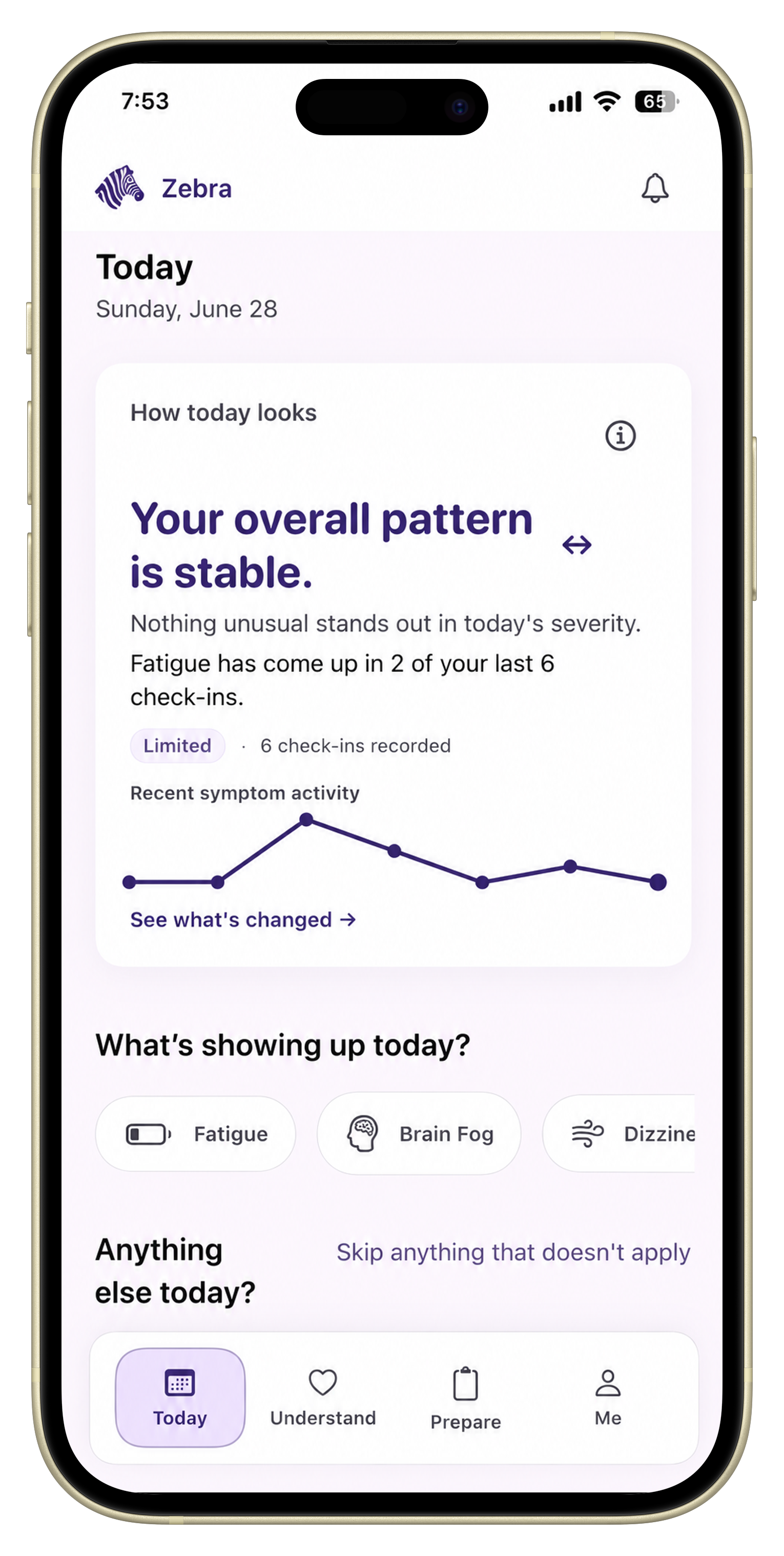
Learn how to track POTS symptoms, upright changes, flares, and relevant home observations in one clear history.
Learn what an orthostatic test helps you record and why position-based observations are more useful when kept with symptom history.